

Let’s imagine John. He keeps seeing tons of YouTube videos where people are making tens of thousands from traffic medybuying. The setup is simple: Facebook + casino, sports betting, and so on. John has read a bunch of case studies, picked his resources, and is already picturing the color of his dream Porsche. He seems to understand what to do and how, but there’s one question with no clear answer: how much money do you need to get started?
The main problem with this question is that different people mean different things by ‘getting started.’ One person wants to open Ads Manager for the first time and immediately make a profit, another plans to test several offers, and a third expects to find a working bundle and keep the campaign running until the affiliate network reconciles and prepares the payout. Each of these goals requires a different amount of money.
Today, let’s honestly figure out how much a beginner will need to start on Facebook in 2026.
Getting Started iN Mediabuying in 2026
In 2026, launching ads has become easier than a few years ago. Back in 2022, you had to manually test creatives, targeting, and placements, but now the lion’s share of the work is handled by AI algorithms. Meta has been developing Advantage+ and other tools for years, helping the system select audiences, placements, and creative options without the affiliate’s intervention. You can read more about Meta’s updates here.
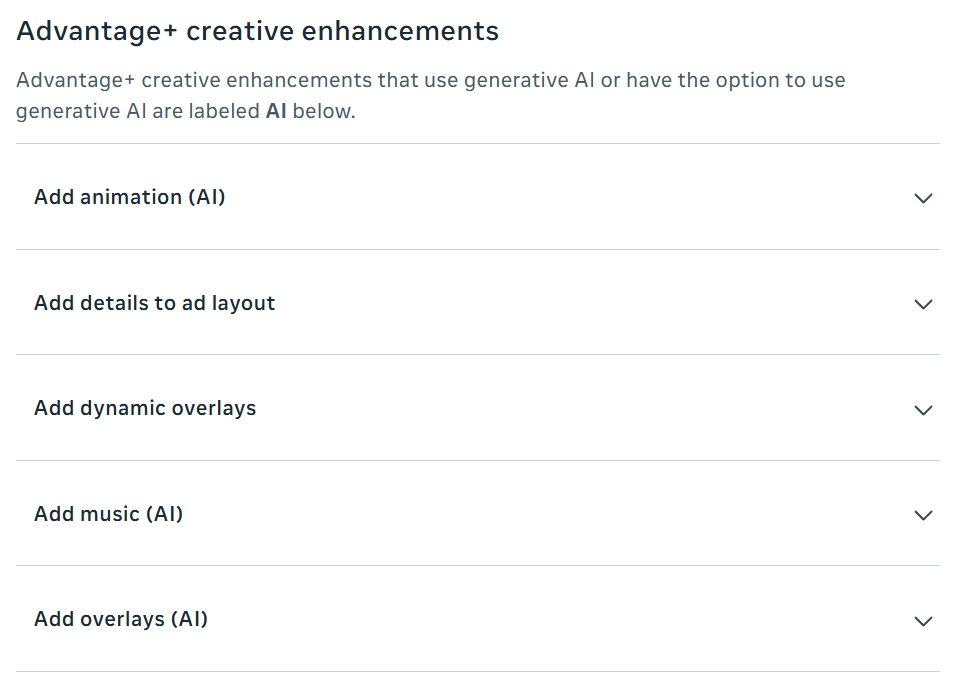
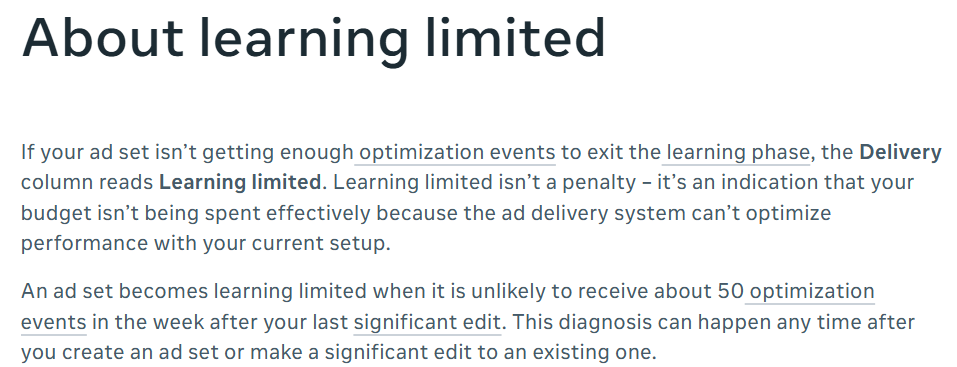
In 2026, the company is also continuing to develop Andromeda – its own ad ranking system designed to handle a large number of different ad formats. On the one hand, this makes things easier for beginners: you no longer have to manually select hundreds of audience interests and turn your ad account into a nuclear control panel. But there’s another side to the coin – automation itself doesn’t make testing free. The algorithm will find the audience, placement, and serve relevant ads, but it relies more on the quality of the creative, the offer itself, and the landing page. Meta notes that an ad set usually exits the learning phase after about 50 optimization events per week. So if you split a small budget across 5 offers, 10 audiences, and 20 ads, the campaign won’t get optimal conversion, just a few random clicks.
This leads to the main paradox of 2026: creating an ad has become easier, but testing a hypothesis to a meaningful result has not. AI can generate ten video variations in an evening, but it won’t pay for impressions or refund your money if the offer doesn’t convert.
Logically, since launching ads is easier, more people will want to do it. The number of players in the market is unstable, the auction behaves unpredictably, and traffic costs can spike at any moment. Because of this, you need to budget more money than before. For example, Albert Mugenov, CBDO of Exgaming, says in an interview that this is critical for gambling verticals with their NET 14 and NET 30 cycles. In his opinion, you need to consistently maintain good cash flow to squeeze current bundles, test new ones, pay salaries, and still survive until the next payout from the advertiser.

Screenshot from a video on the channel “Anton Khomenok | Traffic Arbitrage”
What the Experts Say
We gathered opinions from various experts on the starting budget for working with Facebook. According to their breakdowns, the situation is as follows:
$300 – Paid Introduction to Facebook
According to Dmitry Leto, about $50 goes to basic tools, another $80 or so to account infrastructure, and around $170 is left for traffic. The expert suggests not spreading yourself thin at first: one GEO, one offer, and two or three creatives. This budget gives you a few tries, but leaves almost no room for error.
A practicing affiliate from the PirateCPA channel comes to the same conclusion: with a $260–300 budget, most of the money should be reserved for traffic, while expensive consumables and extra services can wait. This budget is more about figuring out whether the affiliate can set up a campaign, analyze stats, and stop a non-working hypothesis before it drains the wallet.
Some specialists believe that $300 is the price of a practical exam. If you pass, you gain experience and understand your next steps. If not, at least you learn which approach doesn’t work or what needs to be changed.
$1,000 – The Lower Limit for Meaningful Testing
A buyer with $1,000 in the account breathes a little easier. Dmitry suggests allocating $100–150 for a working set of tools, $150–200 for infrastructure, and the remaining $650–700 directly for traffic. This allows you to test several offers or angles, instead of putting the entire budget on one video.
The affiliate from PirateCPA also considers $975–1,000 an adequate starting amount: about $500 goes to testing, around $200 remains as a minimum cushion, and the rest is for tech and consumables. With this budget, a beginner can calmly handle creative replacements, extra bundle tests, or a delayed payout from the advertiser.
$10,000 – Reserve for Systematic Work
A $10,000 budget is far from a first introduction to Facebook. This amount allows you to simultaneously maintain ad spend, run several tests, and keep turnover. The difference is especially noticeable in expensive GEOs, where a single hypothesis may require hundreds of dollars before the first stable conversions.
“A comfortable budget for Facebook is $10,000. However, in Africa and LATAM you can start with smaller amounts: traffic is cheaper and competition is lower. As for budget structure: allocate at least $1,000 for ad spend, and calculate consumables as 10% on top of the spend. Benchmark for evaluating a test: wait for 30 registrations or 3–5 first deposits. The total for one test comes out to about $700.” Vitaly, Head of Media Buying at Ace Partners
That’s why the debate about whether you can start with $300 or if you really need $10,000 is like arguing over the price of a car. A used compact and a new SUV will both get you to the store, but their reliability, speed, and cost of mistakes are very different.
How to Calculate Your Own Ad Budget
To calculate your starting amount, we recommend the following algorithm:
First, ask your affiliate manager for data on your target GEO: payout, allowed sources and formats, average conversion rates between key steps, hold, and payout schedule. Then, define the event you’ll use to make decisions. At the start, most drive traffic on a pay-per-install basis, as it’s the easiest for the user. A more complex option is registration, and the final stage is deposit, if we’re talking about gambling. The more steps a user needs to take before the target action, the more valuable the conversion and the harder it is to get.
If the affiliate terms suit you, move on to evaluating consumables. For example, you can create and farm accounts manually instead of buying them for $5–7+. Same goes for creatives—the first versions can be made yourself.
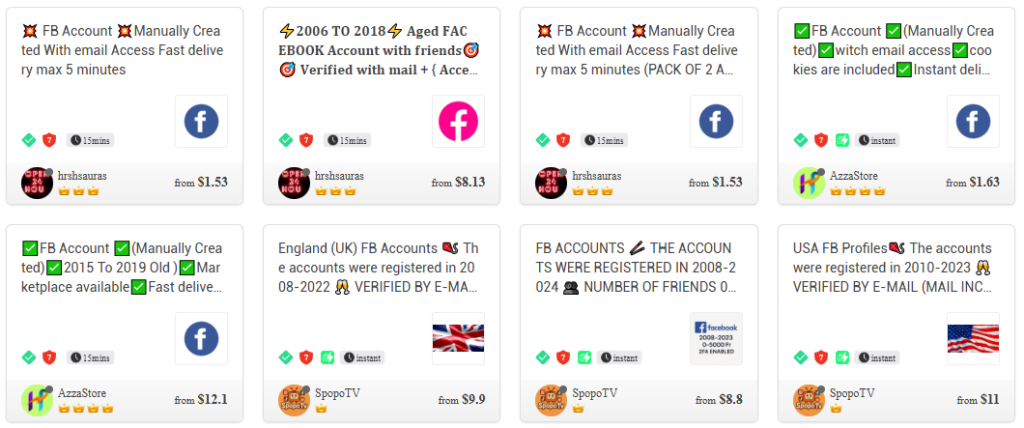
Don’t skimp on anti-detect or proxies, because without reliable infrastructure, you can forget about an effective test.
Let’s say you have $300 left. If you get paid $20 per target action, for example, a registration, you need at least 15 regs to break even. Ideally, each reg should cost less than $20. Also, don’t forget about a cushion, which should be roughly equal to a week’s spend.
This is exactly why the same $1,000 gives you many tries in a cheap GEO and only one or two in an expensive one.
Current Facebook Trends for 2026
Meta is constantly evolving and rolling out new features, forcing affiliates to adapt again and again. So we’ve gathered a few nuances that are relevant for 2026.
You can’t split a small budget into dust. Meta recommends building separate ad sets so each can reach optimization events faster. An ad set that can’t get about 50 events per week risks staying in Learning Limited status. So with a $300 budget, don’t try to test three GEOs, five offers, and eight audiences at the same time.
It’s much more effective to build and test one bundle: one offer, one GEO, a few truly different creatives, and pre-set rules for stopping the campaign. For example, the difference between videos shouldn’t just be the button color, but the approach: product demo, testimonial, first-person story, problem breakdown, or comparison.
Creative variations matter more than endless micro-targeting. Facebook directly links Andromeda to a risk diversification strategy. Previously, you had to write briefs yourself, set up targeting, and guess what would hook your chosen audience. Now, the system receives different creative variations and generates the right ad for each user without affiliate involvement. But this doesn’t mean you should upload 50 nearly identical videos or static images. On the contrary, the more diverse creatives the affiliate uploads, the higher the chance Facebook will assemble the optimal combination.
Frequent edits prolong algorithm learning. Previously, buyers had to dictate traffic requirements themselves. On one hand, you could assess a bundle’s potential in just a day and avoid wasting money. On the other hand, if the affiliate didn’t fully understand their audience, the risk of losing profit increased. With AI, this task is now partly out of affiliates’ hands. The system works like this: the platform collects creative variations, shows them to different audiences, and monitors the response. Any changes to budget, targeting, or creatives are considered significant edits by Facebook and halt the learning phase. So you’ll need to give the algorithms 2–3 days to understand the bundle’s effectiveness.
Free research exists, but it won’t give you a ready-made bundle. Meta Ad Library does show active ads on the company’s platforms, but you won’t find a finished bundle with this tool. However, it’s great for training your eye: formats, offers, and angles without paying for a spy tool. But keep in mind, an ad might run for a long time due to a large budget, retargeting, or weak moderation—not necessarily because it’s profitable. This is especially true with big brands for whom Facebook isn’t the main source.
Top Verticals for Facebook: Where Beginners Should Start
Let’s be clear: there’s no single best vertical. There’s a vertical where a beginner understands the product, the brand, and can promote it within Facebook’s realities. Let’s go from simple to complex.
White-hat e-commerce. Good for getting to know Facebook overall: no bans, and infrastructure costs are minimal. Don’t expect a solid ROI due to high competition, but if by “starting” an affiliate means launching their first campaign, this is a solid option. Here, you’ll need to consider delivery, returns, margins, and order processing quality—not just lead price—otherwise, you might never see a payout.
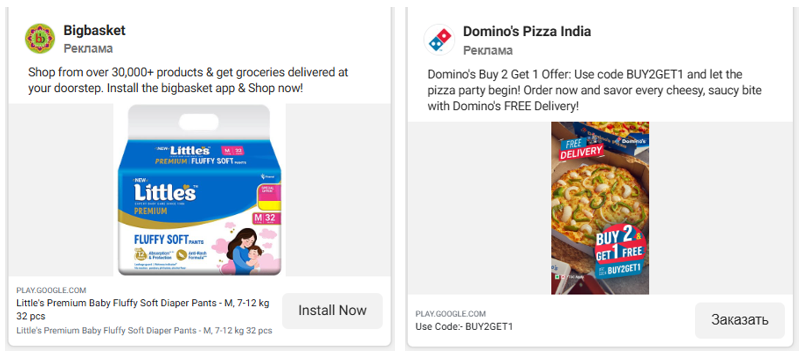
There are hundreds, if not thousands, of e-commerce affiliate programs. So you’ll have no trouble picking a product at the start. You also won’t need to learn cloaking or anti-fraud bypass methods, which makes entry much easier.
Classic leadgen. Education, local services, B2B, and other white-hat niches are also good for starting out. Here, the value of a lead for the advertiser is critical: cheap leads are worthless if the sales team can’t close them.
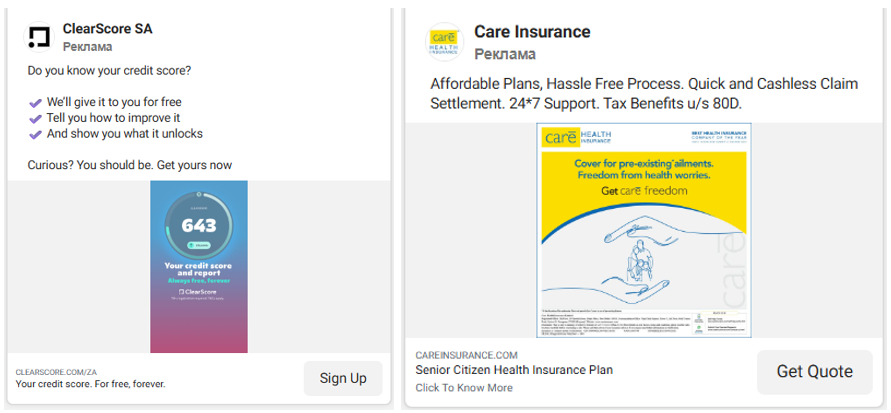
If you figure out how to convey the value of a product to the user not only in the moment but also in the long run, switching to verticals like gambling will be much easier.
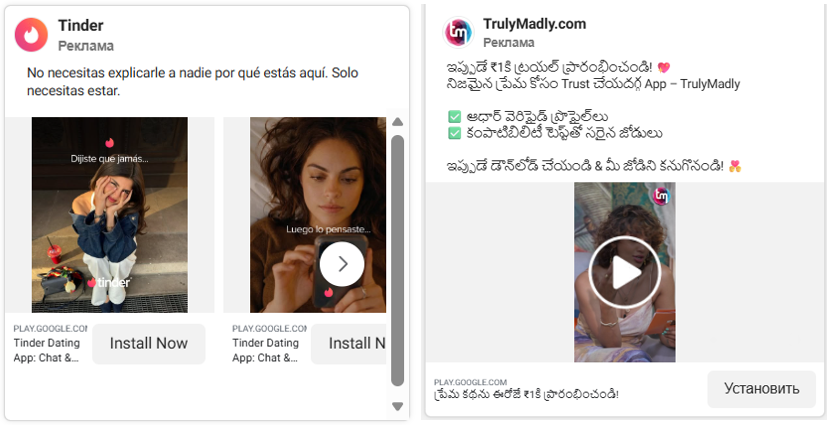
Dating. Facebook and Instagram are perfect for visually explaining an offer, and a short video clearly shows how the app or service is used. From dating, the next step is adult, where both payouts and risks are higher: the affiliate needs to communicate the offer’s value without explicit nudity.
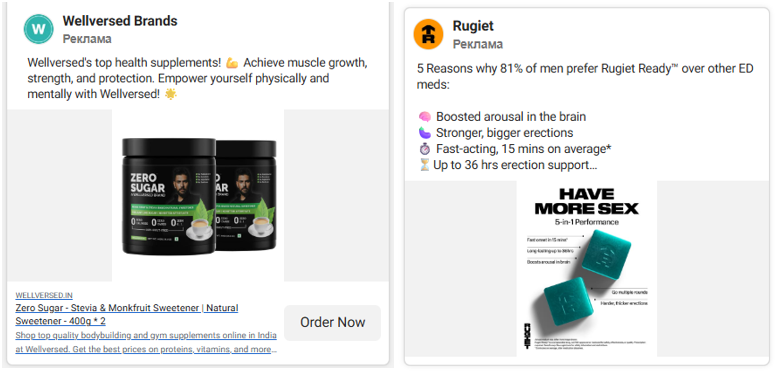
Nutra. This is one of the most popular niches for Facebook due to its versatility. An affiliate can run any offers to any audience: from children’s vitamins to male enhancement and Viagra. Working in gray nutra without cloaking is tough, but not impossible.
iGaming, adult dating, crypto, and some financial offers. These are the most attractive and promising niches in terms of income. Payouts reach $500 per FTD, but buyers face huge competition and constant bans. While gambling can still be promoted legally in Google Ads, in Facebook it’s definitely not allowed.
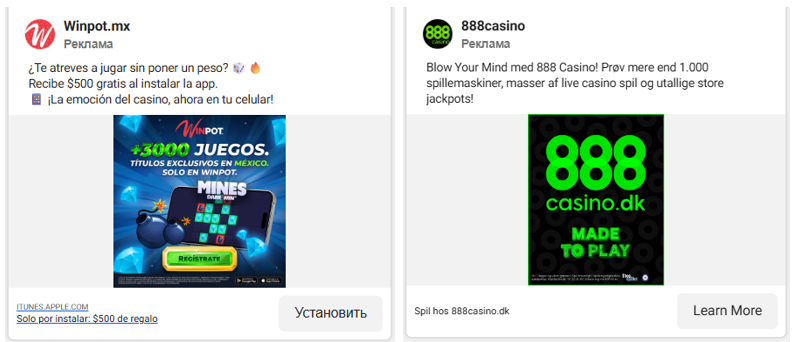
Moreover, if Meta completely removes manual campaign management for affiliates, forbidden niches will likely become even more expensive.
If an affiliate’s goal is to learn how to manage ads, it makes more sense to start with a white vertical with a short and transparent funnel. But if the aim is to get into iGaming specifically, it’s better to accept upfront that $300–500 will only be enough for an initial introduction to Facebook and its system.
Conclusions
In 2026, a beginner really can launch ads on Facebook with $300. But this amount is only enough to test your skills and one funnel if you’re working in a gray niche. A budget of about $1,000 is the minimum where you get a small reserve. A $10,000 balance is already suitable for full-scale work even in Tier-1,2 GEOs with the highest payouts.
The most common mistake beginners make is spending half their money on a fancy set of tools, and spreading the other half across a dozen campaigns. First, you need to calculate the cost of the desired event, the number of events needed for a positive ROI, and the hold period. Only after that should you buy tools and form hypotheses. It’s also naive to expect that modern neural networks will help you reach your first profit faster. That’s partly true, but it’s important to understand that any AI is just a tool. And the effectiveness of this tool depends heavily on who uses it and how.

FAQ
Yes, you can. But that's a budget for one narrow scenario and gaining experience, not for stable earnings. If the first test fails, you might not have enough left for a proper test of a second bundle.
According to practitioners, a reasonable lower benchmark is around $1,000–1,500, provided most of it goes to traffic buying. For a more relaxed solo approach with a reserve, the benchmark shifts to $3,000 and above.
With a small budget, 4–5 static and 2–3 dynamic creatives are enough. But ten copies of the same clip with just a background change don’t make a proper test set. It’s more effective to take one approach and create different creatives within that framework.
For learning, a white-hat niche with a clear funnel and simple target action is easier. iGaming, dating, crypto, and other gray areas require more experience and creativity to bypass moderation, so they increase the cost of mistakes.

Comments (0)