

Among all categories of physical products in affiliate marketing, nutra remains one of the most stable and in-demand niches. The reason for this consistent demand is simple: joint supplements, weight loss products, anti-aging creams, and men’s health products address personal pain points that remain relevant regardless of the season or economic conditions.
However, the conditions for working with this vertical have changed significantly over the past few years. Moderation on Facebook Ads and Google Ads has become stricter, while automated review algorithms have learned to instantly block aggressive creatives and fake medical news.
In this article, we take a detailed look at the nutra vertical in 2026, discuss suitable traffic sources, and provide a step-by-step guide to building high-converting funnels.
What Is Nutra and How the Vertical’s Economics Work
Nutra refers to offers in the beauty and health sector: dietary supplements, nutritional supplements, anti-aging cosmetics, and products for weight loss, joint treatment, and potency enhancement. Unlike pharmaceuticals, these products are sold over the counter and do not require mandatory pharmacy certification.
Buyers are attracted by the promise of quick results: losing weight without working out, relieving pain in a few days, or smoothing out wrinkles.
Direct advertising with a hard sell rarely works here. Users are first hooked by a problem highlighted in the creative and then directed to a pre-lander that warms them up. The pre-lander may feature an expert interview, a personal story, or testimonials with visible results.
The nutra sales funnel relies on the work of the affiliate, the affiliate network, and a local call center. The user leaves their name and phone number in a form on the landing page. A call center operator calls them back, sells them the full course of the product, and confirms the order. The affiliate network then pays the media buyer a fixed commission.
An affiliate’s income depends on the cost of traffic and the percentage of confirmed orders, known as the Approval Rate. The approval rate is directly affected by the call center’s schedule and response time. If operators do not call the customer back within the first 10–15 minutes, the person loses interest and decides not to buy. Unconfirmed leads are discarded and reduce the campaign’s profitability.
| Every year, someone in the market starts saying that nutra is dead and everyone should urgently switch to gambling. In reality, nutra is alive and will remain that way—you just need to know how to work with it. At scale in 2026, a normal ROI is 30–40%, while 50–60% is an excellent result. If someone claims to be getting 80–100% on large spends, it’s either a fairy tale or a short-lived spike lasting a couple of weeks,” said Nikita, owner of Drop Team, in a Russian-language video on YouTube. |
Payout Models for Webmasters
The payout type from the partner network determines the conditions under which the media buyer receives a reward.
CPA (Cost Per Action): Payment for a Target Action
This is the main working model in nutra. The target action is usually a confirmed order: the payout is credited after the client agrees to the purchase over the phone and the call center operator changes the application status to approved.
On some offers, the payout is credited immediately after the buyer’s card is successfully charged on the landing page.
CPL (Cost Per Lead): payout for contact details
With the CPL model, the affiliate network pays a fixed amount for each completed form on the website with a name and phone number. The media buyer gets paid just for submitting the contacts and is not dependent on the approval rate in the call center.
Because of this, affiliate programs offer CPL deals with strict test limits: first, the advertiser calls a small cap of 30–50 leads.
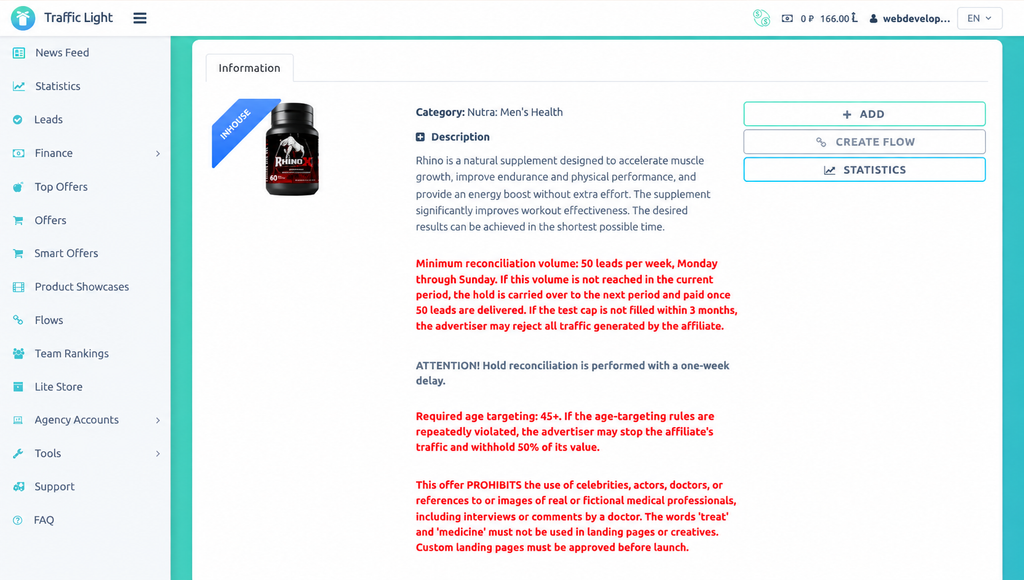
If the phone numbers turn out to be invalid or people have entered fake information, the traffic will not be accepted and no payout will be credited.
CPS (Cost Per Sale) + RevShare
CPS (Cost Per Sale) is a model in which the webmaster receives a fixed payment for a product purchased by the user. It is found in affiliate programs that sell directly through the website and is suitable for those who know how to drive warm traffic. Under the similar RevShare (Revenue Share) model, the webmaster receives a percentage of the customer’s spending, and the income may continue for years if the customer keeps buying. Hybrid combines two models, such as CPA and RevShare, allowing the webmaster to receive both a fixed rate and a percentage of the customer’s purchases. However, negotiating this arrangement with an affiliate program can be difficult, especially if the traffic is of average quality.
Current subverticals: from classic nutra to the GLP-1 trend
The choice of niche within nutra determines the target audience, the approaches permitted by ad networks, and the complexity of preparing the funnel. Each subvertical addresses a specific customer pain point and passes moderation checks differently.
Weight loss and detox
Weight loss offers attract the most audience interest before summer and the New Year holidays. In the traditional format, affiliates promote supplements, teas, and capsules that promise weight loss without dieting or exercise. Personal blogs on pre-landers and a native approach deliver the best results in this vertical.
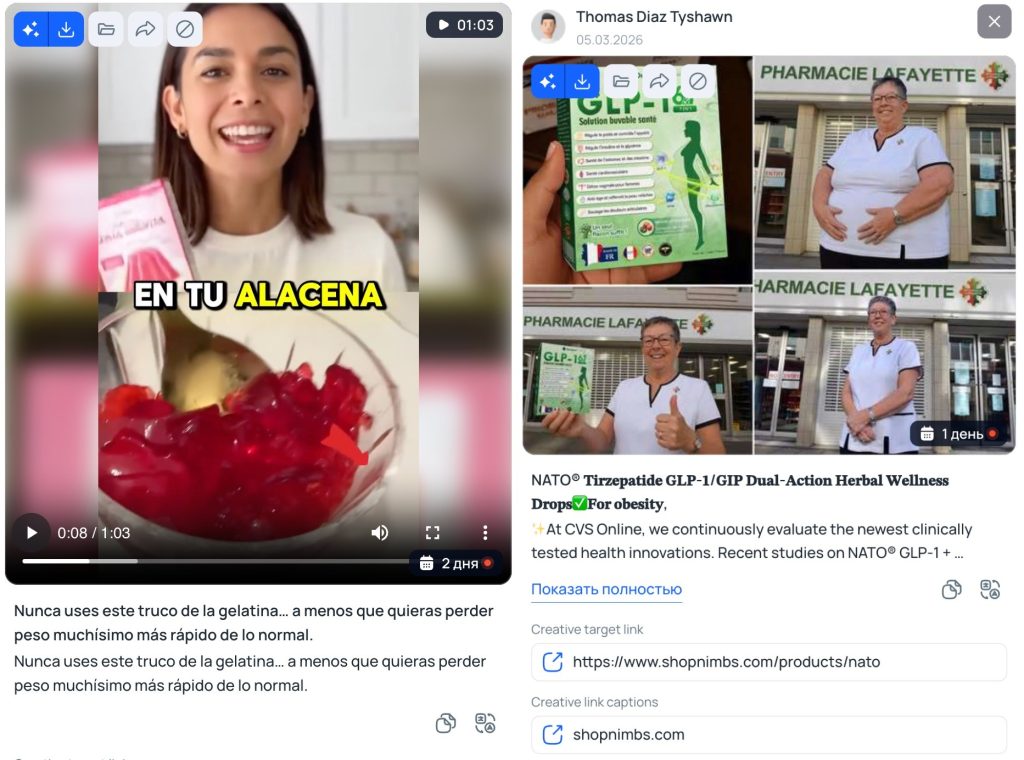
In Tier-1 countries, the emergence of GLP-1 drugs—semaglutide and injectable Ozempic alternatives—has completely transformed the weight loss market.

Original branded injections cost from $1000 per month, leading to the emergence of dozens of online clinics and telemedicine services in the US. They offer customers pharmacy-grade semaglutide alternatives by subscription for $300–500 per month.
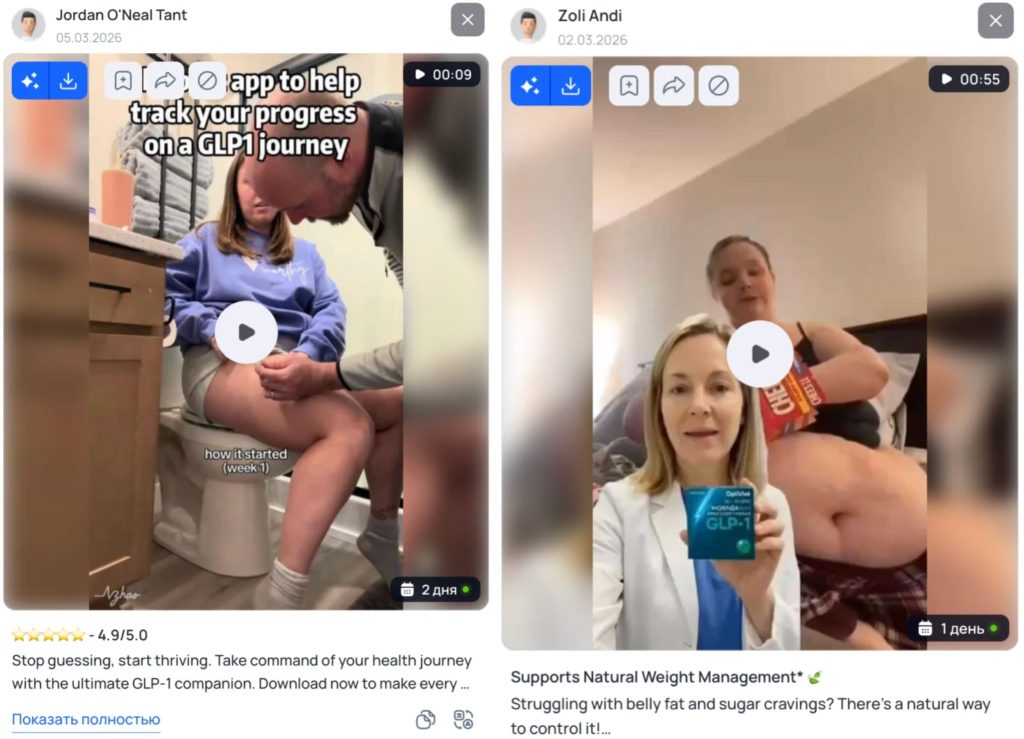
Media buyers run these offers through telemedicine funnels: the user visits the website, completes a quiz that calculates their body mass index, has a remote consultation with a doctor, and pays for a monthly subscription to the medication.
To advertise these clinics on Facebook and Google without getting banned, services obtain a LegitScript certificate, according to a Russian-language article on TraffHub—a document confirming the official licenses of the doctors and pharmacies involved.
As a result, the media buyer works with a fully compliant offer that passes moderation on major platforms and pays up to $250–300 for each paid subscription, according to the same Russian-language article.
Men’s Health (Adult-nutra)
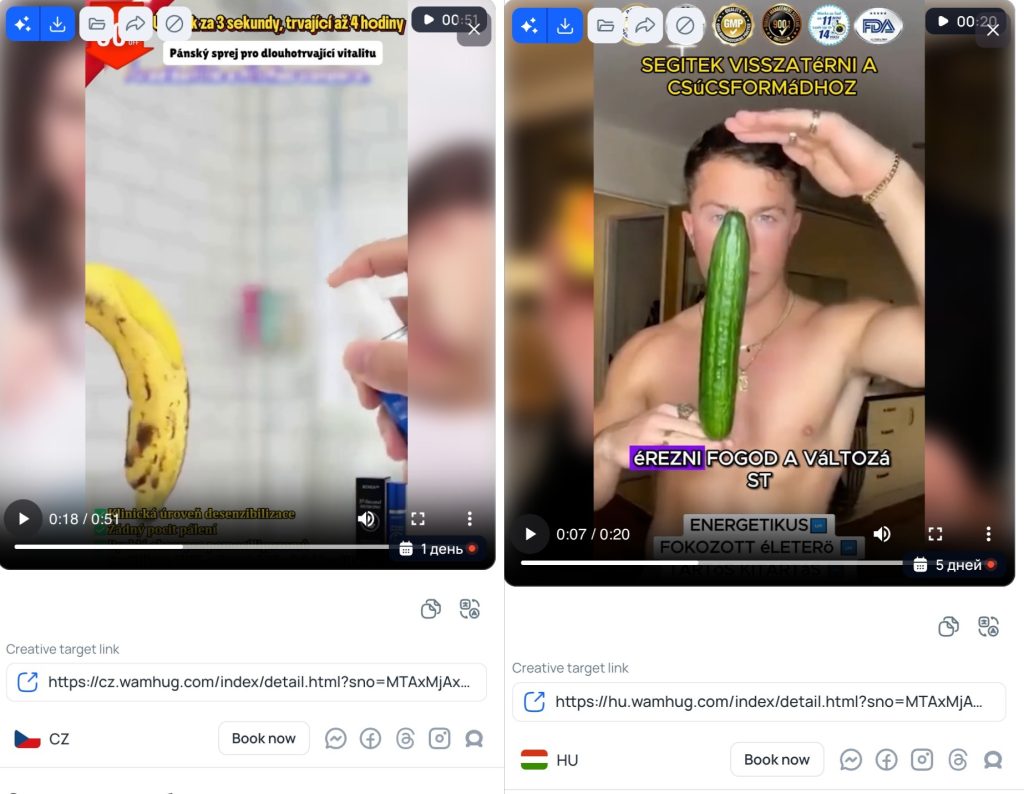
This category includes potency capsules, gels, aphrodisiacs, and remedies for prostatitis. The main audience is men aged 35 to 60. Ads for these offers attract plenty of clicks by addressing pressing audience pain points, but getting such creatives through moderation can be difficult.
Ad networks such as Facebook instantly ban accounts for explicit teasers, shock images, and direct descriptions of intimate problems.
To launch men’s health offers on Facebook Ads or Taboola, buyers remove any suggestive references to intimacy from their promotional materials and replace them with neutral copy about energy, stamina, and family relationships.
Health and Prevention
Products for joint pain, hypertension, diabetes, parasites, and vision protection are aimed at audiences over 45. Unlike weight loss products, they do not experience sharp seasonal declines because joint and blood pressure problems affect people year-round.
Buyers in this niche carefully review the materials before placing an order, so the authority of the source plays a key role. Pre-landers with a medical angle work best: text interviews with doctors, explanations of the causes of the condition, and professional recommendations from specialists.
Beauty Segment and Skincare
Anti-aging serums, wrinkle creams, pigmentation treatments, and hair care products are among the safest offers in nutra. Because they do not make aggressive medical claims, these campaigns are much easier to get approved by major ad networks.
The main target audience is women aged 25–55. Everyday UGC content—user-generated videos and photos without polished editing—product selections, and personal blogs demonstrating results work best for promoting cosmetics.
Nutra Traffic Sources in 2026
The choice of platform determines the requirements for creatives, the pre-lander format, and the test budget. Affiliate marketers use several main traffic sources for nutra: social networks, contextual advertising, native ad networks, and push notifications.
Facebook Ads
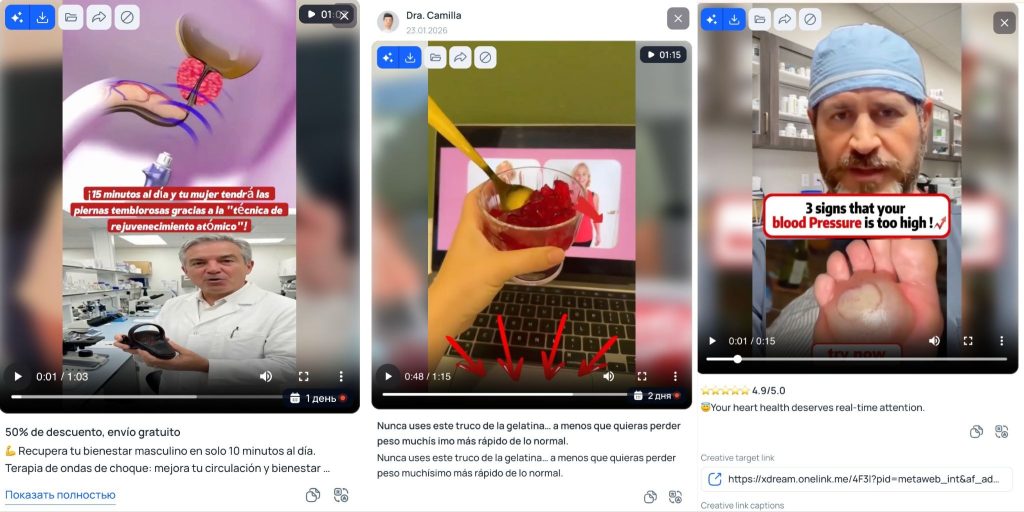
On Facebook, nutra is promoted through three main creative approaches: medical—AI-generated doctors, expert advice, and explanations of symptoms; everyday teasers—product photos, plant-based associations such as garlic or herbs, and folk-remedy recipes; and UGC content—authentic unboxing videos, personal reviews, and simple footage of the product being applied.
When working with this source, you constantly have to deal with moderation. The platform bans accounts for medical claims, close-ups of problem areas, and direct references to diseases.
Because of this, gray nutra offers are launched exclusively through cloaking, which replaces the target landing page with a white page for moderators. To keep campaigns running continuously, affiliates need a steady supply of resources: antidetect browsers, proxies, farmed accounts, and payment cards.
Google Ads
Launching nutra through Google Ads is more expensive and technically more complex than through Facebook. Moderation is stricter and auction costs are higher, but search traffic delivers the highest order confirmation rate.
Users actively search for solutions to specific problems—for example, by entering queries about joint treatment or ways to lower blood pressure—and are already inclined to make a purchase.
Without cloaking, the platform only permits white categories such as skincare and legal medical services.
When running classic supplements and gray offers, affiliates configure cloaking for both search and the Google Display Network, hiding the target pre-lander from moderators and Google bots.
Native Advertising (Taboola, Outbrain, MGID, AdProfex)
In native ad networks, ads appear as recommended content in “Read also” sections on news portals and major websites. The user clicks the teaser and lands on a pre-lander containing an expert article, a doctor interview, or a personal blog.
Because users reach the order form only after reading the material, they already know the product’s terms and price. As a result, the call center receives hot leads and achieves a higher approval rate than with standard teaser ads.
Launch budgets depend on the platform. In networks such as MGID or AdProfex, you can run initial tests with a deposit starting at $50–100. Entering large platforms such as Taboola or Outbrain with only a few hundred dollars is pointless because of the expensive auctions—the budget will not be enough to collect objective data and build a working funnel. Properly testing hypotheses and launching on these networks requires a budget starting at $1,000–2,000.
Push Notifications and In-Page Push
Push networks send pop-up messages to users who have allowed notifications while visiting various websites. Moderation on these networks is more lenient, allowing you to use clickbait headlines and eye-catching teasers without risking an account ban.
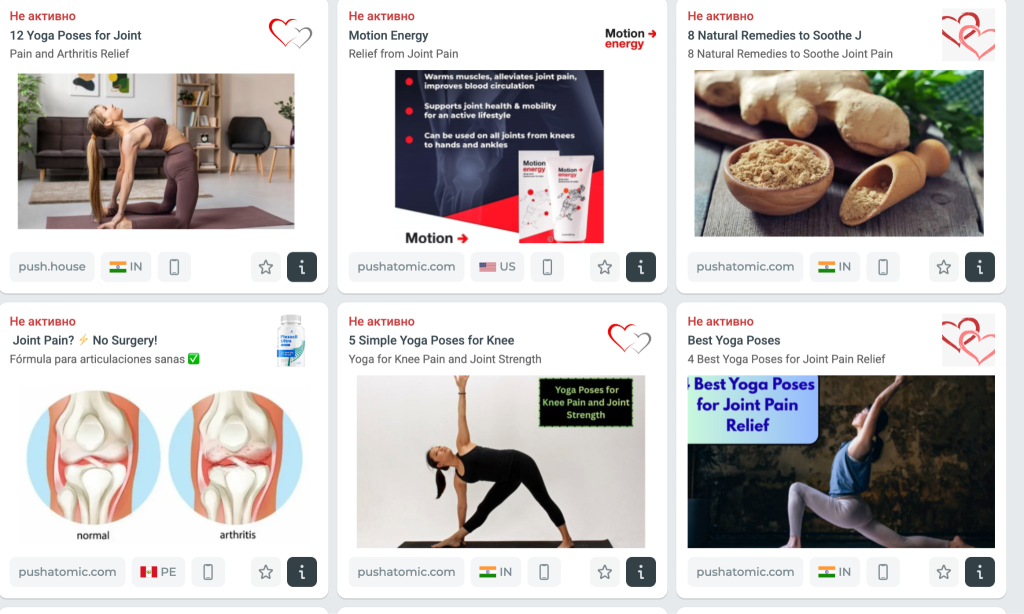
For audiences using Apple devices, affiliates use In-Page Push—ad banners loaded into the page code by a script while the page is being viewed.
Push ads do not offer interest-based targeting, so campaigns are optimized through a tracker: non-performing sources are added to blacklists (BlackList), while converting placements are moved to whitelists (WhiteList) for separate scaling.
Teaser Networks
A classic source for nutra that traditionally performs well with older audiences aged 40 and above.
Teaser platforms bring together news portals, women’s websites, and regional media whose users are accustomed to reading articles about health, household remedies, and medical advice.
Ads consist of an intriguing image and a clickbait headline. Creative approaches include folk medicine, photos of familiar products such as baking soda, herbal mixtures, or garlic, and recommendations from doctors.
After clicking the teaser, the user lands on a pre-lander designed as a news article or an expert interview. It describes symptoms, offers advice, and directs the user to the order form.
Moderation in teaser networks is easier than in Facebook Ads or Google Ads, but stricter than in push networks. Moderators generally reject extremely shocking or trashy creatives, but everyday approaches and standard medical pre-landers are usually accepted without cloaking.
You do not need a large budget to start with teaser networks. On platforms such as LuckyAds, Kadam, or Oblivki, you can run initial tests and collect source data with a deposit of $100–200.
Most teaser networks do not offer interest-based targeting: campaigns can only be configured by GEO, device, operating system, and display time. As a result, optimization relies entirely on using a tracker to filter out non-converting sources and build blacklists.
Bundle Analysis Before Launching Tests
An experienced media buyer evaluates the potential of a campaign setup before launching the first campaign. This helps prevent mistakes, preserve the budget, and filter out obviously weak offers.
Offer and Creative Checklist
Before launching traffic, it is important to evaluate the product itself and how it is presented to the audience:
- Clarity of value. The offer’s benefit should be obvious. If you cannot clearly explain in two sentences why someone needs the product, the customer certainly will not understand it. A strong offer always has a clear message, such as: “a plant-based joint complex that relieves inflammation and pain in a single course.”
- Product form factor. The product’s format should match the audience’s expectations for a particular problem. For knee pain, people are more likely to choose topical creams and gels, while capsules are more likely to be chosen for cleansing blood vessels or lowering blood pressure.
Sometimes an unusual format helps the product stand out. For example, a potency offer may be presented as epimedium paste marketed as natural honey—the Lemon AD team had a successful case involving this approach, as described in a Russian-language article on TraffHub. Buyers perceive such a product as a rare organic remedy, which helps the funnel convert well.
Funnel storyline consistency
The creative, pre-lander, and landing page should all follow the same logic. If the elements of the funnel are inconsistent, users will leave the page before they even complete the form.
For example, the creative features a home remedy using garlic to treat parasites. The user clicks the ad to read a specific tip but lands on a pre-lander containing a doctor interview and an offer to buy capsules.
The user does not find what they clicked for and immediately closes the website. Even if someone leaves their phone number out of curiosity, they will refuse to buy during the call with the call center operator when they are offered a paid course of pills instead of a folk remedy.e. And even if someone leaves their number out of curiosity, during the call with the call center operator, they’ll refuse to buy when instead of a folk remedy they’re offered a paid course of pills.
Technical setup and resources
Of course, complex infrastructure is not always necessary. When working with push, In-Page, or teaser networks, launching involves little more than uploading creatives and configuring the tracker. Additional resources become necessary when driving traffic from sources with strict moderation, primarily Facebook Ads and Google Ads.
To run gray nutra offers through these sources without immediate bans, a media buyer must build a complete setup consisting of an antidetect browser, proxies, cloaking, prepared accounts, and cards with trusted BINs.
Antidetect browsers
An antidetect browser replaces the device’s digital fingerprint, including Canvas, WebGL, cookies, and network parameters. This causes ad network algorithms to see each profile as a separate computer with a unique operating system. If one account is banned, the platform does not link it to the other accounts, allowing the media buyer to continue working with the remaining setup.
Mobile and residential proxies
Media buyers use mobile or residential proxies from the country where the account is being warmed up and launched. The IP addresses in these pools belong to real mobile operators and residential internet service providers, so the anti-fraud systems used by Facebook and Google regard them as highly trustworthy.
Accounts for Facebook Ads
A special account structure is required specifically for Facebook Ads, where moderation regularly bans ad accounts. Running ads from ordinary, inexpensive autoregs is pointless—they are immediately sent to a checkpoint after the campaign is created.
For stable operations, media buyers assemble setups around one trusted, well-warmed account with completed ZRD and connect a batch of autoregs or farmed profiles to it. They use the king account to create a Fan Page, attach payment methods, and manage ads, retaining access to the campaign even if the personal autoreg accounts are blocked.
Payment Cards
Specialized virtual card services are used to pay for traffic. High-quality payment services provide cards with reliable BINs that can be linked to Facebook and Google without issues and do not trigger bans for suspicious payments (Risk Payment).
Cloaking and Trackers
Cloaking works as follows: the system filters traffic and protects the pre-lander from ad network moderators. It can be configured through standalone services such as HideClick or directly inside the Keitaro tracker.
The system checks each visit by IP address, User-Agent, and provider. Bots and moderators see a completely white website, while target users are redirected to the pre-lander with a bridge page and order form.
Choosing GEO: specifics of Tier-1, Tier-2, and Tier-3
The choice of country for a nutra campaign determines the payment model, promotional format, and starting budget. Audiences in countries with different income levels respond differently to supplement advertising and require the funnel to be adapted to the region’s mentality.
Regional Breakdown
The market is divided into three groups of countries, each with different buyer habits and lead-processing rules:
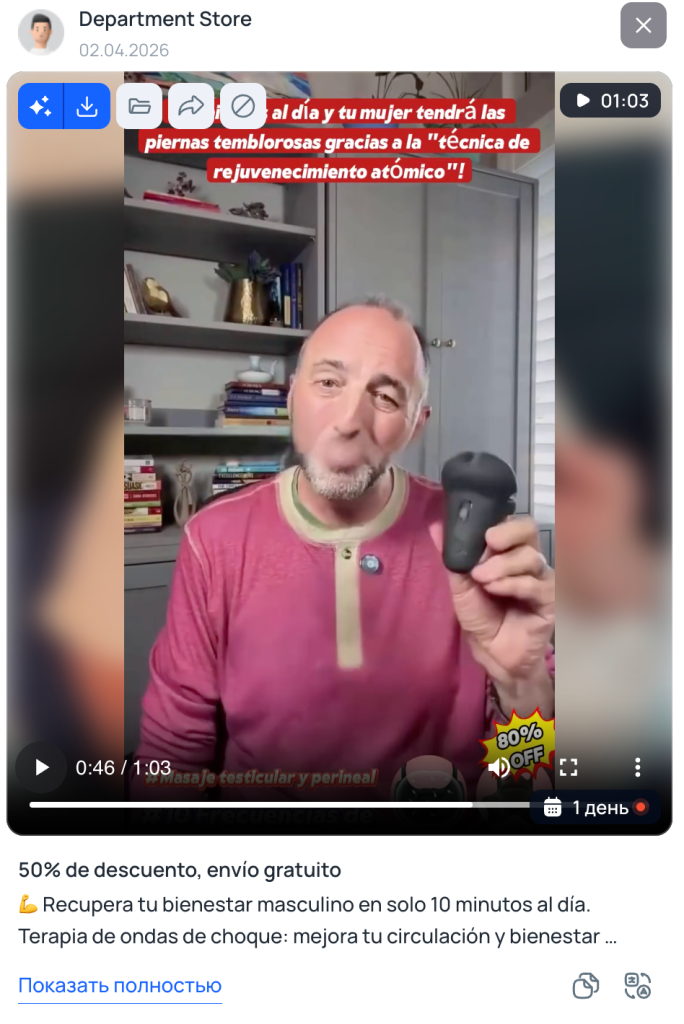
Tier-1 (USA, Western Europe). Auctions are expensive, and audiences are accustomed to verifying information. Direct teasers with shock content do not work, while ad network moderation immediately bans accounts for exaggerated promises of results.
For European audiences, media buyers use native presells: long articles with a detailed breakdown of the problem, expert opinions, and blocks of social proof.
Entering this market with a small budget is pointless. Because of the high CPC, initial tests of several approaches require $1,000–2,000.
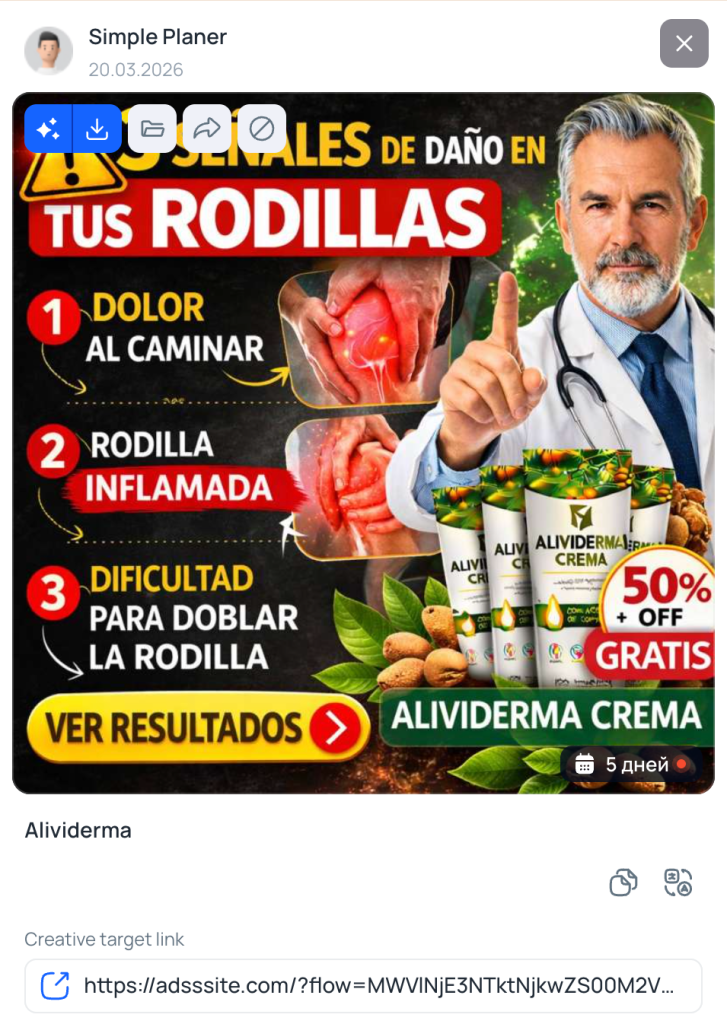
Tier-2 and Tier-3 (Latin America). In Mexico, Colombia, and Peru, audiences respond actively to emotional messaging. Personal stories, clear results from using the product, and everyday teasers featuring familiar products such as herbs, roots, or garlic work best on pre-landers and in creatives.

Source: Tyver.io
This region has many cash-on-delivery offers because people are not accustomed to entering their card details on unfamiliar websites.
Tier-2 and Tier-3 (Asia, CIS, and Africa). Cash-on-delivery offers and simple landing-page order forms that require only a name and phone number also perform well in these regions. Users do not need complex, multi-step warm-up funnels. Straightforward everyday approaches that show a problem and a clear solution
At the same time, call center performance is crucial: if an operator does not call a lead back within the first 10–15 minutes, the approval rate drops dramatically.
| “Beginners and solo buyers with small budgets are better off starting with Tier-3 or LatAm. Clicks are cheap, the audience is easy to understand, and lead prices are low. These GEOs allow you to practice the mechanics and learn how to work leads effectively. Entering Tier-1 without experience and a decent budget is risky—the auction is overheated, and your deposit will be gone before you collect enough data for analysis,” said Nikita, owner of Drop Team, in a Russian-language video on YouTube. |
Cultural nuances and GEO adaptation
Before launching an ad campaign, you must study the cultural characteristics of the GEO you plan to target. Reading local media and popular news websites is helpful, especially if you intend to use well-known public figures in your approach.
It is important to ensure that the chosen doctor, TV host, or celebrity is genuinely well-known and trusted in that country and is not associated with scandals. You should also research which topics are currently being discussed in the regional press, what everyday problems concern local residents, and which specific expressions are used in the target country.
- Characters in creatives and on pages. Using generic European faces from stock photos in ads targeting Thailand, Peru, or Nigeria lowers CTR. Users immediately recognize the people as stock models and scroll past. Creatives and testimonials should feature people who look local.
- Local currency. Prices on pre-landers and landing pages must be displayed in the local currency. Listing prices in dollars or euros reduces trust in Tier-2/3 regions and leads to fewer applications.
- Color scheme and symbols. In Asian countries, white is associated with hospitals and mourning, so it is balanced with neutral tones. Acidic and toxic-looking colors are also avoided in nutra offers because buyers perceive them as dangerous chemicals rather than herbal remedies.
Common mistakes beginners make when running nutra campaigns
Beginners in affiliate marketing often burn through their test budgets not because of poor creatives or strict moderation, but because of simple mistakes in funnel preparation and financial management.
Burning the budget without considering hold
Affiliate networks place payments for confirmed leads on hold, freezing the money for 7–14 days while they verify traffic quality. If you spend all your working capital during the first few days of testing, you will have no funds left to buy new accounts or proxies or to pay for impressions. As a result, the campaign stops, and the buyer has to wait for the affiliate program’s payouts.
Copying prelanders from spy services without cleaning
Downloading a ready-made pre-lander from a spy tool and immediately launching it in a campaign is a direct route to losing traffic. Other people’s pre-landers often contain third-party pixels, broken links, order forms with scripts from other affiliate programs, or poor translations produced by online translators.
Always clean the page code before launching: remove third-party scripts, check that test leads are submitted correctly in the tracker, and proofread the text for errors. If you launch an uncleaned pre-lander, some leads may go to the previous owner of the funnel or be lost because of a broken order form.
Ignoring recommendations from the affiliate manager
Your personal affiliate manager can see current analytics for all buyers, including which GEOs have overloaded call centers that cannot process leads in time and which offers have the highest approval rates.
Choosing an offer from the catalog based solely on a high payout without consulting the manager is a mistake. The manager can recommend working funnels for your budget, provide proven pre-landers, and warn you if the selected offer is experiencing problems with call center performance.
Trying to run traffic to dozens of offers at once
Testing 5–10 different offers with a modest budget of $200–300 is pointless. Spending $20–30 on each product does not provide enough data for analysis: with so few clicks, the outcome is determined by chance.
Testing a single offer requires a budget equal to 2–3 CPA payouts. It is far more effective to focus on one product, test 2–3 approaches with pre-landers, and refine the creatives than to switch to new offers after the first few runs.
Sending traffic outside call center working hours
In nutra, the approval rate often depends directly on how quickly leads are called. If you run ads around the clock without accounting for the GEO’s time zone, nighttime leads will wait 8–10 hours for a call until the operators’ shift begins.
By the time the call center finally reaches the customer, the person may have changed their mind or forgotten about the application. Before launching a campaign, ask your affiliate manager for the call center’s working hours and schedule your ads to match the operators’ shifts.
Case study: running potency offers in Bangladesh via Facebook Ads with 111% ROI
Let’s look at a specific media buyer case published in Russian: the media buyer adapted an existing funnel for adult offers in South Asia and tested the Oxapam BD offer in Bangladesh through Facebook Ads.
Key Campaign Metrics
- Offer: Oxapam BD
- Affiliate Network: Shakes.pro
- Traffic Source: Facebook Ads
- GEO: Bangladesh
- Run Period: 01.01.2025 – 31.01.2025
- Total Leads: 8,924
- Approved Leads: 1,175
- Spend: $3,060
- Revenue: $6,426
- Profit: $3,366
- ROI: 111%
GEO Selection and Landing Page Approaches
Bangladesh was chosen based on previous success in India within the men’s health niche. Audiences in South Asian countries respond well to adult and potency offers presented through aggressive creatives. At the same time, clicks are cheaper in Bangladesh and moderation is easier than in Tier-1 regions.
For the launch, the media buyer used promotional materials that had previously worked in India and adapted them to the local language and currency:
- A product landing page with a direct description of the product.
- A medical pre-lander presented as a doctor’s recommendation.
- A news-style article with a provocative headline.

Quiz funnels were tested later in the campaign, but they produced lower conversion rates. The direct product landing page achieved the best CR: the audience proceeded to the order more quickly without additional warming. Most of the traffic was sent to this page.
Creatives and Scaling
The ads focused on video creatives with an adult angle. To pass Facebook moderation, the videos were structured as follows: the first 1–2 seconds featured rapid scene changes, followed by the main advertising message, while the end of the file contained 10–15 minutes of neutral background footage showing nature or abstract imagery.

Ad CTR remained at 15–20% throughout the campaign, with some variants reaching 25%. Because the creatives used aggressive approaches, the videos had an average lifespan of 2 to 5 days. As a result, 3–5 new video variants were added to the campaign every 2–3 days.
The launch followed a 1-5-1 structure: one campaign, five ads, and one video per ad. Non-converting ads were disabled within the first day, while profitable ads were kept running. The funnel was scaled by copying it and launching the same campaigns from new accounts.
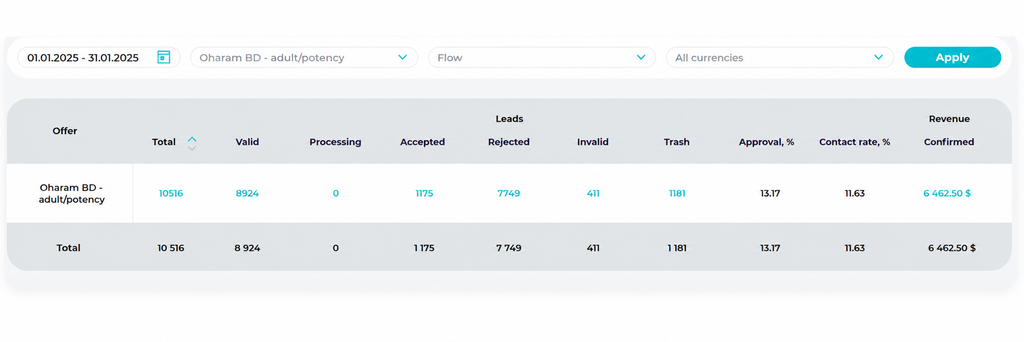
The funnel’s average approval rate was 10–11%. This case shows that when transferring funnels to neighboring GEOs with similar audience characteristics, it is not always necessary to build the funnel from scratch. Adapting a proven approach and regularly updating the creatives can be enough.
Case Study: Joint Offer in Lebanon via Facebook Ads with 127% ROI
Let’s look at a Russian-language media buyer case study involving a less common GEO: the media buyer ran the Flekosteel joint offer in Lebanon and achieved a 127.6% ROI.
Key Campaign Metrics
- Offer: Flekosteel (joints)
- Affiliate Network: AdCombo
- Traffic Source: Facebook Ads
- GEO: Lebanon
- Run Period: 03.02 – 18.02
- Spend: $2,122
- Revenue: $4,830
- Profit: $2,707
- ROI: 127.6%
GEO Selection and Funnel Approach
Lebanon was selected because of low competition in the auction and the specific characteristics of the MENA region. The Flekosteel offer had been on the market for about three years, so the local audience had developed strong trust in the brand: the product was sold in local shops and advertised on television.
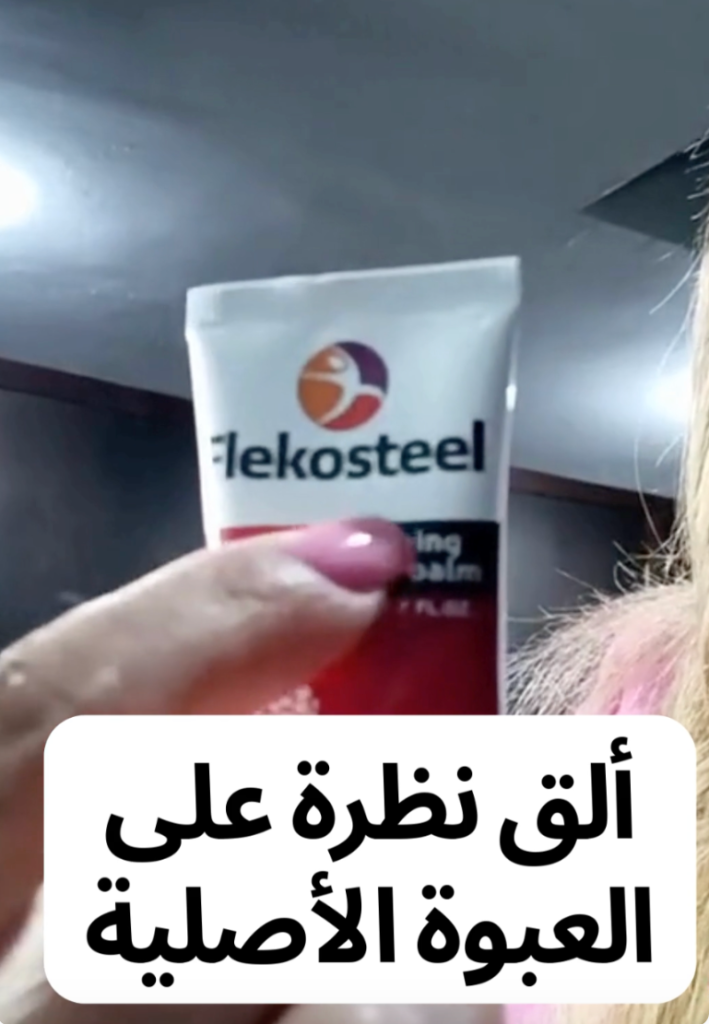
The funnel did not need to prove the product’s effectiveness or explain its ingredients. Instead, it focused on the product’s authenticity. The campaign emphasized that local stores sold Chinese counterfeits and that the original product could only be ordered through the form on the website.
Warning blocks about dishonest local sellers and a call to purchase the genuine product were added to the standard product landing page.
Creatives and Scaling
The ads used teasers focused on counterfeit products. The ad copy warned about fake products in local pharmacies and encouraged users to order the original product from the website.
The campaign was launched from three accounts using a 1-1-3 structure: one campaign, one ad set, and three different creatives for testing. Targeting was set to women aged 35 and over, with automatic placements and a daily budget of $100 per campaign.
The initial tests produced a 98% ROI, after which the funnel was scaled. To capture more traffic, daily budgets on existing campaigns were gradually increased and new accounts were added.
CPL did not increase as the budgets were raised gradually, allowing the media buyer to maintain performance and run the funnel for 14 days.
Conclusion
In 2026, the conditions for working with nutra depend on the chosen traffic source. Launching through Facebook Ads and Google Ads requires a budget for farmed accounts, proxies, and cloaking—or a switch to white offers within the GLP-1 trend.
However, the white auction means competing with major brands and online clinics, which also requires substantial budgets.
Alternative sources such as push and teaser networks allow you to start with a few hundred dollars, but they have a downside: high volumes of bot traffic and intense competition for placements.
Nevertheless, nutra still offers the potential for strong earnings, in some cases comparable to the iGaming niche. So, if you have never worked with this vertical, we strongly recommend running at least a few tests.

Comments (0)