


Push networks have held their place as one of the most accessible sources in affiliate marketing for many years. Media buyers are drawn to their technical simplicity and predictability: there’s no need to fight daily account bans, moderation easily approves creatives with aggressive approaches, before-and-after formats, or bonus promises.
However, despite all the advantages of this source, working with push traffic has become more challenging over the past two years. Due to Google updates and the built-in unsubscribe button in Chrome, subscriber bases have dropped, and many platforms have seen a rise in bot traffic. If you run traffic without a tracker and don’t blacklist bot-heavy sources, you won’t be able to turn a profit.
In this article, we break down the specifics of working with push traffic in 2026, highlight the verticals that still work, and explain how to properly set up and optimize your campaigns.
How Push Traffic Used to Work and What’s Changed
A few years ago, publishers built enormous subscriber databases by any means available. They installed subscription scripts on torrent sites and illegal streaming platforms or sent cheap clickunder traffic to dedicated landing pages.
Users could not access the site until they clicked “Allow,” supposedly to confirm their age or download a file. Many clicked without thinking, were added to a database, and then received dozens of notifications every day—often without even knowing how to unsubscribe.
Over the past two years, two Google updates have changed the situation:
- Chrome’s unsubscribe button. The browser added an option to unsubscribe directly from the push notification pop-up. Users no longer need to search through site settings, so inactive subscribers now leave databases much faster.
- Google Spam Update. The search engine began penalizing domains that use hidden subscription forms or send alarming notifications. Both publisher websites and push network domains have been affected and removed from search results.
| “Google has become much more aggressive in fighting spam and flagging domains that send alarming or misleading notifications. The browser automatically unsubscribes users if they do not click push notifications for several days, or it removes subscribers in bulk from publisher databases built through aggressive landing pages,” said Pavel Fedorov, account manager at RollerAds. |
As a result of these measures, traffic volumes have declined, while the share of bots on unverified platforms has increased.
| “By our estimates, around 80% of push network traffic now comes from bots, while only 20% comes from real users. AI-powered bots have become more sophisticated: they can imitate real user behavior and even generate conversions, causing affiliates to burn through their budgets,” said Slinck, author of the Telegram channel Skhematozy and owner of the slinck.partners affiliate network. |
Even so, the format remains profitable for buyers who know how to clean up placements and filter out bot traffic.
| “The format is still alive, but volumes have fallen and competition has increased. Building subscriber databases through pre-landers and scaling campaigns have become more difficult. Even so, a solo buyer can still run campaigns spending several thousand dollars a day at a solid ROI. The key is understanding how source filtering works within the networks,” said Mikhail Svinarev, co-owner of the defo.cc forum. |
How Push Notifications Work
Affiliate marketers use three types of push notifications: classic push, In-Page Push, and mobile push. Each works differently and has its own device requirements.
The ad itself consists of an icon, image, headline, text, and a link to the offer. The key difference between the formats is where the message appears and which devices support it.
Classic Push
Classic push notifications appear on desktops and Android devices. To start receiving them, a user must visit a website and click “Allow” in a pop-up window. Once subscribed, the user continues to receive notifications even when the browser is closed.

The main drawback is that this format does not work on iOS because Safari blocks web push notifications.
In-Page Push
This format was created to reach Apple users. It looks like a system notification but is actually a banner that appears over a webpage while the user is viewing it.
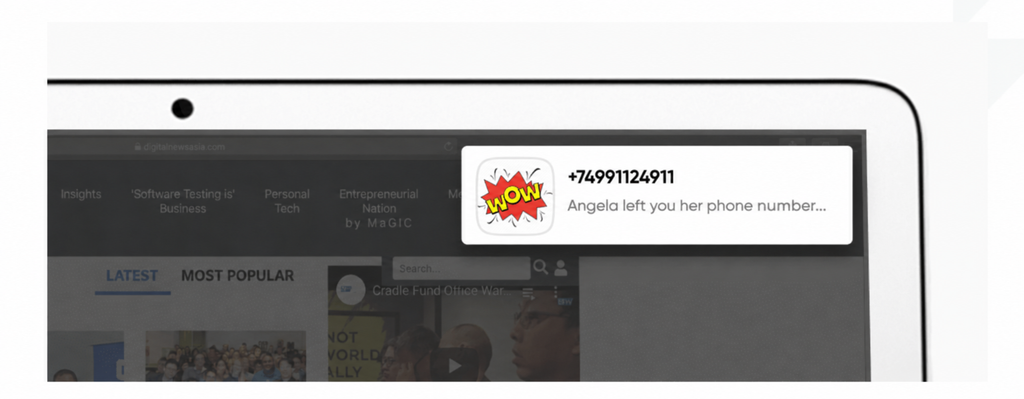
Users do not need to confirm a subscription, so these ads can appear on iPhones and other devices.
Mobile Push
These messages are sent by an app installed on the user’s phone—such as a PWA or WebView app—rather than by the browser.
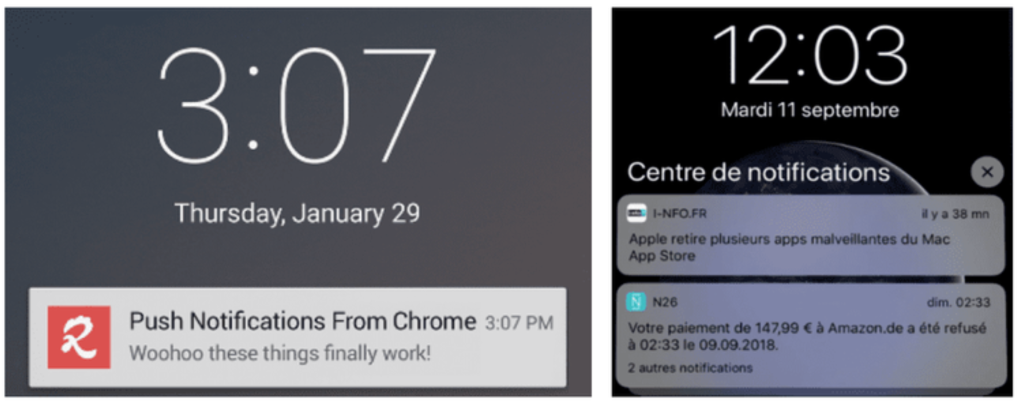
In gambling and betting, mobile push is used to bring players back. Once the app is installed, users receive reminders about bonuses, free spins, or matches designed to encourage repeat deposits.
Advantages of Push Traffic
The main advantage of push traffic is that networks rarely ban advertiser accounts. If a moderator rejects a creative, you can simply change the image or headline and resubmit it. There are no lost ad accounts or wasted setup costs.
Push networks offer several other advantages:
- Fast launch with no extra setup. You do not need antidetect browsers or farmed accounts. Campaigns are configured directly in the network dashboard: upload the creative, set the targeting, and add the tracking link.
- Lenient moderation. Unlike Facebook Ads or search advertising, push networks generally accept aggressive teasers, bonus offers, before-and-after angles, and 18+ images.
- Low testing costs. Clicks in Tier-2 and Tier-3 countries cost very little, allowing buyers to test dozens of creatives and pre-landers on a small budget.
- Simple funnel. There is no need to rent PWA or WebView apps, integrate SDKs, or configure cloaking. The funnel has three simple stages: push notification, pre-lander, and offer.
- Targeting by subscription age. Some networks allow advertisers to target only recent subscribers. Users from fresh databases—up to three days after subscribing—have not yet been overwhelmed with ads and are therefore more likely to click through to the offer.
Which Verticals Work with Push Traffic
Push traffic is not a good fit for mainstream e-commerce offers, banking products, or B2B services. Push networks do not provide conventional targeting by age, gender, or interests, so ads are shown across the entire subscriber database. As a result, offers with complex funnels tend to attract irrelevant clicks. Push works best for mass-market offers with a simple conversion action.
Gambling and Betting
Creatives typically promote bonuses, free spins for signing up, and upcoming sporting events. In-Page Push and mobile push notifications tend to deliver the best conversion rates.
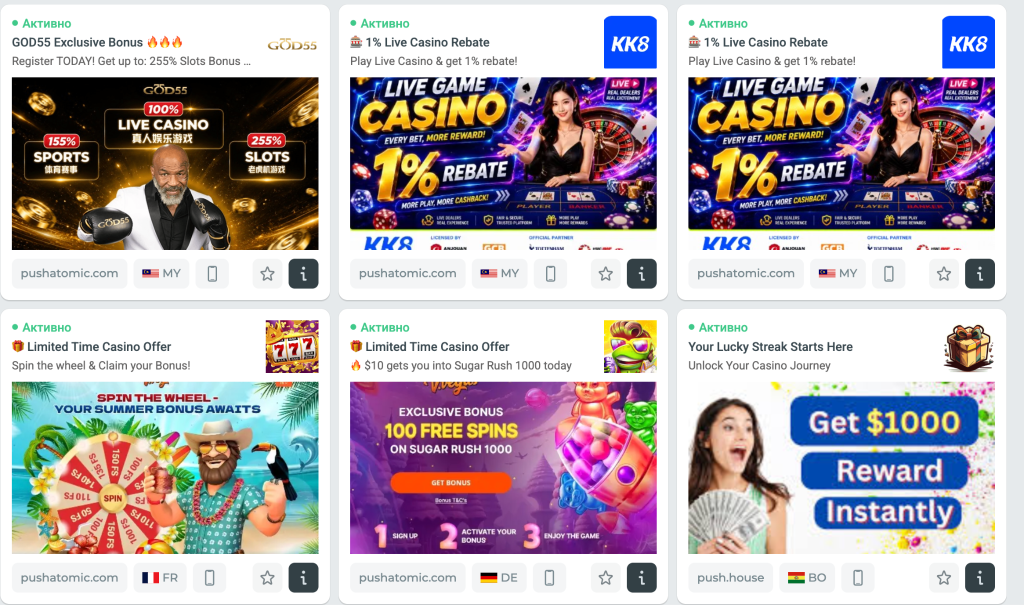
Classic web push campaigns should always use a pre-lander, such as a wheel of fortune or an interactive mini-game. Without one, users land directly on the registration form and leave the site, resulting in no deposits from the funnel.
Nutra
Push networks are often used to promote products for weight loss, joint health, male enhancement, and parasite cleansing. Their main advantage for nutra is lenient moderation.
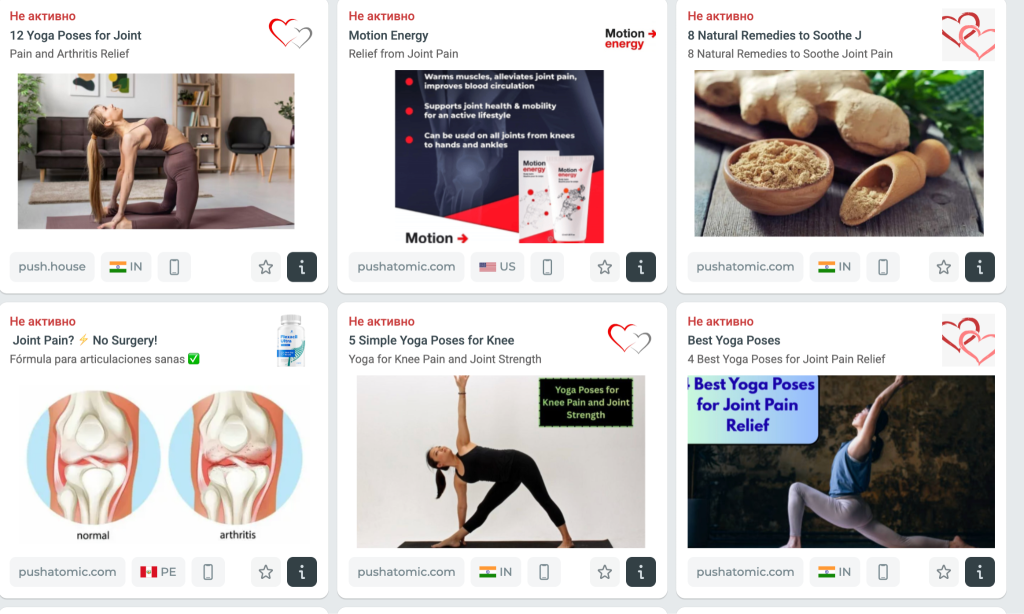
Unlike Facebook Ads or Google Ads, push networks generally accept teasers showing symptoms, before-and-after comparisons, and aggressive pre-landers built around doctors’ stories or news-style articles.
Dating
Ads are designed to resemble missed calls or messenger notifications. A woman’s photo appears as the icon, accompanied by copy such as “Anna sent you a photo” or “You have 1 new message.”
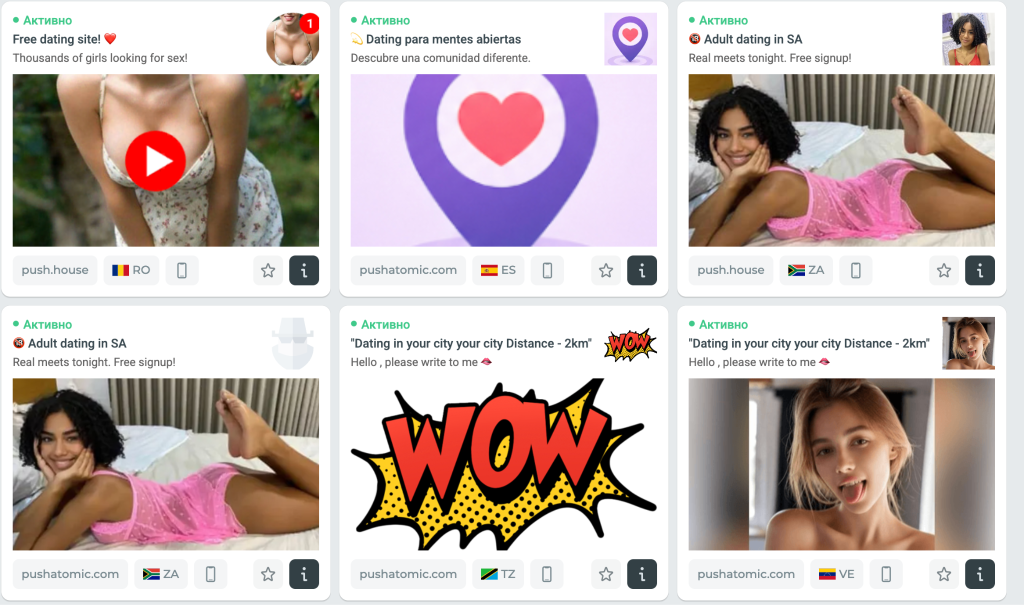
This approach works best on mobile devices through In-Page Push. Users are then sent to a pre-lander with a short questionnaire or directly to a registration form that requires only a username and email address.
Utilities
Push ads are designed to look like smartphone system notifications, using messages such as “Memory full,” “Virus detected,” or “Connection not secure.”
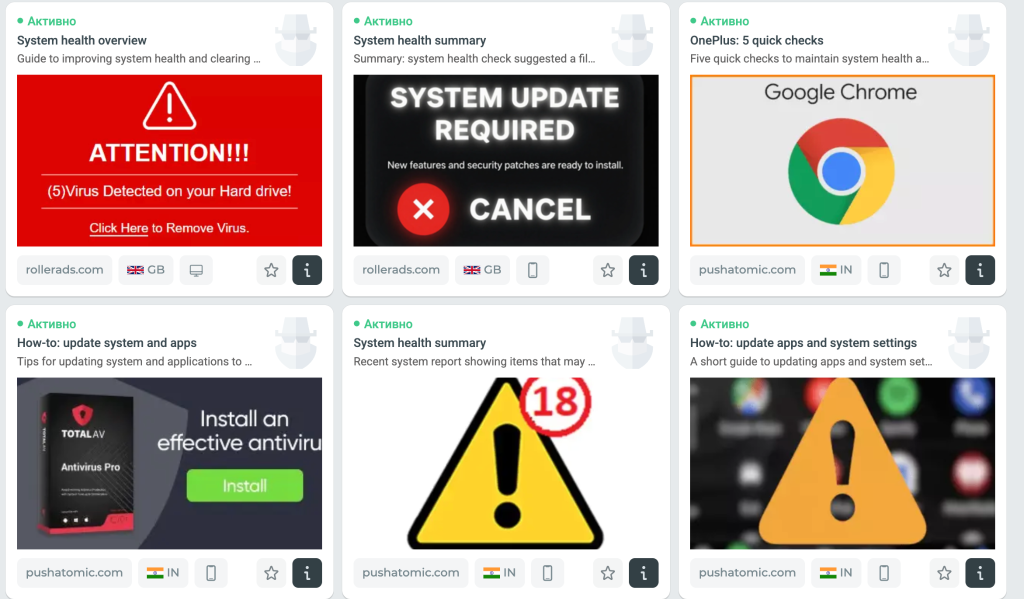
The user mistakes the ad for an operating system warning and opens a download page for a cleaner, performance booster, or antivirus app.
Sweepstakes
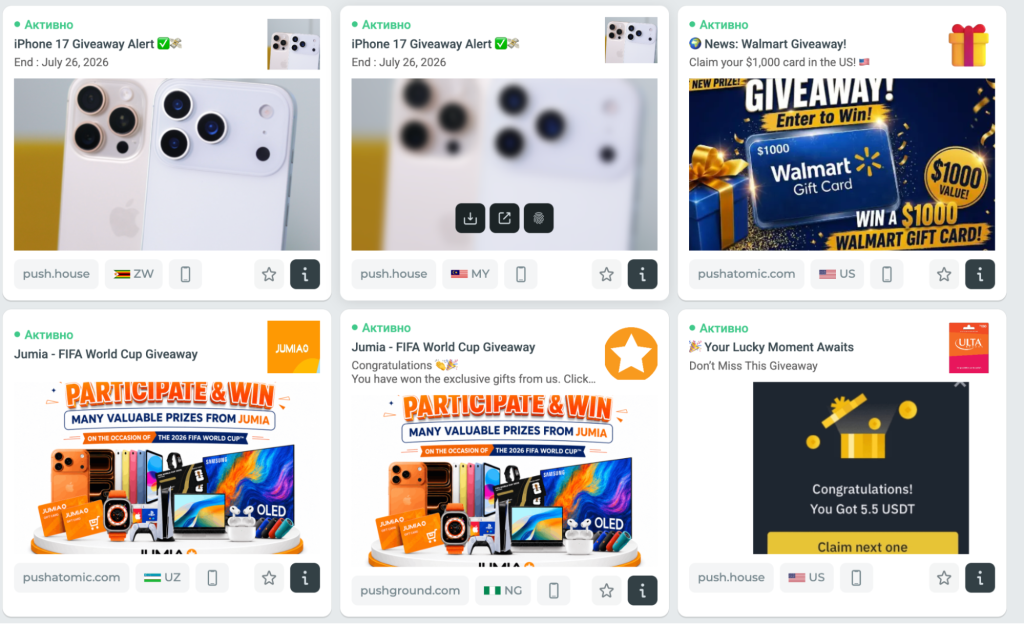
These campaigns promote giveaways for smartphones, electronics, or gift cards. The user clicks the notification, answers a few questions or spins a wheel on the pre-lander, and submits their contact details to enter the promotion.
Where to Buy Push Traffic
The right ad network depends on the vertical, the format of the promotional materials, and moderation requirements. Each platform offers different traffic volumes, optimization tools, and rules for gray-hat offers.
PropellerAds
PropellerAds is one of the largest networks on the market and has its own anti-fraud system. Campaign settings include automated optimization through Target CPA or SmartCPC. You set the desired cost per registration or deposit, and the algorithm adjusts bids and disables placements that spend money without converting.
Advantages:
- Large traffic volumes across all GEOs and granular targeting by operating system version, carrier, and subscription age;
- Audience segmentation by activity level—High, Medium, and Low—with fresh subscriptions delivering higher CTR at a higher price;
- Automated campaign optimization toward a target conversion cost.
Disadvantages:
- Strict moderation: 18+ content, aggressive nutra, and medical teasers that show symptoms are prohibited.
RichAds
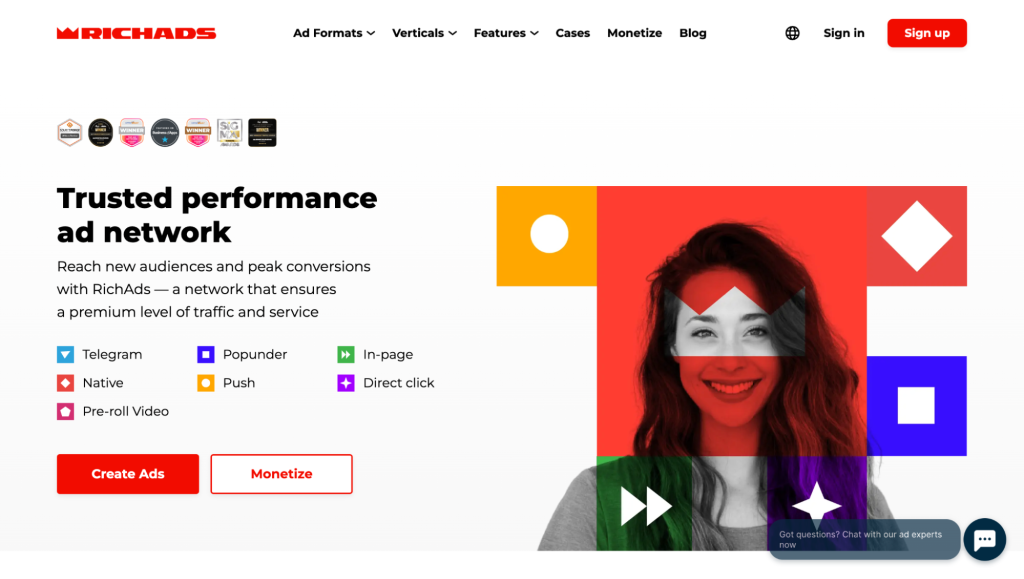
RichAds offers convenient source segmentation by quality: Premium, Standard, New, and Remnant. The Premium category includes only verified placements, allowing buyers to test a funnel on higher-converting traffic without wasting money on low-quality sites.nt). Only verified sites are included in the Premium category, allowing you to test your funnel on converting traffic right away without wasting budget on junk sites.
Advantages:
- Microbidding lets you adjust bids for individual Sub IDs without blacklisting the corresponding sources;
- Built-in automated rules and direct integration with Keitaro and Binom;
- The Premium category delivers stable conversions without unnecessary testing spend.
Disadvantages:
- Explicit 18+ content is prohibited; only mainstream dating without nudity is allowed.
Push.House
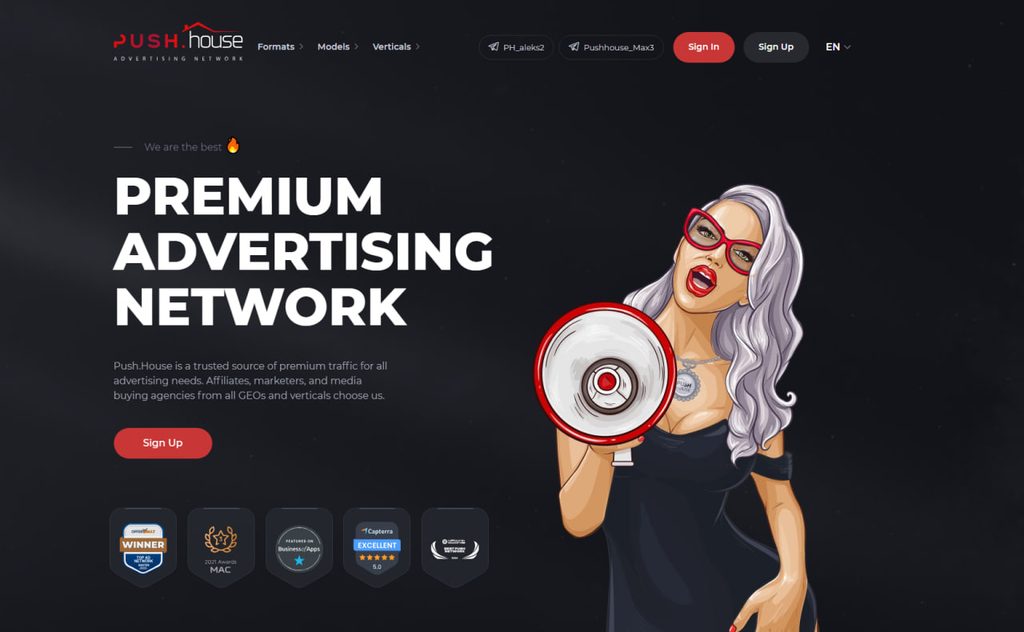
Push.House has a minimum deposit of $50 and lets advertisers buy traffic from both its own database and external partner networks, or feeds. It is suitable for gray-hat verticals because moderators do not reject campaigns solely for aggressive teasers or pre-landers.ble for gray verticals, as moderators do not block campaigns for aggressive teasers and pre-landers.
Advantages:
- Accessible entry point with a $50 minimum deposit and lenient review of gray-hat promotional materials;
- Separate subscriber databases for 18+ traffic;
- Detailed targeting by subscription age in days.
Disadvantages:
- External feeds may produce irrelevant clicks, so placements need to be filtered regularly using tracker blacklists.
EvaDav
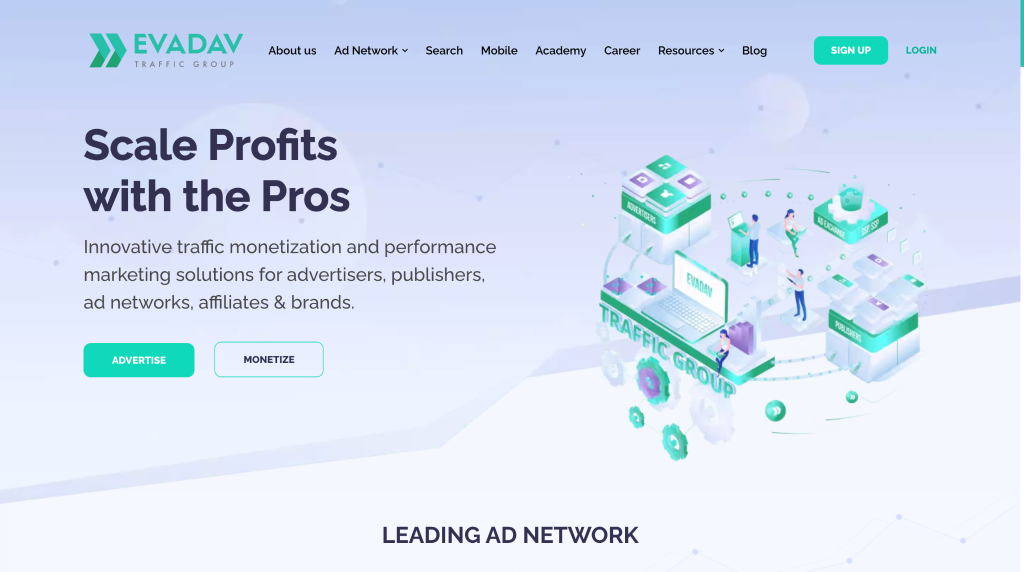
EvaDav is a multi-format platform with separate mainstream and 18+ traffic databases in its dashboard. It supports traffic from external feeds, CPC and CPM buying models, and automated campaign optimization.
Advantages:
- Clear separation between mainstream and adult traffic in campaign settings, built-in creative split testing, and microbidding support;
- Large audience volumes across LATAM, Asia, and Tier-3 countries.
Disadvantages:
- Because the platform buys traffic from external feeds, campaigns require regular blacklist maintenance through a tracker.
Galaksion
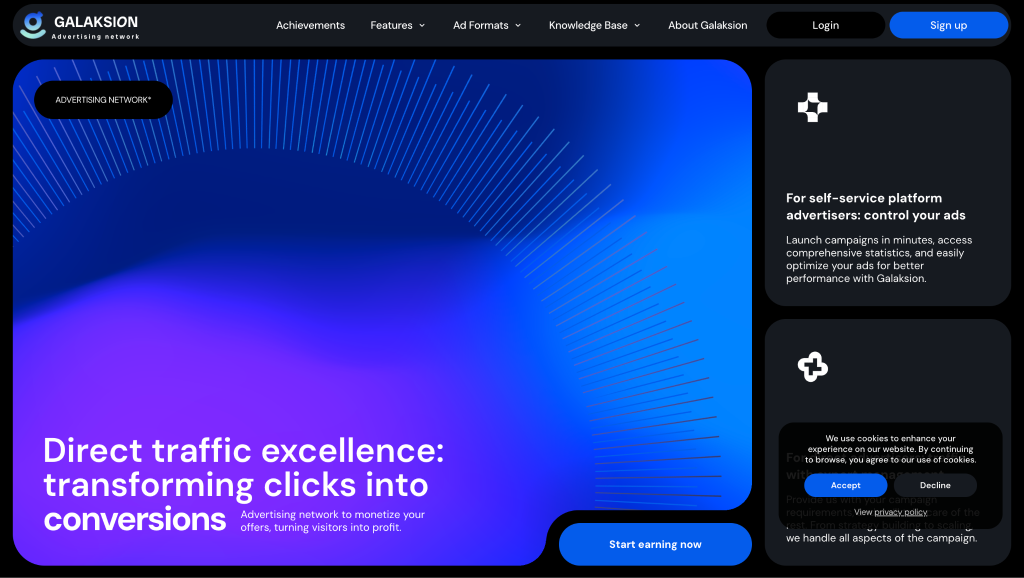
Galaksion collects push subscriptions directly from its own sites and does not resell traffic purchased from other networks. As a result, the platform has virtually no bot traffic and delivers stable conversions in iGaming, nutra, and utilities.bots on the platform, and the traffic delivers stable conversions in iGaming, nutra, and utilities.
Advantages:
- Clean traffic with no intermediaries or resellers;
- A CPA Goal bidding model and the option to request ready-made creative packs from a personal manager;
- A minimum deposit of $50.
Disadvantages:
- A complete ban on 18+ content and aggressive pre-landers;
- A smaller subscriber database than major networks such as PropellerAds.
TacoLoco
TacoLoco specializes in the 18+ segment, with a subscriber database collected from adult tube sites and other niche websites. The platform places few restrictions on promotional materials and offers fast moderation.
Advantages:
- Lenient moderation with no bans for explicit creatives and teasers;
- Lower click costs than mainstream networks;
- Fast campaign launches without lengthy reviews.
Disadvantages:
- No automated smart bidding. Unlike PropellerAds or RichAds, TacoLoco does not have an algorithm that automatically optimizes delivery toward a target conversion cost. Bids, microbids, and placement blacklists must be managed manually or through automated tracker rules.
| Network | Minimum deposit | Payment methods | Targeting options | Adult (18+) |
| PropellerAds | $100 | Cards, Wire, PayPal, Skrill, UnionPay, Pix, Crypto | GEO, OS, browsers, providers, connection type, audience activity, Target CPA | Prohibited |
| RichAds | $150 | Cards, Wire, Capitalist, Crypto, Paxum | GEO, devices, OS, providers, languages, microbidding, source categories | Prohibited (mainstream dating allowed) |
| Push.House | $50 | Capitalist, Crypto, cards, Payeer, WebMoney | GEO, OS, devices, subscription age, languages, providers, feed IDs | Allowed (separate 18+ databases available) |
| EvaDav | $100 | Cards, Wire, Capitalist, Crypto, Paxum, Skrill | GEO, OS, browsers, languages, devices, providers, subscription age | Allowed (separate databases) |
| Galaksion | $50 | Cards, Wire, Paxum, Capitalist | GEO, city, OS, browsers, devices, languages, impression limits, CPA Goal | Prohibited |
| TacoLoco | $100 | Cards, Capitalist, Paxum, Crypto, WebMoney | GEO, OS, devices, providers, browsers, languages | Allowed (own LosPollos base, tubes and adult sites) |
How to Test and Optimize Push Campaigns
Unlike Facebook Ads, where algorithms find the audience for you, push networks leave full control over budget allocation to the media buyer. If you launch without configuring a tracker and segmenting campaigns in advance, you will not get clear conversion data.
Use a Tracker and Configure Postbacks
Push traffic should not be sent directly through an affiliate program link. The network serves ads across thousands of websites, but without a tracker, you cannot see which placement generated conversions and which simply spent your budget without delivering results.
Before launch, connect the campaign to Keitaro or Binom. Add a source macro to the offer URL—for example, {zone_id} or {site_id}—depending on the network’s requirements.
Then configure postbacks from the affiliate program so the tracker displays conversions, cost per lead, and final ROI for each placement.
Segment Campaigns Before Launch
Traffic should be split across several separate campaigns. To obtain clean data and avoid overpaying during testing, separate the following parameters from the outset:
- Device type. Desktop and mobile traffic should always run separately. They have different click costs and CTRs, and users behave very differently on pre-landers.
- Subscription age. Networks segment subscriber databases by freshness. Recent subscriptions—up to 3–7 days old—deliver high CTR and convert well, but the traffic costs more. Older databases, starting at 30 days, are cheaper, but the audience is already saturated and converts poorly. For testing, it is better to target subscriptions no more than 14 days old.
- Different creative combinations. Upload 5–10 promotional variants with different icons, headlines, and creatives to attract attention and achieve a high CTR in the auction.
Optimize Campaigns and Build Blacklists
Once the campaign has generated its first clicks and enough data, you can begin analyzing performance in the tracker. The main objective is to remove non-converting placements and protect the budget.
- Build a blacklist. If a specific site spends the equivalent of 1.5–2 offer payouts—for example, $30–40 on a $20 payout—without producing a conversion, add its ID to the campaign blacklist. There is no reason to keep buying clicks from it.
- Build a whitelist. Move sources that consistently generate profit into a separate campaign with a higher bid. This allows you to capture the maximum possible traffic volume from them.
- Adjust bids with microbidding. If a placement generates conversions but the cost per lead is too high to be profitable, do not blacklist it immediately. Networks such as RichAds and EvaDav allow you to reduce the bid for a particular Sub ID by 20–30%. This lowers traffic costs and can make the source profitable without sacrificing conversions.
Creative Fatigue
Push creatives burn out within 2–4 days. Once the audience becomes familiar with a teaser and stops clicking it, the creative’s CTR falls. In push networks, a lower CTR automatically reduces the campaign’s position in the auction, eventually causing it to lose impressions.
To maintain traffic volume, check campaign statistics every day. Disable creatives with declining CTR and replace them immediately with fresh promotional materials featuring new icons, different headline angles, and new banners.
Case Studies
In-Page Push for Dating in India
A Russian-language case study examined a CPL dating smartlink campaign targeting India through Push.House’s In-Page Push format. The buyer targeted Android users in major cities, including Mumbai, Delhi, and Bangalore.
Three separate campaigns were launched for testing:
- A whitelist campaign delivered around 50% ROI and stable positive returns;
- A campaign with placement filtering generated most of the leads at approximately 42% ROI;
- An unfiltered campaign ended with a loss of 27% despite its high CTR, due to low-quality sites and a pre-lander that failed to convert.
To avoid filtering placements manually, the buyer configured automated rules in the network dashboard. If a site spent $0.1 without generating a lead, the algorithm automatically added it to the blacklist. Placements that converted were moved to a whitelist for separate scaling.
In-Page Push on Android performs well for CPL dating in Tier-3 markets, but profitability requires strict automated source filtering from the first few cents of spend.
Push Traffic for Antivirus Offers
Another Russian-language case study tested RollerAds’ CPA Goal auto-optimization for a mobile antivirus offer. To avoid burning the test budget on an expensive CPS conversion valued at $90, the campaign used a $1 CPL micro-conversion as its primary event, triggered when the user reached the checkout page. Traffic was tracked through Binom.
The campaign used two tools provided by the network:
- CPA Goal algorithm. The system automatically adjusted bids to meet the target cost of $1 per lead and disabled non-converting placements;
- Automated creative generation. The platform assembled promotional materials and automatically rotated the variants with the highest CTR.
As a result, the cost per lead remained at or below $1, while net profit exceeded $1,000 at 49% ROI.
When working with expensive conversion events such as CPS or FTD, optimization is based on an intermediate action, such as a CPL event or a click from the pre-lander. This gives the network’s algorithms enough data to filter placements effectively.
Conclusion
Push traffic remains profitable in 2026, but running campaigns without reliable analytics is no longer viable. Cheap clicks alone are not enough to turn a profit.
Successful campaigns follow a few basic rules: always use a tracker, segment traffic from the testing stage, cut non-converting placements through automated rules or microbidding, and replace fatigued creatives on time. If you control spending from the first few cents and choose a straightforward funnel suited to the GEO, push traffic can continue to deliver a steady flow of leads.

Comments (0)