


For complete beginners, driving organic traffic from Instagram to an offer can look deceptively simple: download a video → create a new version → publish it. In practice, that idea quickly runs into dozens of questions: which accounts should you use, how should you warm them up, when should you add a link, and so on.
In this guide, we’ll break down how organic affiliate traffic from Instagram works in 2026, what you need to get started, and what experienced affiliates recommend.
Technical Setup
Let’s imagine Andrew. He’s read plenty of case studies with impressive numbers, picked out a dozen offers, and then got stuck on the most basic question: where do you actually start?
To keep things simple, we’ll work from the basics up.
The first thing you’ll need is a phone. If Instagram has never been installed on your personal device, you can use that. If it has, you can buy a basic phone for RUB 1,000–3,000 and use it as a dedicated device.
Instagram is fundamentally a mobile-first platform, and in affiliate practice, mobile environments are generally considered more trusted than desktop setups. Some affiliates swear by iPhones for Instagram, but that is hardly the most practical option when you are just getting started.
If buying a separate phone isn’t an option, you can use an anti-detect browser. In that case, you’ll need separate accounts and proxies for your target geo. Ideally, the anti-detect browser should also support mobile device emulation. Products with this functionality are available, although we won’t recommend any specific ones here.
Residential or mobile proxies are preferable. They are more expensive, but they can make a desktop-based setup look closer to a normal mobile-user environment.
Once that is sorted, you can move on to the rest of the tooling and infrastructure.
Tools and Supporting Infrastructure
In addition to a phone or anti-detect browser, you’ll need accounts, proxies, a video editor, a tool or workflow for creating distinct creative variants, and some form of analytics.
Accounts. Sellers usually offer three broad types:
- newly created accounts;
- aged accounts with little or no activity;
- older accounts with an established activity history.
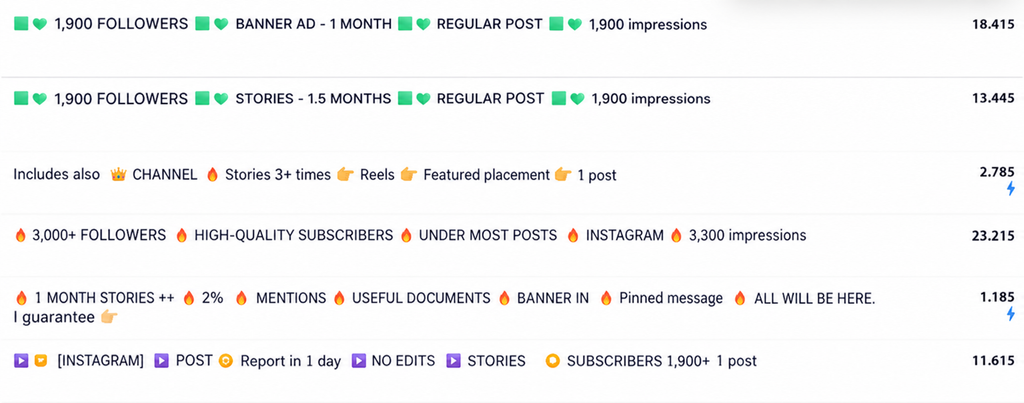
There is little point in paying extra for highly trusted accounts when you are just starting out. If you do not yet understand how Instagram reacts to your setup and content, you can lose expensive profiles just as quickly as cheap ones.
Aged accounts are usually the most practical starting point. If the budget is extremely limited, newly created accounts can also work.
Proxies. Each account should have its own clean proxy. Residential or mobile proxies are preferable, but if the budget does not allow for them, dedicated IPv4 or IPv6 proxies are another option.
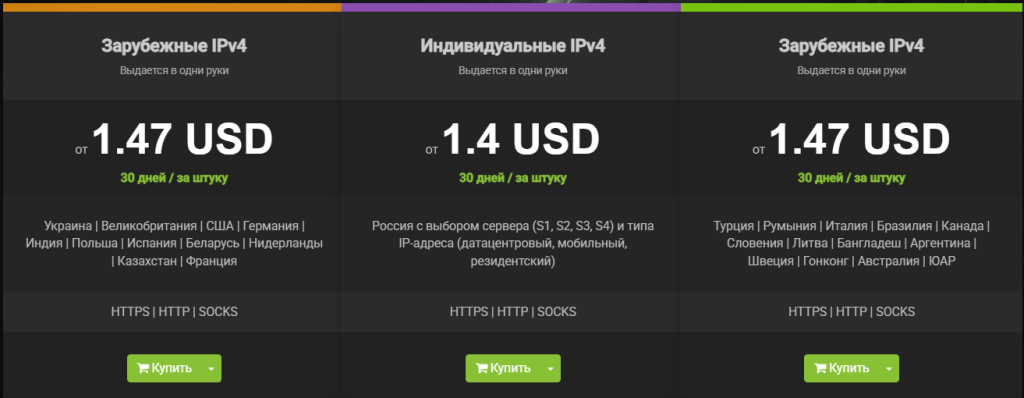
One important rule: one profile, one proxy, one environment.
If you buy a batch of accounts, create a separate browser profile for each one in your anti-detect browser and assign each profile its own proxy. Practitioners often point to shared fingerprints as one of the most common beginner mistakes. If Instagram links several accounts to the same environment and one of them is banned for violating the rules, the others may be affected as well.
In other words, each profile should look like it belongs to a separate user.
Creative variation. There are two basic approaches: use an automated video-variation tool or bot, or manually re-edit the original footage.
Automation is faster and easier. The downside is that if the tool relies on a simple, repeatable editing pattern, Instagram may still recognize similarities between the outputs. It is similar to operating a dozen profiles from the same phone on the same home Wi-Fi.
Still, automated tools are perfectly usable for early testing and validating a hypothesis.
With Adobe Premiere Pro, you can build your own set of templates and modify them for each new version. This gives you more distinct outputs and much more control over the details. In the long run, it is usually the stronger approach: a media buyer can develop a repeatable workflow for producing creative variants and potentially even productize that workflow later.
Video editor. For complete beginners, CapCut is a good place to start. It works on both mobile and desktop, and its feature set is more than enough for basic editing: transitions, effects, subtitles, music, and other common changes can all be handled quickly.
After that, it makes sense to move to Adobe Premiere Pro. In video-editing terms, it is closer to a top-end Bugatti.
In CapCut, many settings are typically applied to the entire clip at once. If you set the scale to 102%, for example, it stays at 102% throughout the clip.
In Premiere, you can vary it over time:
- 0–2 sec: 100%;
- 2–4 sec: 103%;
- 4–7 sec: 98%;
- 7–8 sec: smooth zoom;
- 8–12 sec: 101%.
The same applies to audio, color, frame rate, speed, and other parameters.
Analytics. If your budget is on life support, start with Google Sheets. A template could look something like this.
Later, you can move to an affiliate tracker or build your own analytics setup with an AI agent. There are plenty of guides available, so the right solution ultimately depends on your workflow.
How to Warm Up Instagram Accounts
There is no universal playbook here. Every affiliate eventually develops their own process based on testing and experience, and successful setups are rarely shared in full.
Here is one practitioner approach described in this Russian-language guide:
| For the first few days, watch Reels in your niche, scroll the feed, and occasionally like posts. You can also follow similar accounts and leave a few comments. The main objective is to gradually fill your recommendations with content relevant to your chosen niche. During this period, you are essentially training the algorithm through your behavior: what you watch longer, which videos you like, and where you leave comments. After several days, set up the profile around your future topic: add a suitable name, avatar, and bio, but do not add links yet. Continue using the account normally. After roughly a week, start publishing your first videos. Begin slowly, with around one Reel per day, and only start routing traffic once your videos are consistently reaching recommendations. |
At the same time, it helps to publish content that is useful or entertaining for followers and your potential target audience. That can include memes, carousels, polls, quick reactions to current events, or anything else that fits the niche.
When to Add a Link
Practitioners disagree on the exact timing, but one rule is fairly consistent: do not turn a brand-new profile into a 1990s storefront crammed with ads and links.
What to Promote in 2026
Instagram is a visual-first platform. If you can communicate the value of an offer in 40–50 seconds, it is a strong fit for Reels. If you cannot, conversion is still possible, but the odds are lower.
Here are some of the most popular verticals for Reels in 2026.
Gambling and Betting
TikTok, Reels, and YouTube Shorts constantly borrow formats from one another. If an angle takes off on Shorts, someone will almost certainly test it on Reels, and vice versa.
One evergreen format is a strong emotional reaction to a win.
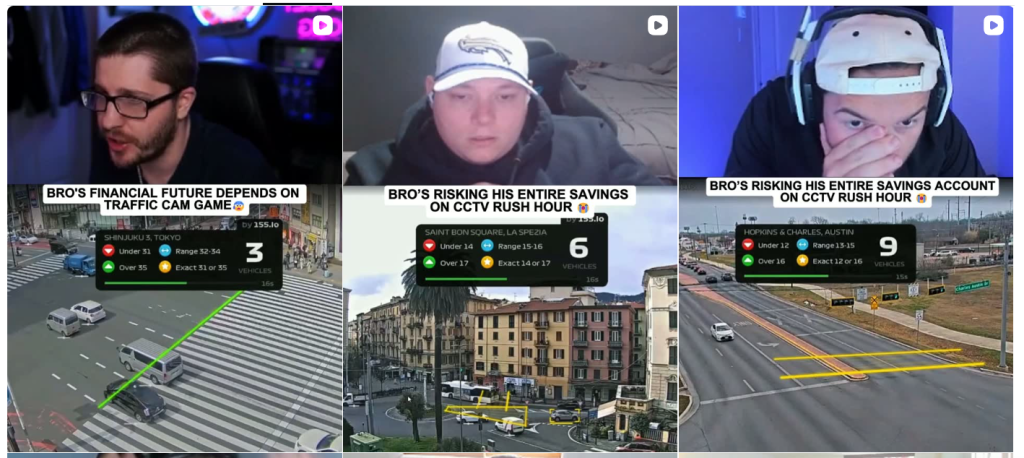
The World Cup is a particularly strong period for betting, but affiliates continue running the vertical outside major tournament windows as well. One approach, for example, is to review sources of betting signals or sports-betting insights.

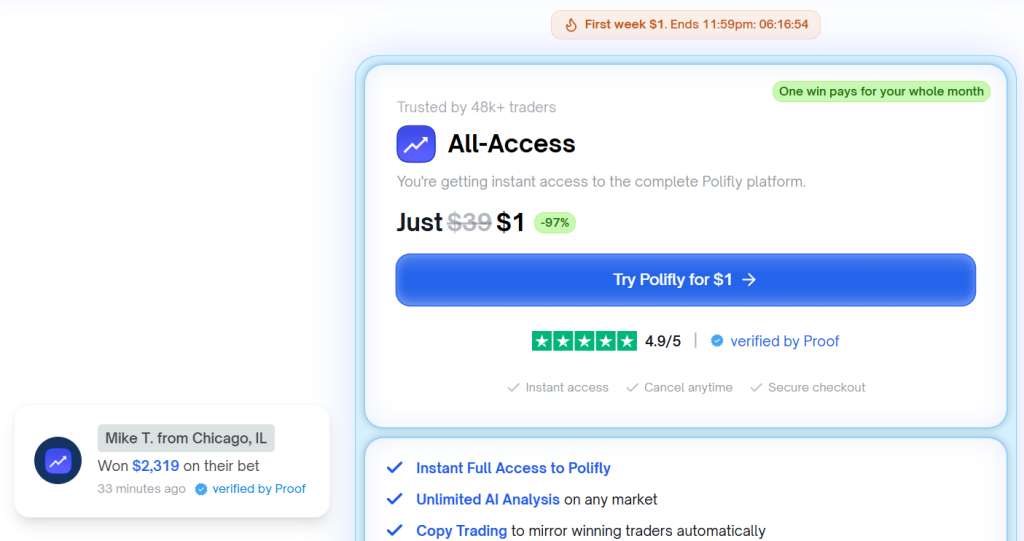
In the example below, the creative promises users an opportunity to make millions on Polymarket starting with just $1: follow the instructions in a private Telegram channel and supposedly make money from the strategy.
Promoting gambling and betting on Instagram without a person on screen is considerably harder. That is why affiliates often experiment with AI-generated presenters, face-swapped footage, and other synthetic-person formats: users are generally more accustomed to watching videos that feature people.
Dating and AI Models
Dating, adult, and AI-generated model content are all highly visual verticals and therefore fit Instagram particularly well.
Instagram requires AI-generated content to be labeled, but some affiliates minimize the disclosure by showing it for only one or two frames. Once the video catches the viewer’s attention, the funnel moves them to the profile and then into DMs.
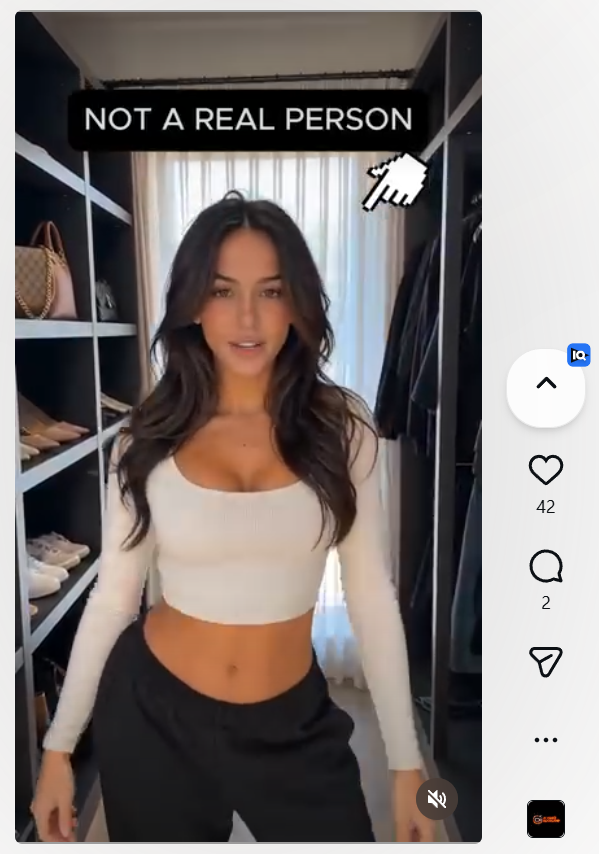
In the Russian-speaking market, AI dating works somewhat differently: audiences are often monetized through Telegram.
Each video presents an aspirational character for the target audience and includes a CTA: leave a comment, visit the profile, check the link in the bio, and so on.

In practice, affiliates often package the offer subtly enough that the promotional angle is not immediately obvious to moderation.
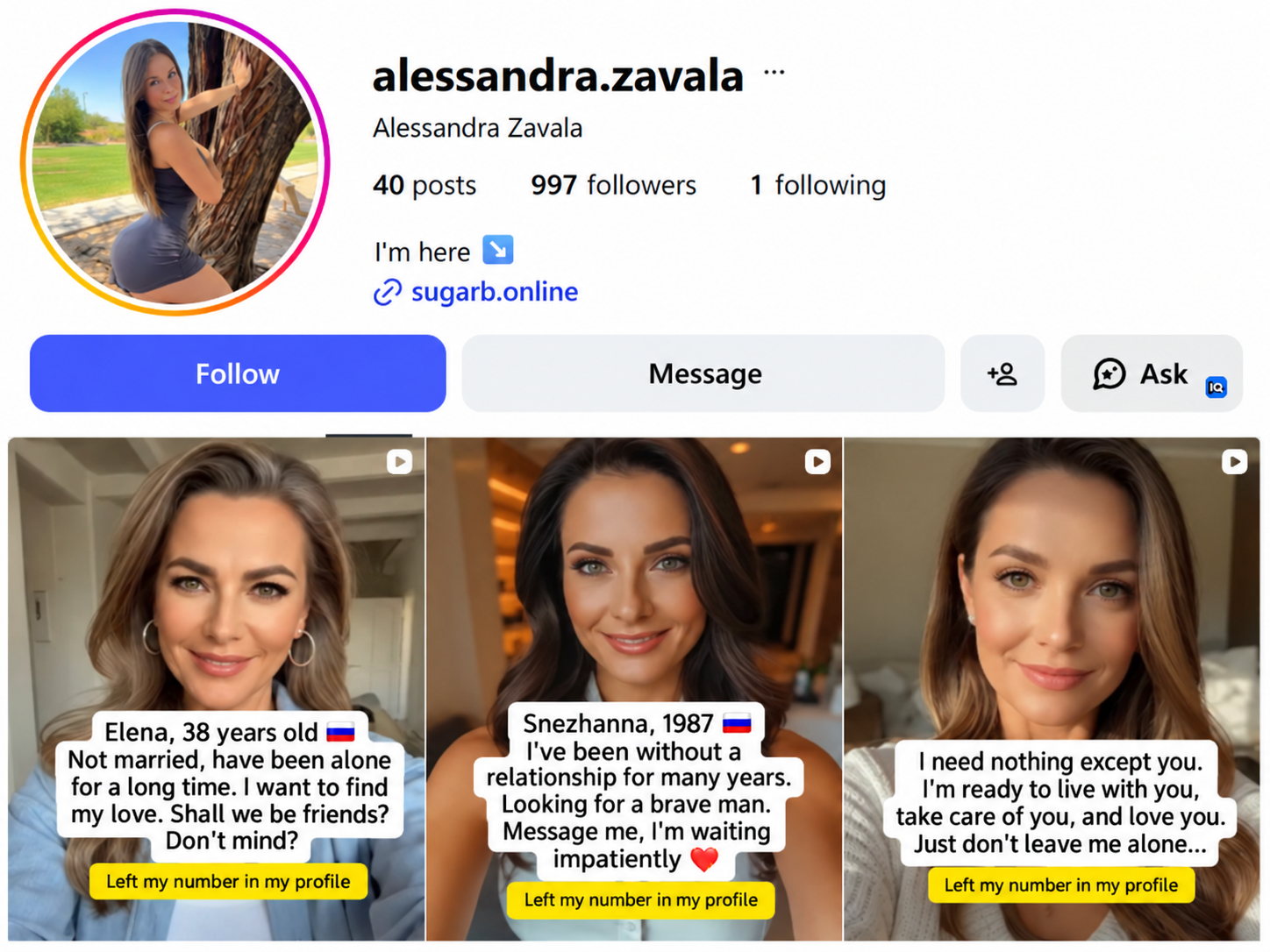
We’ll come back to monetization in this vertical later.
Nutra and E-commerce Offers
In nutra and e-commerce, practitioners often use a problem → use → result structure, as well as everyday experiments, reactions, comparisons, and UGC-style content.
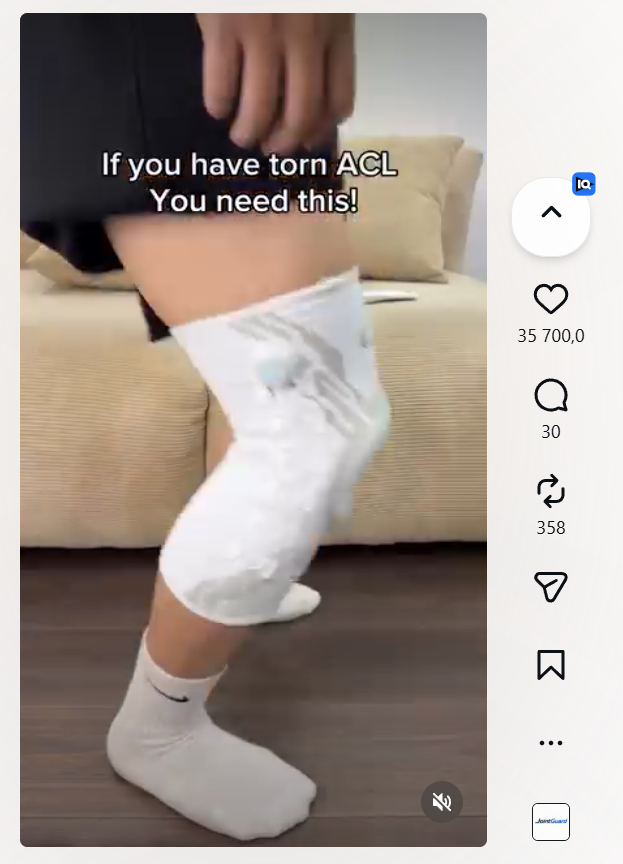
Ideally, the advertiser should provide footage of the product being used or help the affiliate produce it.
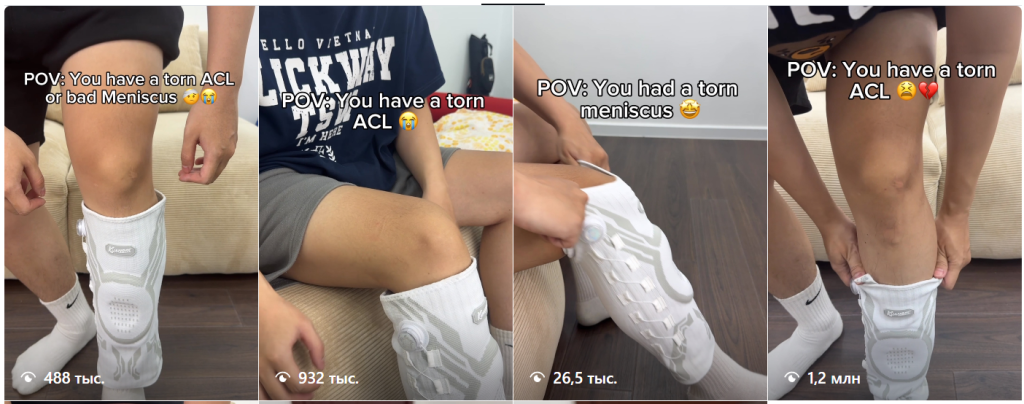
Promoting nutra or physical products without people and some sense of real-world experience is extremely difficult. Every high-performing example we found featured either a real person or an AI-generated model.
Apps, Services, and VPNs
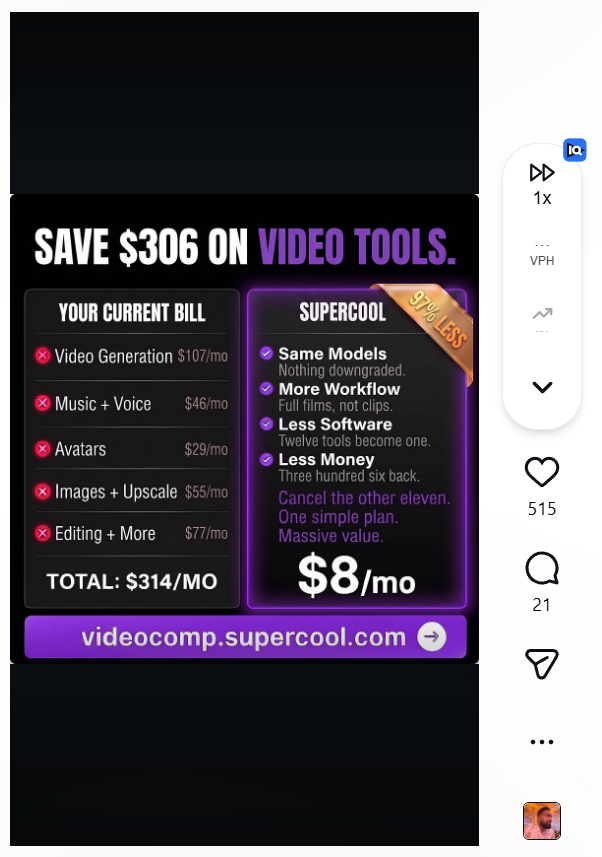
For digital products, effective formats include screen recordings, short feature demos, comparisons between two tools, explanations of common errors, and answers to frequently asked questions.
These videos often end with a side-by-side comparison that makes the benefit immediately visible.
How to Create Content
Before Instagram’s recommendation systems became this sophisticated, affiliates could get away with a much simpler workflow: find a video, change the speed, add a filter, and distribute it across the entire account network.
Today, lightly editing the same clip can result in the first account getting reach while the second gets almost none.
To make organic Instagram traffic work in 2026, you need to create genuinely distinct versions of the same underlying concept at several levels.
How to Rework Source Footage
The short version: change as much as possible.
A basic checklist might include:
- change the file hash and metadata;
- slightly trim or shift the beginning and end;
- adjust the frame rate;
- change the speed;
- apply different color grading;
- add noise or an overlay;
- use new text and subtitles;
- replace or modify the audio;
- use a different opening frame;
- create a new ending and CTA.
The more variables an affiliate can change, the better.
But changing only the hash, speed, or zoom is unlikely to help if the structure of the video remains identical. Ideally, every new version should also differ slightly in meaning or presentation.
One practical way to do that is to break each creative into five components:
- Source footage. Use the original footage in one version; screen-record it in another.
- Hook. Open with a question, promise, conflict, surprising number, or provocative statement.
- Main section. Build it around a story, product or offer demo, creator reaction, or comparison.
- Presentation. Change the text, fonts, voice-over, music, character, or pacing.
- CTA. Send the user to the link in the profile, ask for a keyword in the comments, move them into DMs, or send them to Telegram.
This way, one source video can become 10–15 distinct creative variants that can be distributed across different accounts without every profile publishing an obvious duplicate.
Test Different Openings
A few months ago, a discussion about Instagram reach appeared on Reddit. One point from that thread comes up repeatedly in other affiliate communities as well: a weak opening is one of the fastest ways to kill a Reel’s performance. You can see the discussion in this Reddit thread.
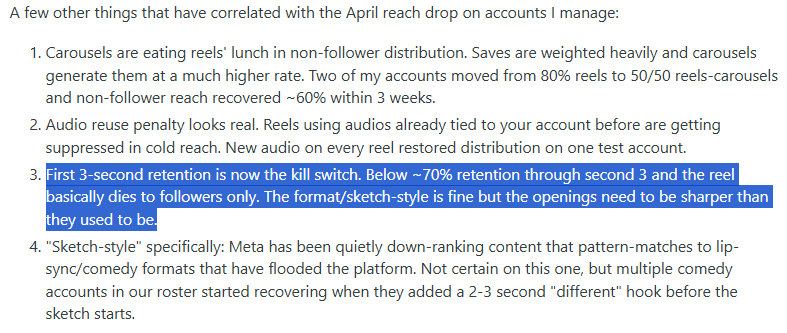
One simple way to create a stronger opening is to show the final scene first, cut away about a second before the payoff, and then restart the video from the beginning.
Where to Send Traffic from Reels
A typical funnel looks like this:
Reels → profile → link in bio → Telegram, pre-lander, or offer.
The basic principle is simple: the more steps between the first interaction and the target action, the harder it becomes to convert the user.
That is why affiliates are constantly looking for ways to shorten the funnel. Here are the most common routes.
Link in Bio
This is the simplest option. The viewer watches the Reel, sees a clear CTA on screen, and goes to the profile, where the link is waiting.
It works particularly well when the profile continues the promise made by the creative.
If the Reel features an AI-generated model who supposedly wants to connect, for example, the viewer naturally expects to find links to social platforms or other ways to continue the interaction in the profile.
But if someone watches a meme about World Cup betting and then lands on a generic page listing ten unrelated casinos, the chance of conversion drops sharply.
According to the author of this Russian-language FB-killa case study, a media buyer published three Reels per day and routed users through the profile link to a bonus page. Over a month and a half, the setup reportedly generated $1,638 in net profit.
Telegram
Telegram is a standard route for verticals whose content is restricted on Instagram.
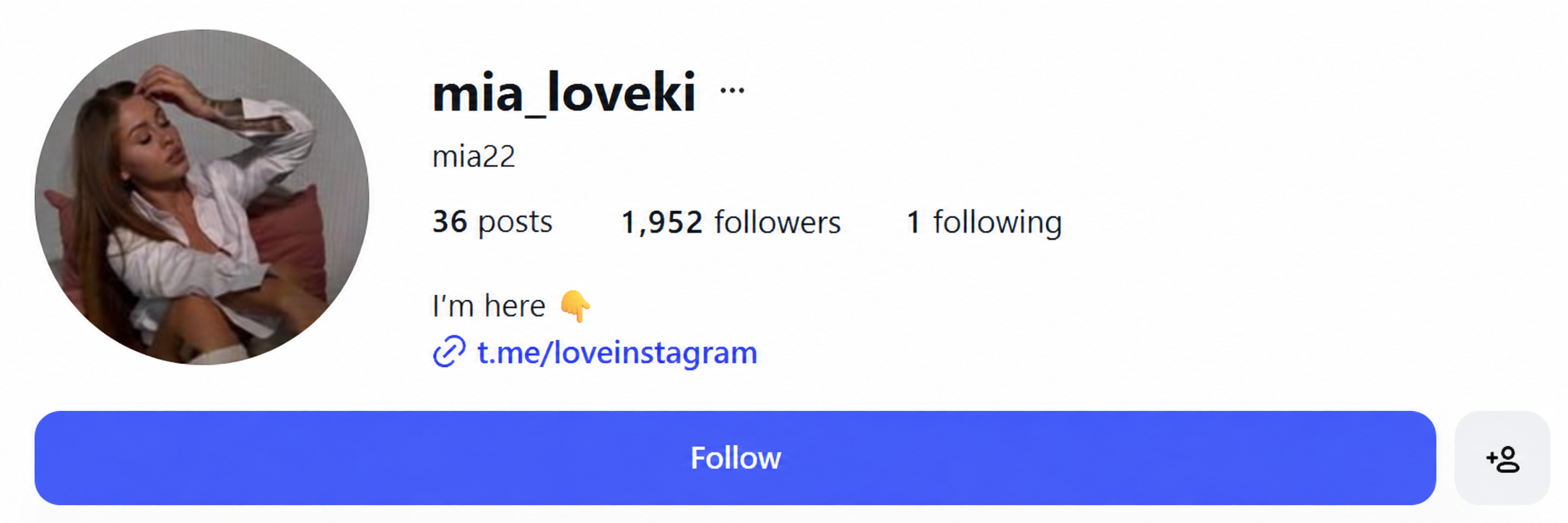
The media buyer sends traffic to a Telegram channel and uses the channel to give the audience more context and explain the next step.
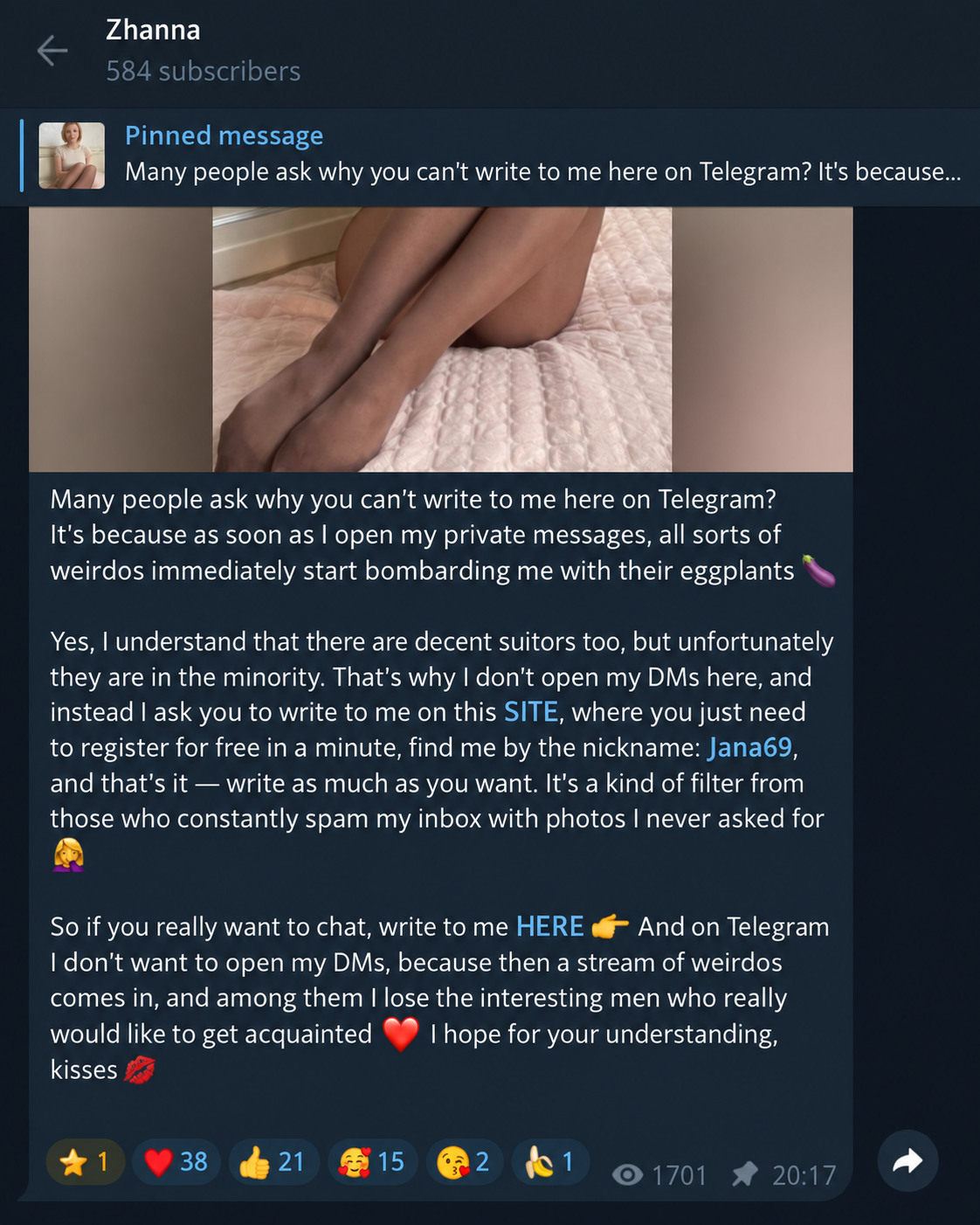
Another option is to send users to a Telegram bot.
A bot can potentially outperform a regular channel, but only if the affiliate has mapped out enough conversational branches and follow-up scenarios for different types of leads.
Keyword in the Comments
If the vertical is allowed under Instagram’s rules, or the video itself does not contain restricted content, another common approach is to use a keyword-based CTA.
The viewer finishes the video and sees something like:
“Comment KEYWORD and I’ll DM you the material.”
Sometimes the CTA is placed directly over the video.
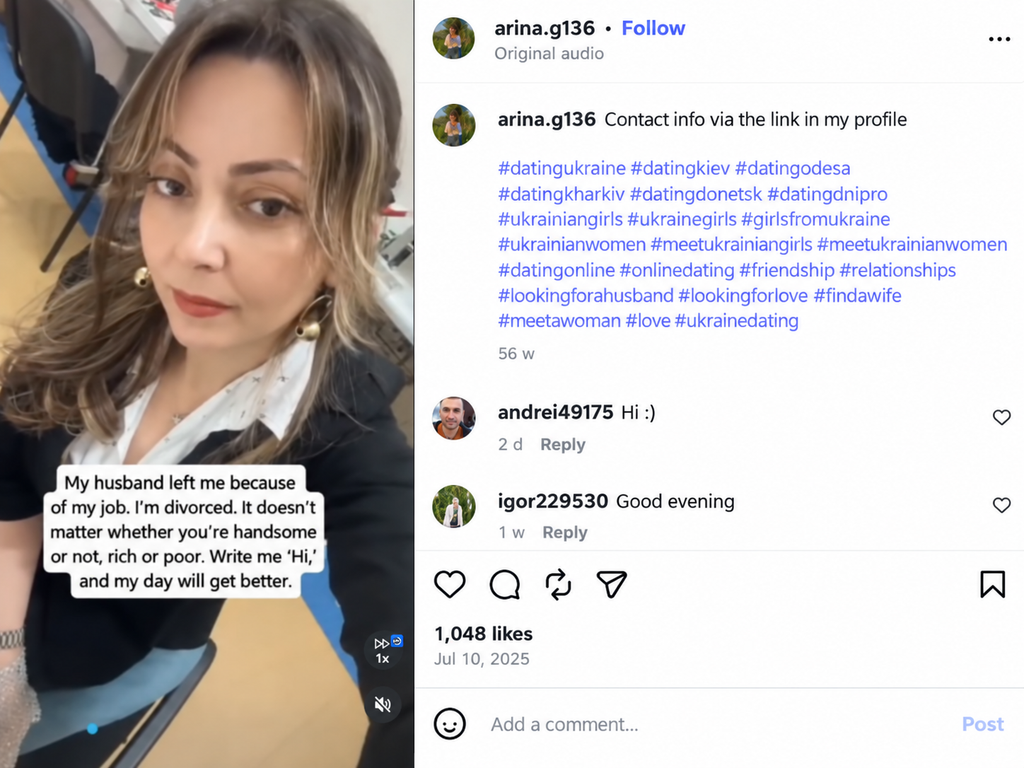
This generates engagement around the Reel while giving the media buyer an opportunity to continue the conversation with the lead in DMs.
Stories and Highlights
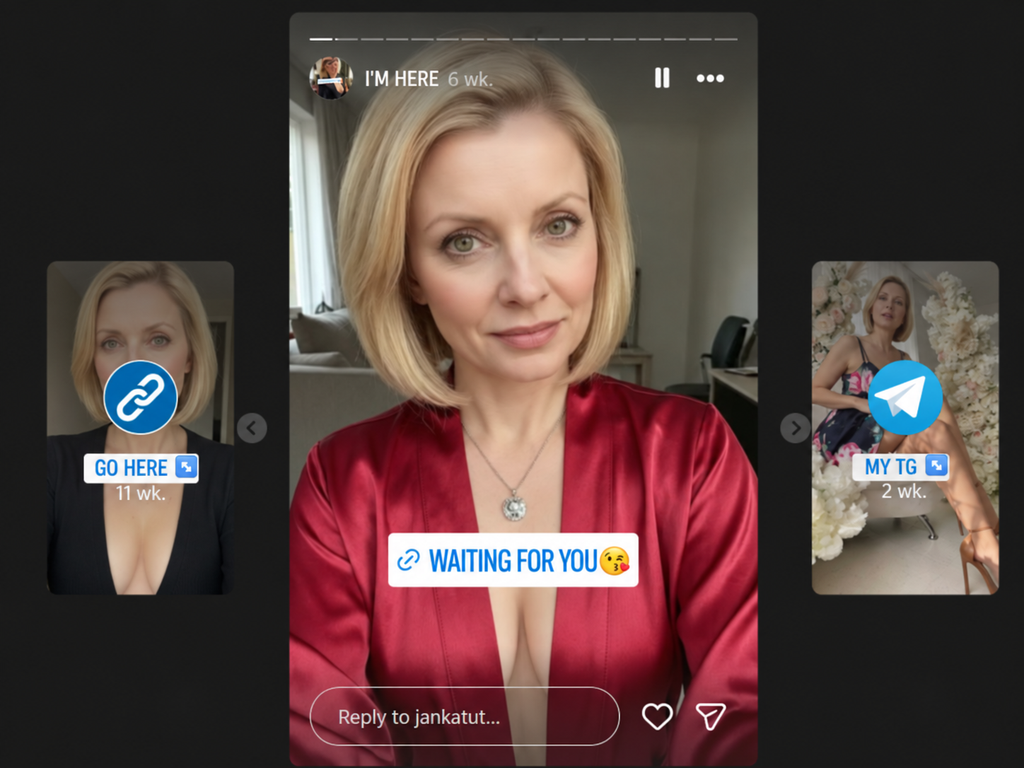
Stories are often used as an intermediate nurturing step.
A user arrives from Reels, checks the profile, watches several Stories, and only then sees the CTA.
Common Beginner Mistakes with Organic Reels Traffic
Beginners often want everything at once. In practice, that is a bit like starting a car and immediately shifting into fourth gear.
Here are some of the most common mistakes.
- The first Reel sends users straight to the offer. A brand-new profile, an overtly promotional Reel among the first posts, and a link from day one is one of the worst ways to start. Build some normal activity and account history before you start promoting anything.
- One source creative is used across the entire account network. The most impatient affiliates try to compensate with volume: if a video fails on one account, they upload the same thing to five more. That is usually a dead end. The first account may get reach while the others get little or none.
- The account is warmed up around the wrong niche. If you plan to promote iGaming, interact with relevant accounts and content. The algorithm needs signals about the audience you want to reach. Sports betting, for example, is unlikely to resonate with an account whose feed has been trained entirely on funny turtle videos.
- The first videos are throwaway creatives. Treat the first 5–10 videos as if a million people are going to see them. Instagram will use the early content to evaluate the account and identify its audience. If you upload material you do not care about losing, you will not know whether poor results came from the account setup or from weak creatives.
- Ten videos are published back-to-back. A more useful testing cadence is roughly one Reel per day. That gives the platform time to distribute each video and gives the affiliate a clearer picture of what is and is not working. Uploading clips in batches does not automatically create more reach.
Where to Find Creative Ideas
The Reels feed itself is the main source of ideas.
Enter a keyword or hashtag from your vertical into search, and you will immediately start getting creative references. It is free, fast, and usually more useful than trying to invent every concept from scratch.king vertical into the search, and you’ll see the first references on the screen. It’s all free and pretty fast.

Experienced affiliates often create a separate research account that is never used to promote offers. Its only purpose is to consume niche-specific content.
Spend a couple of days training a profile this way, and it effectively becomes your own manual spy tool.
Once you have identified a dozen useful accounts, start monitoring their comments.
Questions such as “Where can I download this?”, “What app is this?”, “Is there a version for my country?”, or “Where’s part two?” already contain either a ready-made CTA or the topic for your next creative.
Top Creative Formats for Organic Reels
On-Camera Reaction
This format never really goes away: a win, an unusual event, or an app demonstration appears on screen while the person’s reaction amplifies the emotion.
Because it often resembles conventional UGC, it can blend naturally into the feed without drawing extra attention from moderation.
The format is particularly common in gambling and betting.
Screen Recording + Result
These creatives are frequently used for apps, VPNs, and AI services.
The main criterion when choosing an offer is simple: can you demonstrate its “wow” effect in 20–30 seconds?
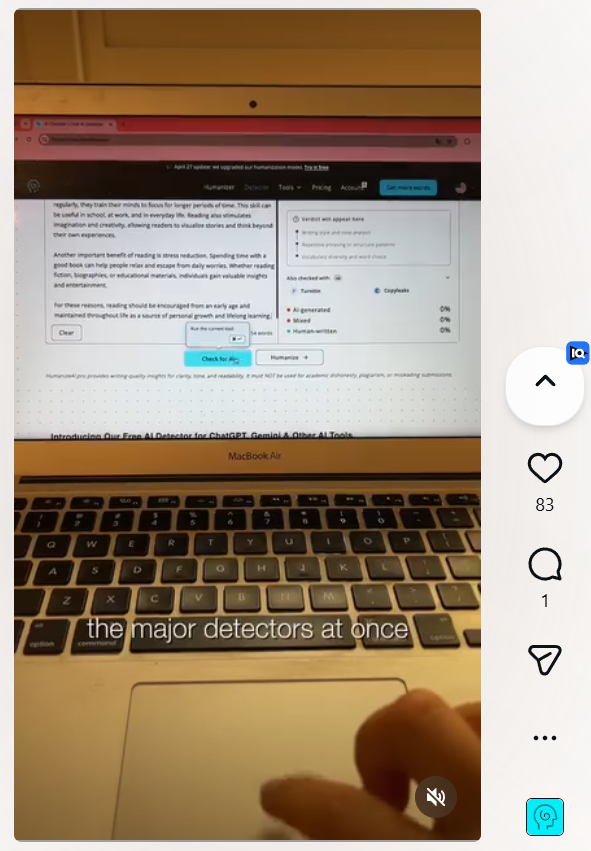
The opening seconds show the final result. The rest of the video quickly explains how to get there.
The CTA then sends the user to the tool, instructions, or full version.
Meme That Funnels to the Offer
The meme itself does not explain the product. Its job is to capture attention around a familiar or relatable situation.
The offer appears elsewhere: in the caption, Stories, a pinned comment, or the bio.
Because there is very little overt advertising in the Reel itself, the video can reach recommendations and generate views more easily.
There is also demand for scalable content formats like these. Memes, gameplay clips, AI-generated content, and highly watchable videos are bought and repurposed for monetization through apps and services.
“Comment a Keyword — I’ll DM You the Link”
The video gives the viewer part of the information. A template, list, tool, or other resource is then sent by DM after the viewer comments.
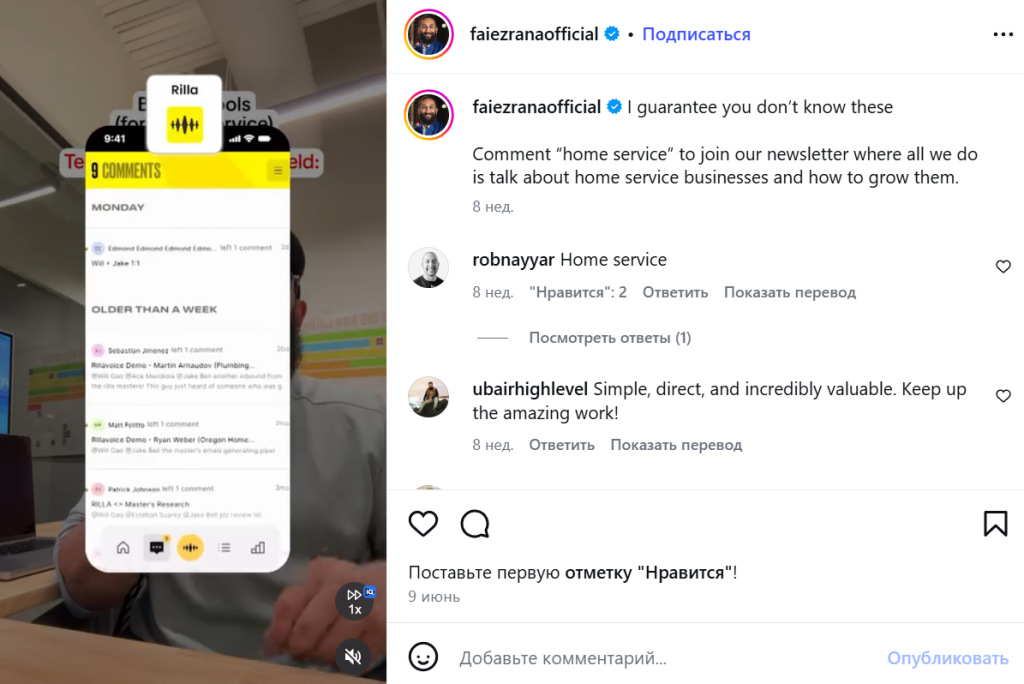
This format is not limited to white-hat verticals. In gray-area niches, affiliates also use it to share Telegram links, offer lists, instructions, promo codes, or the next part of a story.
Compare Two Options
“Expensive vs. cheap,” “manual vs. automated,” “slot A vs. slot B,” and “popular tool vs. unknown alternative” are all classic comparison formats.
You do not necessarily need to declare an absolute winner at the end.
Sometimes it is better to leave the result open to debate so viewers head to the comments to defend their choice.
Provocative Question
Some practitioners recommend opening with a question that immediately hits a specific audience pain point, then delivering a small piece of value and ending with a CTA.

The idea is simple: help viewers recognize themselves in the problem, then offer them a solution.
Conclusion
At the beginning of this article, Andrew was stuck on a basic question: where do you even start with organic affiliate traffic from Instagram?
The answer is a little less exciting than the case studies promising millions of views.
Not with a hundred accounts. Not with a $200 video-variation tool. And not even with a search for the perfect Reel.
Start with a system: one geo, one vertical, a few accounts, and a measurable hypothesis.
First, see how the profiles behave. Then identify which videos Instagram actually distributes. Next, find out which of those videos bring people to the profile. Finally, measure whether those visits turn into registrations, deposits, or whatever other conversion matters for the offer.
A Reel with 500,000 views can be less valuable than one with 20,000 if the first attracted a random audience while the second reached the right users.
The same principle applies to creative variation.
File hashes, FPS, audio, color, and other technical parameters help you produce different versions of the file, but Instagram also evaluates the originality of the content itself. As your account network grows, it becomes increasingly important to vary not only the technical layer but also the hook, structure, on-screen character, storyline, and CTA.
Scaling only makes sense once the result is repeatable.
If one profile consistently generates views, profile visits, and conversions, you can apply the same framework to additional accounts and increase production.
If it does not, another hundred profiles will only help you scale the problem faster.

FAQ
Experts recommend allowing about a week for warming up: for the first 3–4 days, create themed activity, on days 3–5 set up the profile without a link, and after about a week, publish your first Reels. Ideally, start with one video per day.
There’s no universal day. Most experts don’t rush to add an external link to a brand-new profile and first check if the account is getting normal reach. So it’s better to focus on the profile’s state: is it fully set up, does it have an activity history, and are the first Reels getting into recommendations?
We recommend starting with one video per day. This makes it easier to see which creative worked and how the audience reacts.
You can, but it’s not effective. Experts recommend creating different versions of the same original: change the intro, script, speed, color, and CTA. Just changing the hash or FPS isn’t enough to guarantee a truly original video. So when scaling, you should change both the technical aspects and the content itself.
CapCut is more than enough to start with: the desktop version lets you change the scale and opacity of frames, as well as adjust playback speed and other parameters. Premiere is more interesting for mass production, when you need deeper control over effects, sound, and final encoding settings – down to bitrate, color space, and keyframe interval.
The main metric for the video itself is watch time. If leads drop off after 1 second, the problem is only in the opening frames, and changing the final CTA makes no sense. Next, track retention, audience reaction, likes, comments, shares, and so on.
But for affiliates, that's not enough. You also need to count profile visits, link clicks, registrations, deposits, EPC, and revenue for each creative. That's why a viral video and a profitable video are not always the same thing.
It depends on the funnel length. If the action is simple and the offer is clear right away, extra intermediate pages can only lose users. For example, in dating, a user sees an attractive person and wants to message them. If the product needs explanation or several touchpoints, use the profile, stories, direct messages, Telegram, a bot, or a pre-landing page.
The cheapest spy is a separate Instagram* account trained for the right vertical. Practitioners interact only with relevant content so that recommendations gradually turn into a stream of other people's approaches and formats. Then they analyze not the whole video, but its components: the first frame, hook, storyline, duration, CTA, and audience reaction.

Comments (0)