

When an ad unit on a website looks like an editorial recommendation or a “Read Also” section, it feels like a natural extension of the page. In affiliate marketing, this format is known as native advertising, or native ads.
Because audiences tend to trust this format and it supports longer pre-sell funnels, native traffic is widely used for nutra, finance, e-commerce, iGaming, and dating. With the right approach, these campaigns can generate thousands of dollars without the constant battle against account bans that buyers face on Facebook.
To help you avoid wasting money, this article explains how native traffic works in 2026, covers the verticals that perform well, compares the leading ad networks, provides a step-by-step campaign setup guide, and examines a real case study that generated more than $3,500 in revenue.
What Is Native Advertising, and How Does It Differ from Teaser Ads?
Native advertising is a relatively new format in the CIS market, so it is often confused with traditional teaser networks. At first glance, the two look similar: both use small images paired with short headlines. However, they work differently and are perceived differently by users.
Teaser networks rely on shocking headlines and curiosity-driven hooks. A user clicks an image out of curiosity and is taken directly to a page offering a product for sale.
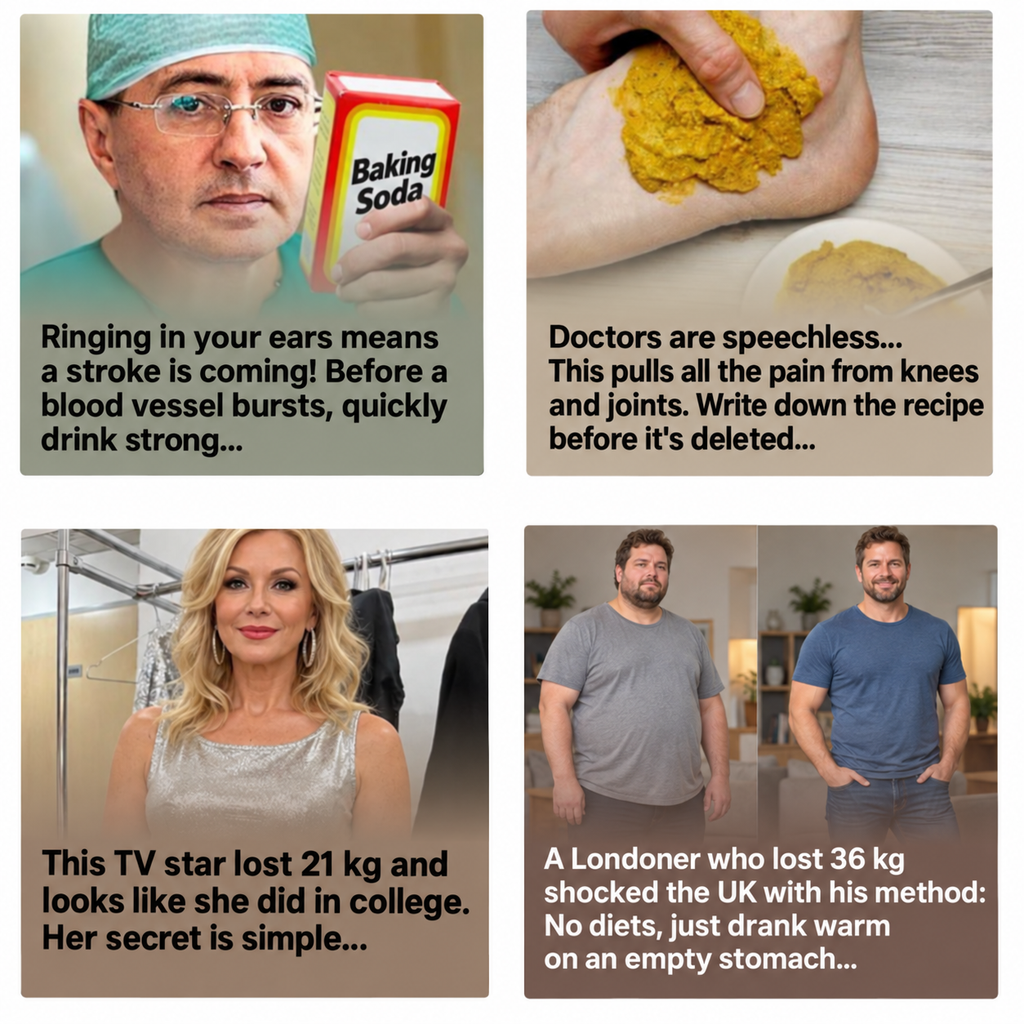
Native advertising works through content discovery platforms. These services analyze the subject of an article and recommend similar or potentially useful content to the reader.
The ad adapts to the publisher’s design: the platform automatically adjusts the font, text-block size, and image proportions. As a result, the preview looks like an ordinary piece of content from the same website.
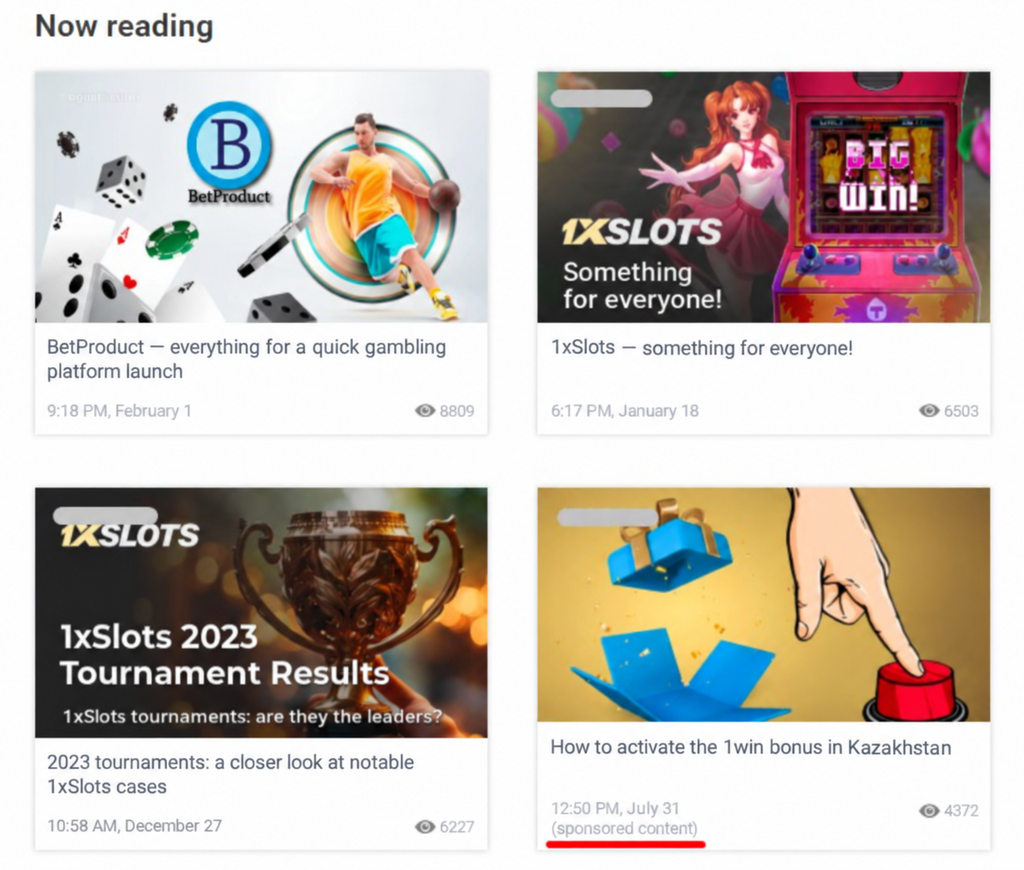
The funnel is different as well. A native ad does not immediately ask the user to buy the product. Instead, it draws attention to a problem or story and sends the user to a pre-lander containing a useful article. From there, the reader moves to the offer’s landing page.
Advantages and Disadvantages of Native Traffic
Compared with teaser or push traffic, native traffic brings in a warmer audience and supports funnels with a longer lifespan. In return, buyers need a larger testing budget and must spend more time preparing campaign materials.
Advantages
- Overcomes banner blindness. Users are accustomed to ignoring traditional banners and brightly colored ad blocks. Because a native unit looks like a preview of a useful article, readers are more likely to notice it.
- Resistant to ad blockers. Extensions such as AdBlock identify and block standard display banners and pop-ups through their technical tags. Native ads load as part of the publisher’s recommendation content, so ad-blocking algorithms do not recognize them as conventional ad units.
- Long campaign lifespan. On social media, creatives burn out quickly because the same audience sees them repeatedly. A native article on a news website can continue generating conversions for several months.
- Higher-quality users with strong LTV. Users reach the offer only after reading the content. They already understand the proposition, so they are more likely to complete the target action and generate more revenue over time.
Disadvantages
- High starting budget. Native networks require more testing spend than push or pop traffic. Testing hypotheses generally requires at least $500–1,000, while major platforms such as Taboola expect clients to spend several thousand dollars per month.
- Complex funnel preparation. An image and a short line of copy are not enough. The media buyer must build a complete pre-lander: write an article, style it to resemble a well-known media outlet, add comments, and adapt the content to the language of the target country.
- Strict moderation. Major ad networks protect their reputation with publishers. Aggressive clickbait, black-hat nutra, and direct links to gambling offers are unlikely to pass review and may result in an immediate account ban.
Types of Native Advertising
The format determines where users see the ad and how they interact with the content. Affiliate marketers use four main types of native advertising:
- Recommendation widgets. These are the familiar image-and-headline blocks shown at the end of an article or in a website’s sidebar. They usually appear under labels such as “Read Also” or “You May Also Like.” The platform adapts the widget to the publisher’s layout, making the ads look like a list of related articles from the website itself.
- In-feed ads. These ad cards appear directly within a news or content feed. As users scroll, they encounter a sponsored card designed to match the surrounding content. Native networks often use this format in infinite feeds, such as Taboola Feed, where new cards load as the user moves down the page.
- Advertorials. These are full-length articles, guides, or reviews published on an informational website. The content follows the publisher’s editorial rules and includes links, buttons, or a lead form directing readers to the offer’s landing page.
- Native video, or in-feed video. These short videos autoplay without sound inside an article or news feed. A video may show the product in use, demonstrate a service, or tell a story. Clicking the player takes the reader to a pre-lander.
The right format depends on the budget and vertical. Widgets and feeds are commonly used to buy large volumes of traffic through ad networks, while full sponsored articles are better suited to warming up audiences in higher-value niches.
Where to Run Native Ads
Native traffic can be purchased directly from website owners, through influencers, or via specialized ad networks. Affiliate marketers most often use ad networks because they bring thousands of publishers together in a single dashboard and provide tools for filtering traffic.
Popular Native Ad Networks
Taboola and Outbrain
- Minimum deposit: Officially from $100, but launching gray-hat verticals realistically requires $1,000–2,000. Running nutra from a self-service account (Russian-language Telegram post) is very difficult without a thorough understanding of platform moderation. Buyers therefore tend to use manager accounts, which cost $500–1,500 depending on the type (Russian-language article).
- GEOs: United States, Europe, and Tier 1. Traffic comes from major media outlets such as MSN, Business Insider, NBC, and the BBC.
- Verticals: White-hat physical products, e-commerce, finance, services, and white-hat nutra.
- Key features: Strict manual and automated moderation. With an expensive auction, entering the platform with only a few hundred dollars makes little sense: the budget may be gone before the first leads arrive.
MGID
- Minimum deposit: $100.
- GEOs: LATAM, Asia, Europe, and the CIS.
- Verticals: Nutra, dating, physical products, finance, and moderately gray-hat gambling.
- Key features: One of the most accessible networks for affiliate marketers. Most popular offers can pass moderation when the pre-landers are properly prepared. A manager usually gets involved quickly, even at relatively low volumes.
MediaGo
- Minimum deposit: $100–500.
- GEOs: United States, Europe, and LATAM.
- Verticals: E-commerce, nutra, finance, and mobile apps.
- Key features: A DSP that purchases traffic through RTB auctions on websites such as MSN and Yahoo. It offers precise targeting and flexible bid management but requires analytics experience.
RichAds
- Minimum deposit: $100.
- GEOs: More than 200 countries, with strong volumes in LATAM, Asia, and Tier 3.
- Verticals: Gambling, betting, nutra, utilities, and dating.
- Key features: A multi-format network offering native, push, and pop traffic. It provides fast moderation, flexible rules, automated rules, microbidding, and other useful features.
AdProfex
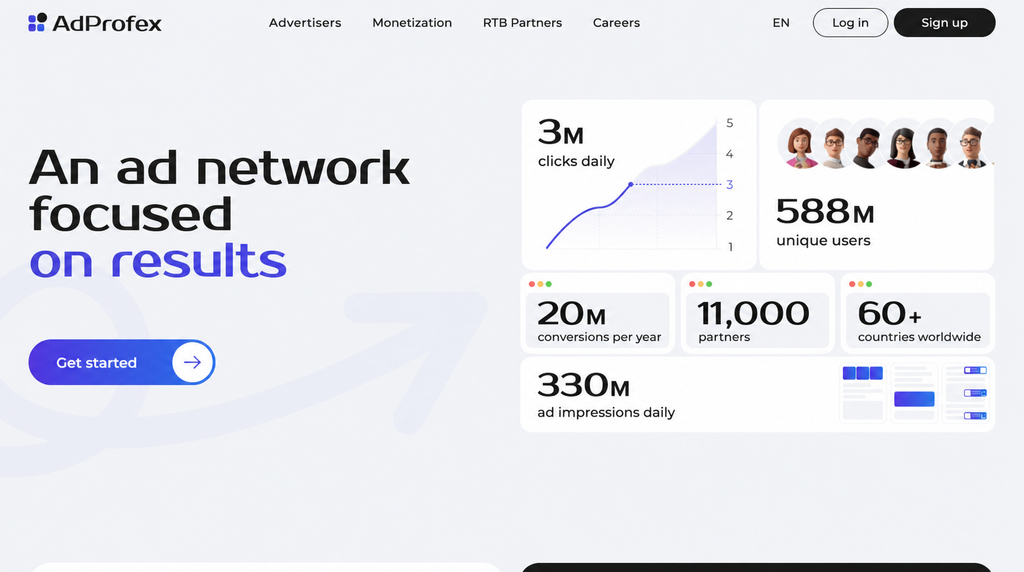
- Minimum deposit: $50.
- GEOs: CIS, LATAM, Europe, and Asia.
- Verticals: Nutra, physical products, finance, and gambling.
- Key features: A low entry threshold and relatively lenient moderation. It is suitable for beginners who want to learn how to test pre-landers and optimize campaigns without committing a large budget.
Account Types in Native Ad Networks
Working conditions and the level of control over a campaign depend on the type of account:
- Self-service accounts (SS). You create the account directly on the network’s website, configure targeting, upload creatives, and manage bids yourself. This is a quick option for testing, but there is no manager support, and even a minor rule violation may result in a ban. The minimum deposit is usually $100–500.
- Agency accounts. These accounts are purchased or rented from intermediary agencies. They are whitelisted by the network, so moderation is faster. If the account is blocked, the remaining balance can often be refunded or transferred.
- Manager accounts. This is the highest access level, opened by a personal platform manager at a network such as Taboola or MGID. The manager assists with moderation, provides lists of effective placements, and helps optimize campaigns. Access requires a proven track record and a starting budget of $2,000–5,000.
Key Verticals for Native Traffic
Native traffic works well for offers that require users to be warmed up with an article, personal story, or expert opinion. The content angle and pre-lander structure vary by niche.
Nutra
In native networks, traditional nutra is promoted through white-hat and moderately gray-hat approaches. Platform moderation does not allow shock content, aggressive teasers, or images of medical conditions, so campaigns focus on benefits and personal stories.
Common formats include medical long reads, interviews with relevant specialists, personal weight-loss diaries, and self-care advice.
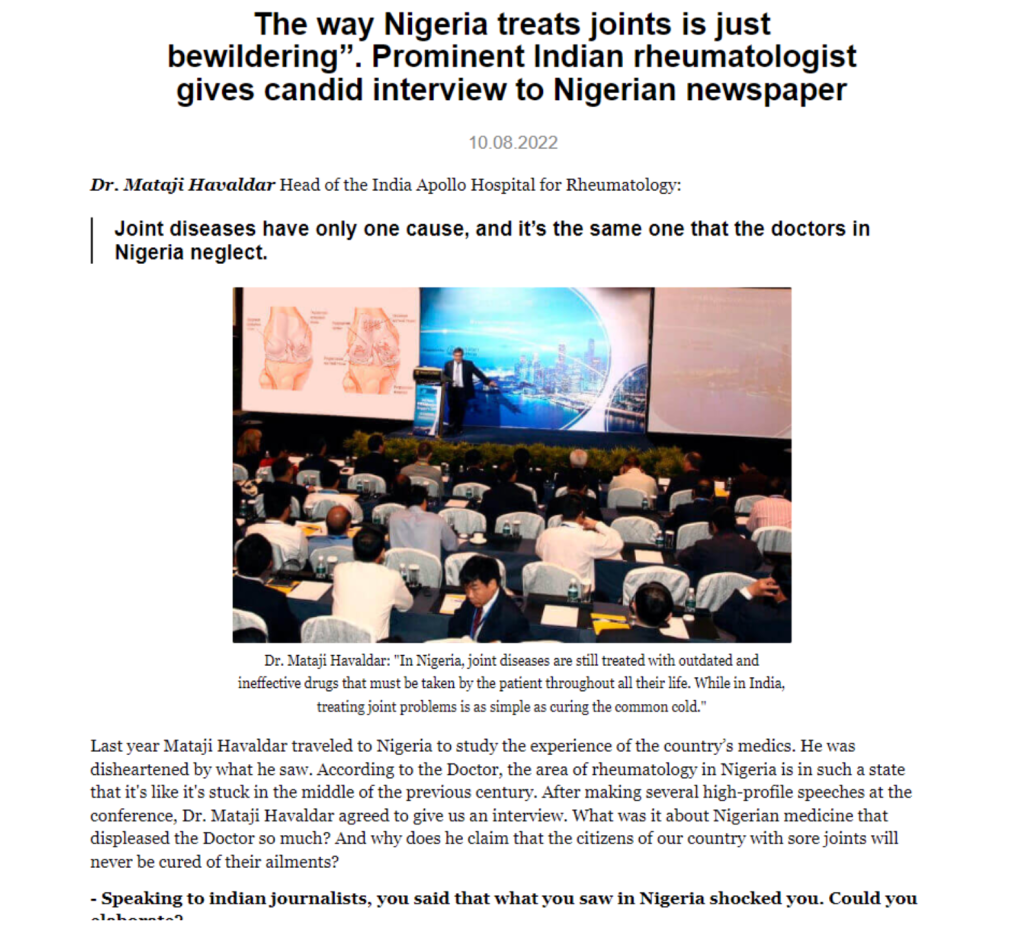
The user sees a preview of a useful article and opens a pre-lander presented as an article or interview. There, an expert explains the cause of the problem and recommends a particular product.
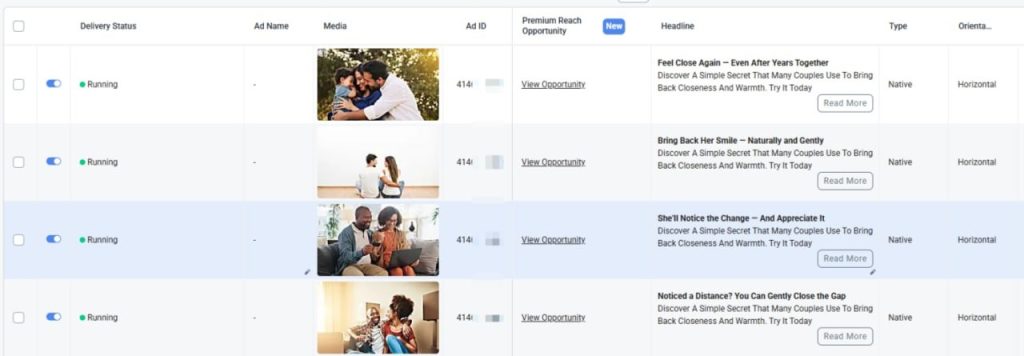
| “I managed to get a potency offer approved on Taboola and run it for quite a while. It was neither rejected nor banned, and it is still running. “Through trial and error, I moved from aggressive sales headlines to copy that pushed the limits, but none of it passed. In the end, I wrote neutral copy about intimacy and used images with no sexual references,” said Marat, author of the Russian-language Telegram channel Nutra Star. |
Finance and Cryptocurrency
Financial products and crypto offers perform well in higher-income Tier 1 GEOs, where users are accustomed to researching information before applying for a card or making an investment.
Campaigns often use credit product reviews comparing cashback and interest rates, investment guides, financial success stories, and market analysis.

The ad preview leads to an informational article explaining different financial products. Links inviting the reader to apply for a card, open an account, or register on a platform appear throughout the article or at the end.
E-Commerce and Physical Products
For physical products, native ads perform best when presented as curated lists and user reviews. People are more likely to buy gadgets and household products when they encounter them in a selection rather than in a direct product ad.
Common formats include articles such as “10 Kitchen Gadgets You Didn’t Know Existed,” honest unboxings, holiday gift guides, and detailed device reviews.
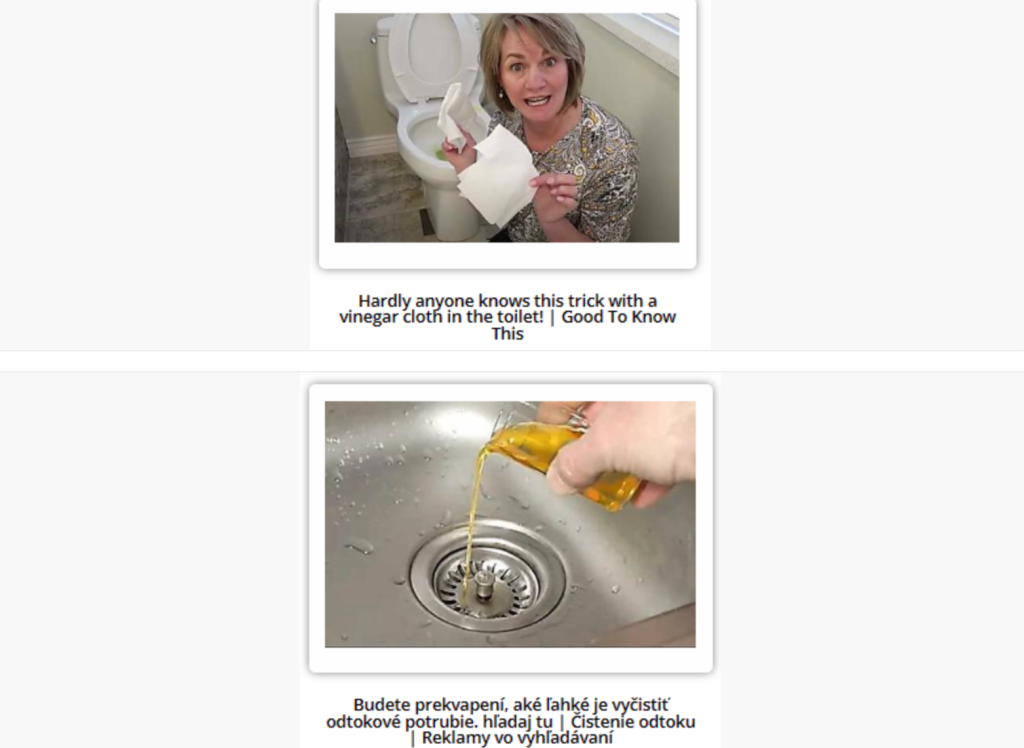
The reader browses a list of useful products, with each entry linking to its product page in an online store.
iGaming and Dating
Because major native networks enforce strict moderation rules, gambling and dating offers are promoted through indirect funnels. Direct links to online casinos or dating services do not work here.
Gambling and betting traffic is attracted through slot reviews with demo versions, sports news, match predictions, and strategy guides.
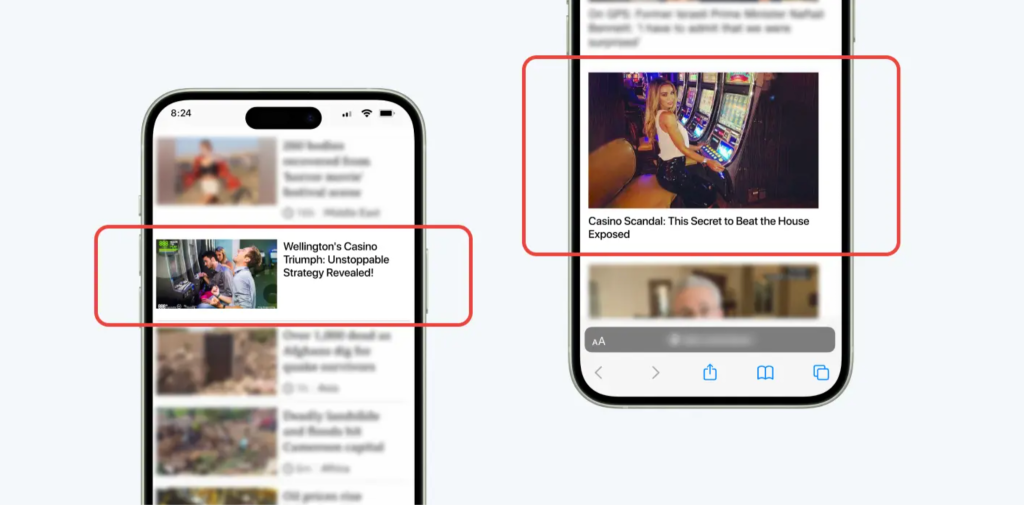
Dating campaigns use articles about relationship psychology, personality tests, lists of places to meet people, and relocation stories. The user reads the content and encounters a registration link presented as a solution to the problem or a useful service.
How to Build a Native Traffic Funnel: Creatives and Pre-Landers
Eighty percent of a native campaign’s success depends on the combination of the creative and the pre-lander. Users are not ready to place an order immediately after clicking a teaser. The ad must spark their interest, while the pre-lander article must address their concerns and guide them toward the offer.
Creatives: Headlines and Images
- Images. Authentic, natural-looking photos tend to perform best: everyday snapshots or frames that resemble news footage. The image should look as though it was taken with a phone or used as an illustration in a blog. Polished stock photos and renders tend to have a low CTR because readers immediately recognize them as advertising.
- Headlines. The copy should highlight the audience’s problem or pose an intriguing question. Personal stories such as “How a Retiree from…,” practical advice, and surprising facts all work well. The headline should be compelling without crossing into aggressive clickbait, which is likely to be rejected during moderation.
Pre-Lander, or Bridge Page
Sending native traffic directly to the offer landing page makes little sense: the conversion rate will be close to zero. Readers click native ads for information or a story, so a pre-lander is placed between the teaser and the target action.
Content format. The most common options are news articles, personal blogs, expert interviews, and analytical explainers. The key is to design the page in a style familiar to readers of the selected media outlet.

Article structure. The content follows a clear narrative. A nutra article, for example, might tell the story of someone who suffered from joint pain for years, tried pharmacy ointments, and eventually discovered a doctor or natural supplement. Expert commentary, illustrative examples, and offer links are integrated naturally into the story.
Social proof. A comment section usually appears at the bottom of the page. Lively discussions with questions, recent dates, and realistic reviews make the content more credible and encourage readers to convert.

Localization. The content must be fully adapted to the selected GEO. In addition to an accurate translation into the local language, it should use local names, references to nearby cities, prices in the national currency, and recognizable pharmacies or stores.
Testing, Bidding, and Optimization
Starting a native campaign with a $50–100 deposit makes little sense because that volume will not provide enough data for a reliable assessment. The minimum budget for testing one hypothesis starts at $300–500 (Russian-language article).
Use the following guidelines when setting up and running a campaign:
- CTR and clicks. Draw the first conclusions about a teaser only after it receives at least 10,000 impressions and 50–60 clicks. Before that, CTR will fluctuate too much to be meaningful.In nutra, the same Russian-language article gives a typical benchmark of 0.5–0.7% for joint and weight-loss offers and at least 1.2% for men’s health. If an ad receives plenty of clicks but the landing page produces no conversions, the issue is probably the pre-lander, which should be revised or replaced.
- Starting bids. Begin with the platform’s average bid or slightly above it. Set the bid too low, and the campaign may receive no impressions or only low-quality traffic.
- Placement cleanup. During the campaign, add non-converting placements to a blacklist manually or disable them with automated rules in the network dashboard. Move placements that consistently generate leads into a separate whitelist campaign.
Case Study: Running Nutra in Mexico through AdsKeeper with 33% ROI
Consider this Russian-language case study from a media buyer who tested a diabetes offer in Mexico through the AdsKeeper native ad network.
Key Campaign Metrics
- Offer: Diapsula for diabetes
- Affiliate network: OMNI CPA
- Traffic source: AdsKeeper
- GEO: Mexico
- Campaign period: April 12–May 12, 2025
- Spend: $2,661.66
- Revenue: $3,547.00
- Profit: $885.34
- ROI: 33%
Funnel and Pre-Lander Approaches
The campaign used a ready-made funnel without cloaking. Two pre-landers were split-tested:
- A conventional version featuring a respected local doctor.
- A story about a Japanese scientist and his approach to fighting the condition.

The pre-lander featuring the scientist’s story converted 20% better than the standard doctor article. It also included an interactive mini-quiz based on a “choose a door” mechanic and a prize draw for a discount, which helped improve the page’s conversion rate.
Creatives and Settings
The buyer purchased mobile traffic only and disabled desktop from the outset. The teasers used everyday images of plants, nuts, roots, and test strips.

The headlines focused on hidden causes of the condition: “Drink This and Get Rid of Diabetes in 7 Days” and “Diabetes Isn’t Caused by Sugar! Discover What Really Causes It.”
The initial bid was $0.025 per click. The network manager helped speed up hypothesis testing by immediately providing a ready-made whitelist of placements for nutra.
Optimization and Results
The campaign was optimized with the ad network’s automated rules. If a placement spent more than $6 in a week without generating a conversion, it was automatically disabled. At the same time, bids were adjusted manually for individual placements, removing sources that delivered cheap but low-quality traffic.
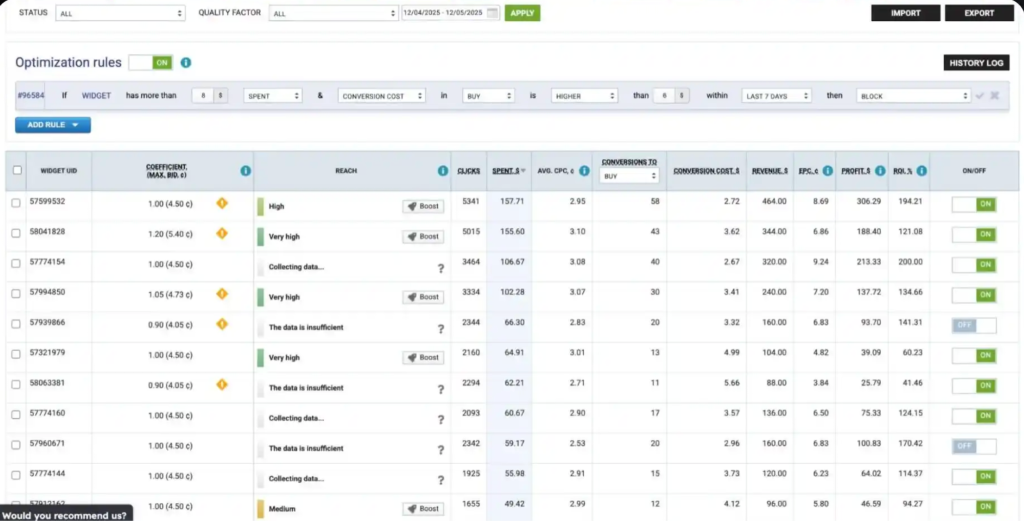
The case shows that native advertising can generate a profit even with a basic setup, provided that the campaign starts with a well-prepared pre-lander, a proven offer, and a relevant list of placements.
Conclusion
The defining feature of native advertising is its high entry threshold in both budget and time. Trying to launch with only a few hundred dollars makes little sense: the balance may run out before you can remove non-converting placements and improve the pre-lander.
To avoid wasting money, start with a proven offer, split-test different pre-lander approaches, and clean up placement lists promptly. With this approach, native traffic becomes a clear acquisition channel with predictable results.

Comments (0)