


According to the figures cited, the top 10 YouTube channels publishing AI-generated content collectively earn more than $33.6 million a year.
AI-generated videos already account for more than 20% of all content published on YouTube. It is no surprise that affiliate marketers were among the early adopters.
Let’s look at how AI video channels make money without the creator appearing on camera, recording their own voice, or filming footage—and how profitable this approach can be.
What Makes AI Videos Stand Out
Traditional video production can be expensive. Ideally, you need a good camera and actors, then have to write scripts, shoot the footage, and edit it yourself. AI reduces those costs: subscribe to the tools you need, choose a workflow automation tool, and you can start producing videos by the hundreds.
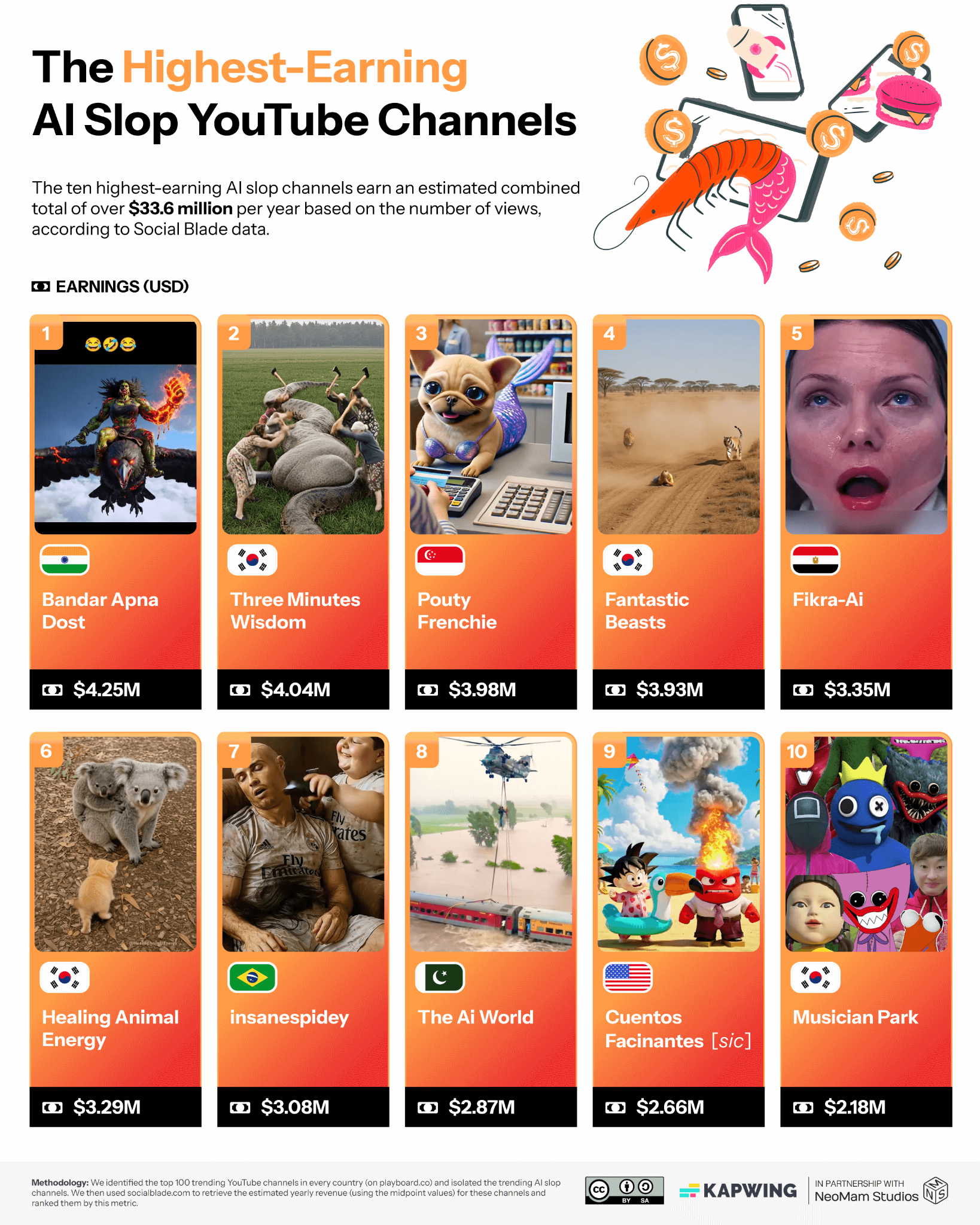
For monetization, this approach can be much more cost-effective. In a couple of days, you can research trends, generate detailed scripts and visuals, add AI voiceovers, edit the results, and start testing. AI video offers three main advantages:
- Low barrier to entry. A conventional shoot requires an actor, lighting, a camera, a location, coordination, and follow-up adjustments. That is expensive, complicated, and time-consuming. A tool such as ChatGPT, assigned the role of an experienced videographer, can explain how to “shoot” a scene so it looks professional.
- Production speed. An actor falls ill, a camera breaks, or the presenter struggles to deliver lines in another language: these are conventional filming problems. With AI, you can specify the camera, angle, effects, lighting, presenter’s movements, speaking pace, facial expressions, language, and other details in one go. The human factor behind many production problems is effectively eliminated.
For reference, we generated the following comparison of what each approach requires:
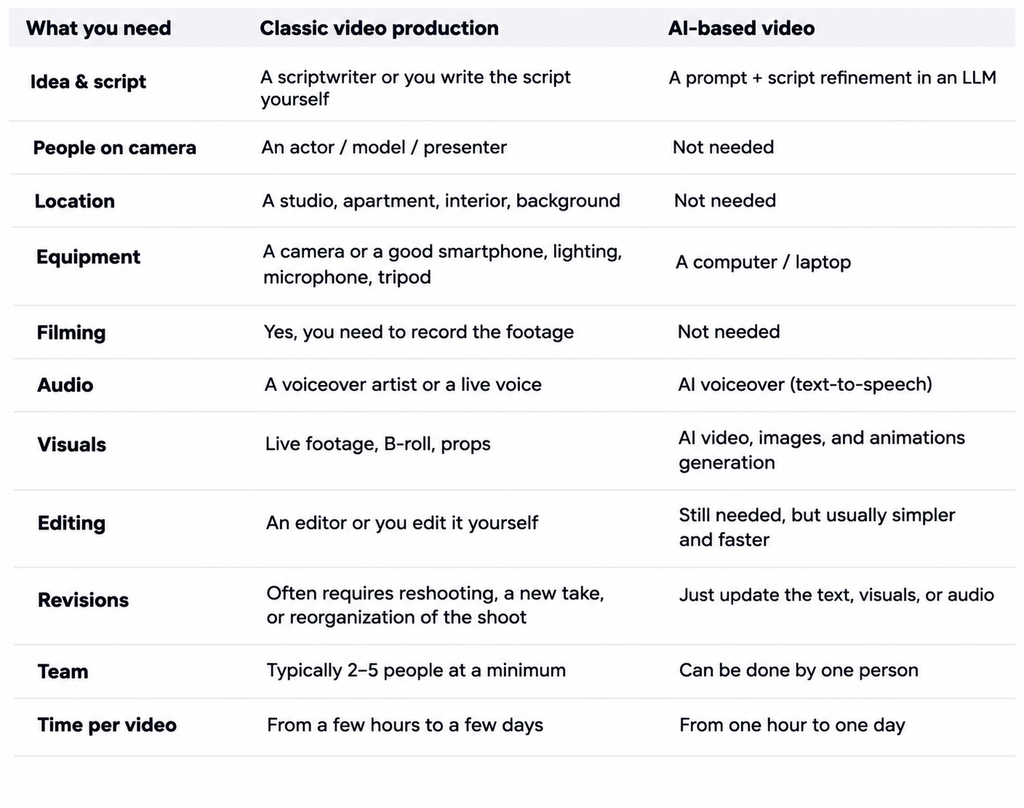
- Scalability. Even experienced video creators eventually organize production into a repeatable process: categorizing videos, planning content sections, and defining a presentation style. AI makes this easier because automation tools can turn the entire workflow into a production pipeline.
Now let’s look at the niches affiliates promote with AI videos.
Which Niches Can You Promote with AI Video?
You can use AI video in virtually any niche. It is the start of the funnel, so what happens next depends on the affiliate’s creativity. YouTube, the largest video platform, does not explicitly ban AI-generated content. You can also expand the funnel to Reels, TikTok, and other platforms. Here are three examples: iGaming, dating, and e-commerce.
iGaming
Older approaches built around aggressive advertising still work to some extent, but getting those videos distributed is harder. AI has made moderation stricter, and clips of this kind are often banned. Some affiliates take a subtler route: they create “educational” content featuring an AI mascot that shares tips and tricks.

Videos demonstrating a strategy are still used, though less often. The affiliate takes a clip and uses AI to place it on the screens of different devices. In Africa, for example, a viewer may find a familiar Tecno phone more believable than an iPhone 16.

Another approach uses AI avatars to present a supposedly unique winning strategy.
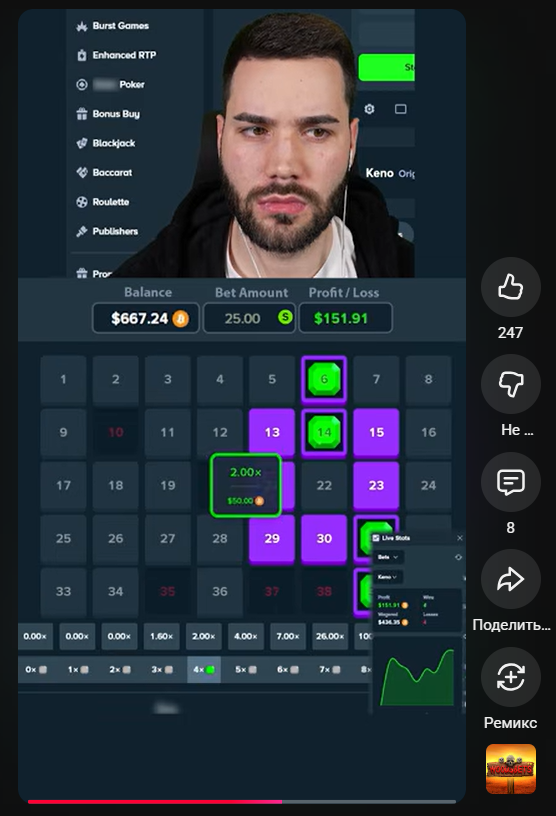
The usual monetization models are CPA and RevShare. Gambling and betting also have a more specialized arrangement negotiated individually: payment for views. This is common in Shorts, where an overlay banner displays an online casino or bookmaker’s logo and a promo code.

Rates are not publicly listed, but affiliate programs typically pay around $0.6–$0.8 per 1,000 views. That means a video with a million views can earn up to $600. Much depends on traffic quality and GEO, however: a million viewers from Tier 1 countries are worth considerably more than the same number from Nigeria.
Dating
In dating, the ad format depends on the offer and the tools available. Finding AI that generates explicit content is easy; producing a borderline video that gets past the platform’s algorithms is much harder. The simplest option is therefore to promote simulators that recreate a conversation with a real girl.
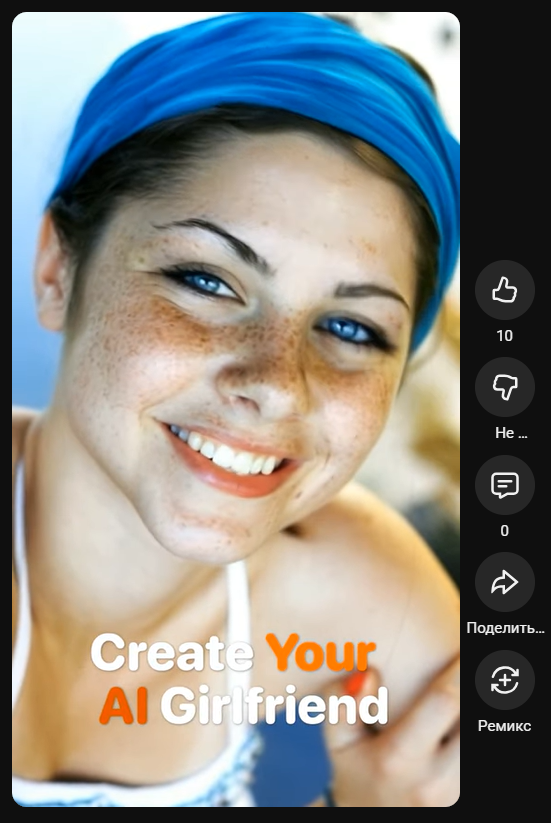
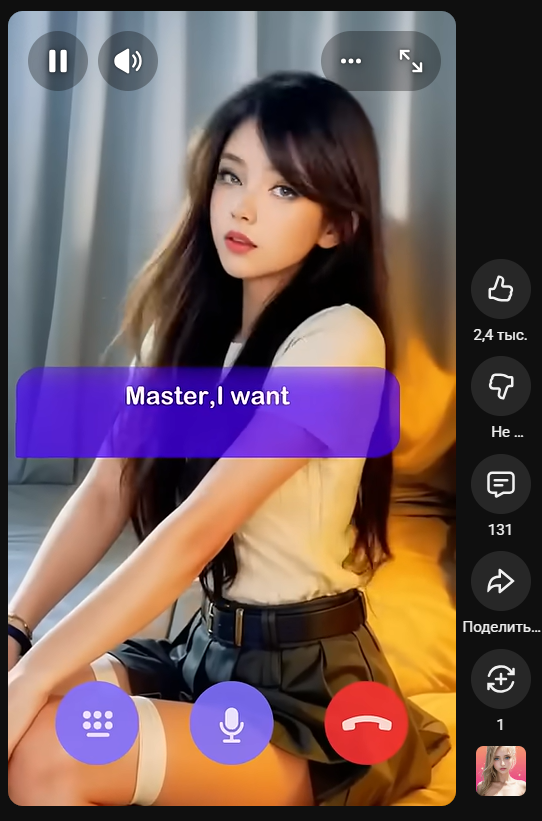
If the affiliate does not want to sell the offer aggressively, they can build interest with videos featuring attractive women, then direct viewers to a Telegram channel, Instagram, or another platform.
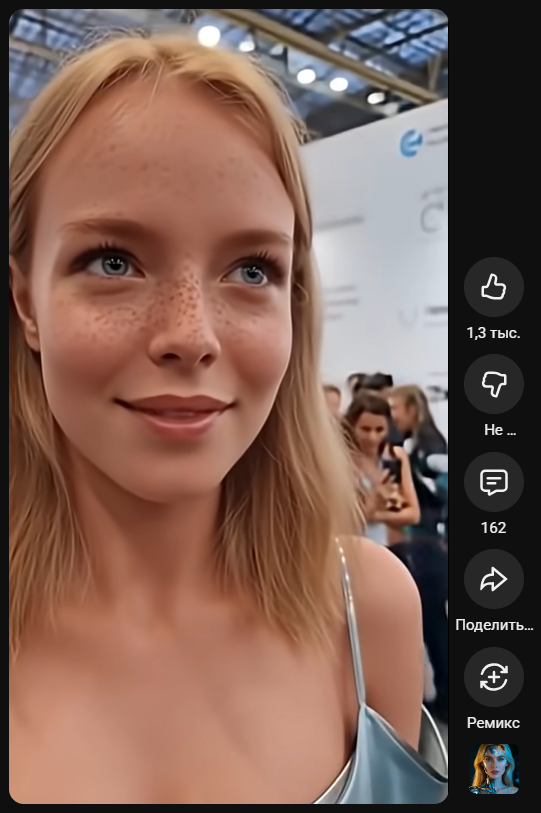
Another option is to send traffic to Fanvue or OnlyFans. The affiliate creates a model persona and promotes it through Shorts.
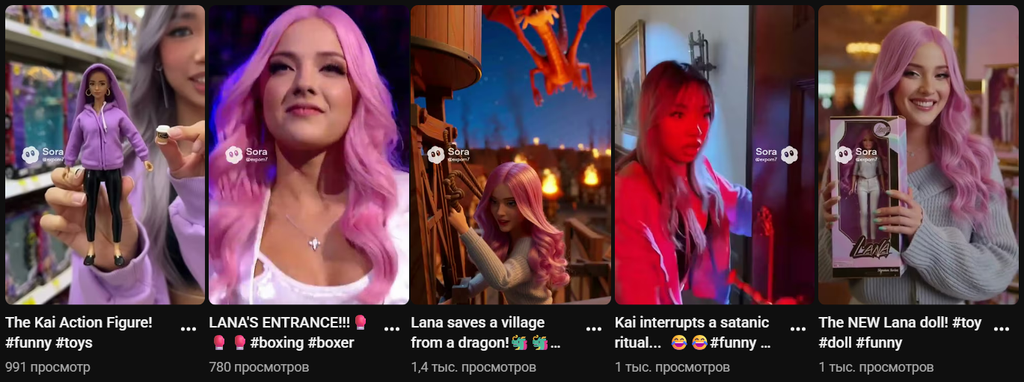
In theory, this can be the most profitable vertical: the content is relatively neutral and bans are minimal. That reduces the need to regenerate successful videos from different angles to get past moderation and into recommendations.
Dating monetization works much as it does with other traffic sources. Commissions are usually paid for registrations or, for AI girlfriend services, paid subscriptions.
E-commerce
AI can also promote physical products. Sora currently handles this best, but OpenAI plans to discontinue it at the end of April. That makes alternatives such as Veo a better option going forward.
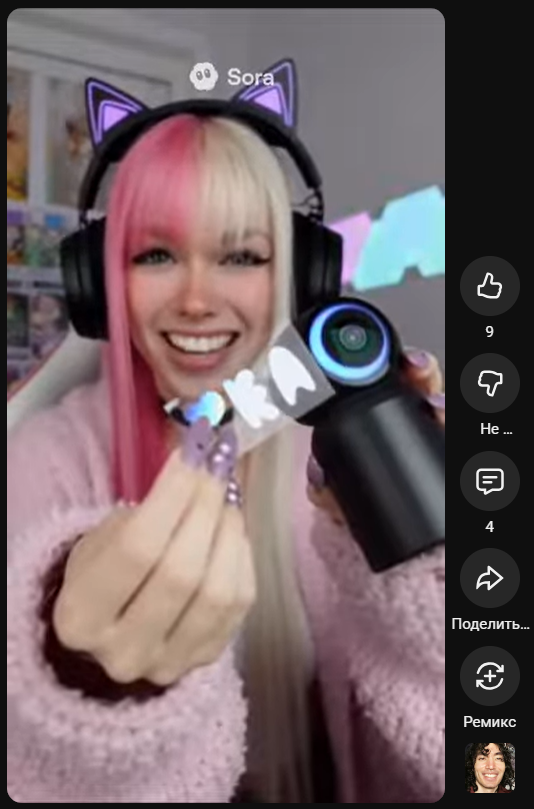
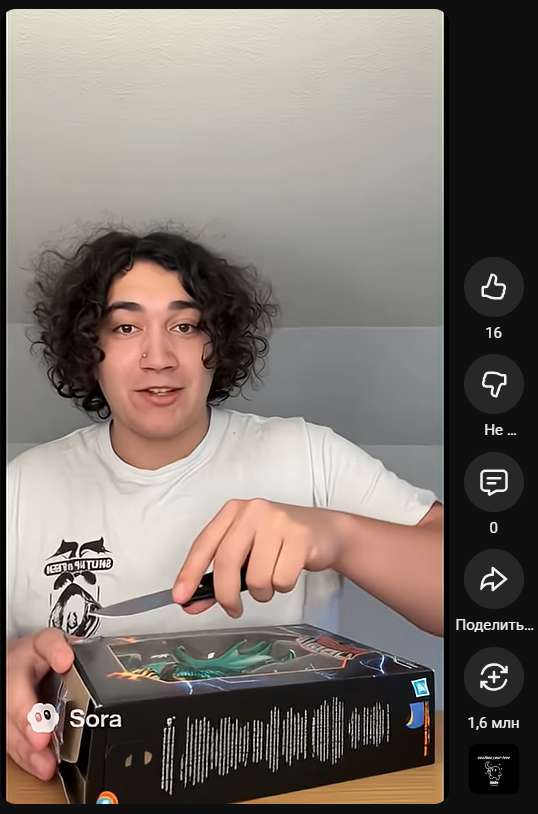
Almost any product can be promoted this way, though electronics and items without intricate details are the most common.
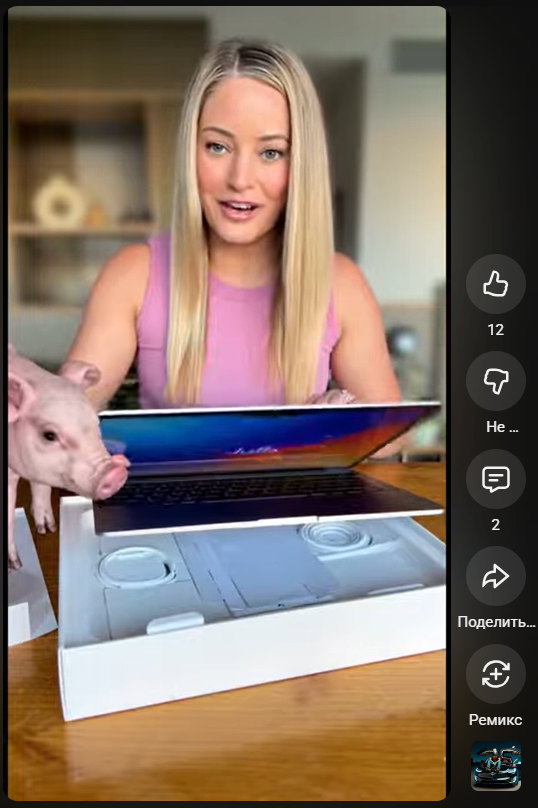
Monetization is more challenging here because the affiliate depends heavily on the product’s reputation. AI can produce an attractive video presentation, but a poor-quality product may still leave the affiliate without a payout.
What Does an AI Video That Converts Look Like?
Let’s use a specific script to show what an AI video designed to convert might look like. ChatGPT generated the script for us. It breaks down into the following sections:
- 0–2 seconds. Hook the viewer immediately by addressing a pain point or challenging an assumption. Script: “A 200% bonus is not always a gift.” Visual: a bright “200% bonus” banner, a quick zoom, and a red circle around the number.
- 2–5 seconds. Explain what comes next while maintaining curiosity: “Watch for the one condition everyone skips.” Visual: the bonus banner slides aside and a card appears with “Terms and conditions” in small print.
- 5–20 seconds. Explain the situation introduced in the hook. Take wagering requirements as an example. Script: “You see an impressive number and think you have simply been given more money. But the terms may include a x35 wagering requirement. That means you have to play through the bonus many times before you can actually benefit from it.” Visual: the banner, then a large “Wager x35” label, followed by a simple sequence: bonus → playthrough → withdrawal.
- 20–30 seconds. Offer a concrete solution. Script: “That is why you should check the terms below the banner, not just the percentage. Sometimes a 100% bonus with easier terms is better than a 200% bonus with strict ones.” Visual: two cards side by side. Card 1 reads “200% bonus, x35 wager”; Card 2 reads “100% bonus, x10 wager.” Add the caption: bigger number ≠ better deal.
- 30–40 seconds. End with a conversion opportunity: a promo code for a trustworthy casino, a Telegram channel reviewing casinos, or a comment linking to a specific offer. Script: “In my Telegram channel, I reviewed three more types of bonuses and found a casino where players are not misled.” Visual: a Telegram link, a promo code, or a pop-up screenshot of a comment linking to the landing page.
You can expand this script template into a more detailed shot-by-shot plan, with prompts for each scene.
How to Make AI Videos and What It Costs
We’ll cover two options: a video without an on-screen presenter and a video with one. The first is quicker and easier to produce, but do not expect high conversion rates: people are more inclined to watch videos featuring other people. An AI avatar takes a little more work because it needs separate animation and voiceover, but it can also make it easier to capture attention.
Making a Video Without an On-Screen Presenter
Tools needed: ChatGPT, Flow, ElevenLabs, and DaVinci Resolve or CapCut.
Cost: a basic setup costs around $25 a month. That covers up to 100 videos of 8 seconds each, plus voiceover.s amount, you can create up to 100 videos, each 8 seconds long, and voice them as well.
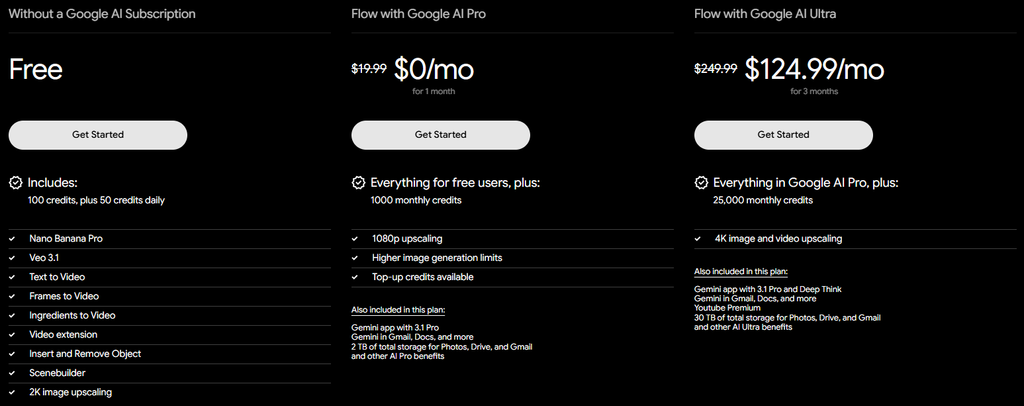
That is enough for testing: a 1-minute Short at medium quality costs around 140 credits. You can also find ways to get a free subscription online, including offers linked to a student email address and other workarounds. For serious production, however, you will need an Ultra subscription.
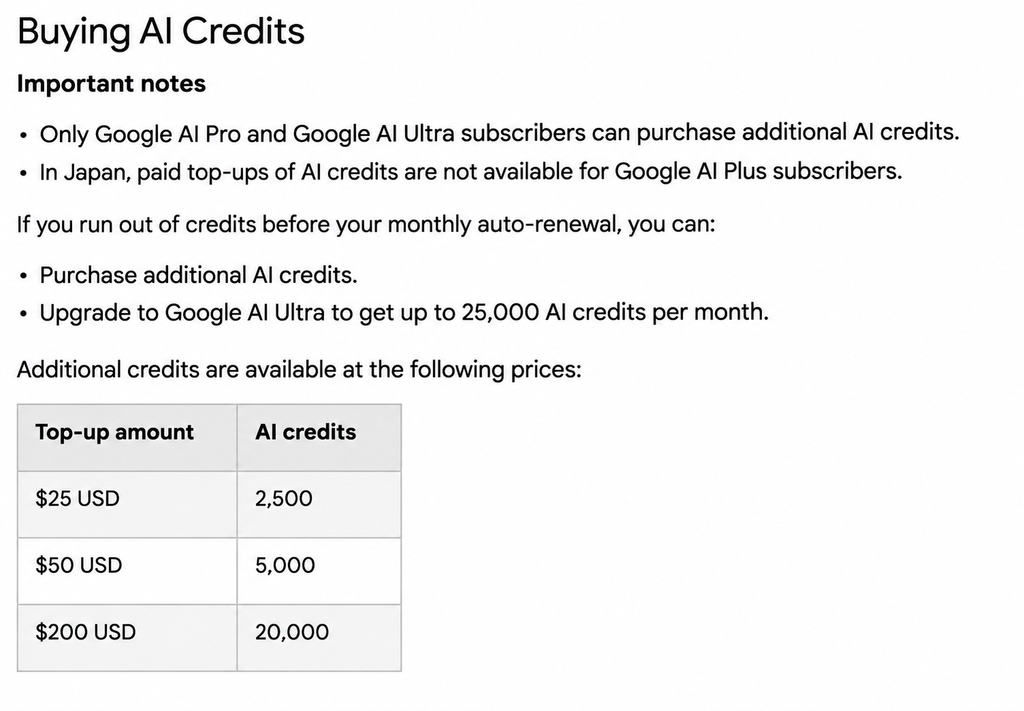
If you run out of credits, you can buy more.
The second expense is voiceover. For $5, an affiliate gets 30 minutes of high-quality narration.
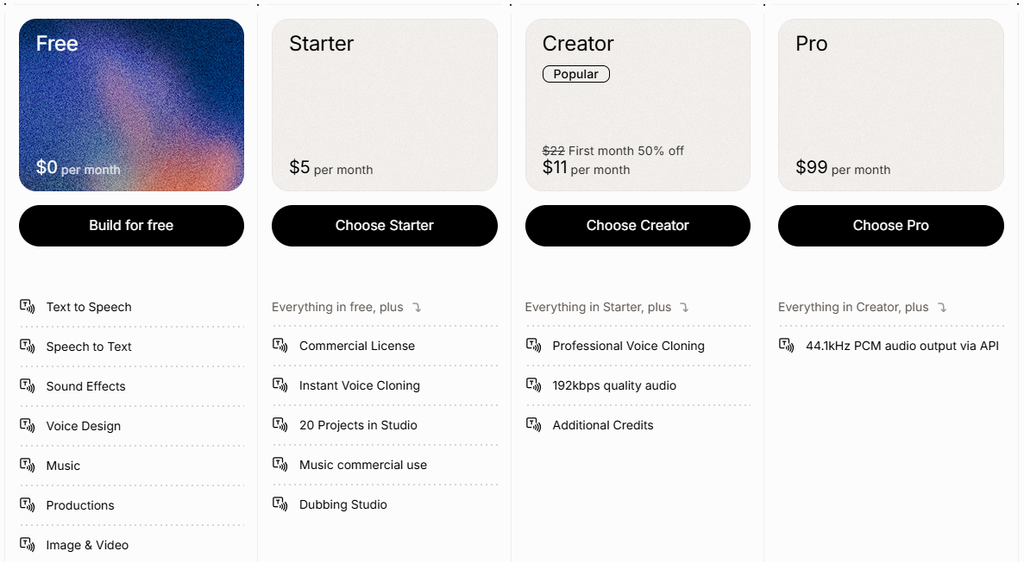
Editing is more straightforward. DaVinci Resolve and CapCut are both available free. Even a paid AI video editor can be found cheaply on a marketplace.
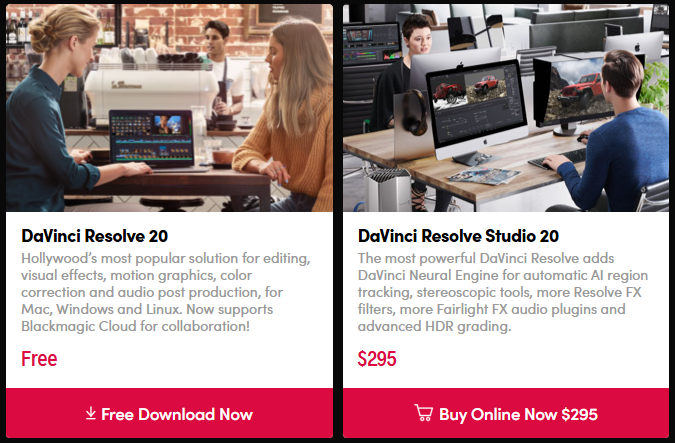
Best suited to: experienced media buyers who know how to structure a video narrative, and anyone who wants to run quick tests.
We have not included ChatGPT pricing because the free usage allowance should be enough. Once your subscriptions are in place, open ChatGPT and assign the roles in sequence: planner, scriptwriter, videographer, and AI specialist. You can find the templates here. This helps the agents work together as a team.
Take the finished storyboard, formatted as prompts, into Flow to generate the scenes. Assemble them into one video, then create the voiceover in ElevenLabs and add it to the edit.
Once the workflow is running smoothly, you can automate it with n8n. There are dozens of workflow templates available online for this task.
Making a Video with an AI Avatar
Tools needed: ChatGPT, HeyGen, Flow, and DaVinci Resolve or CapCut.
Cost: a starter setup costs around $49 a month. HeyGen replaces ElevenLabs as the main expense. It is the service used to generate the AI avatar.
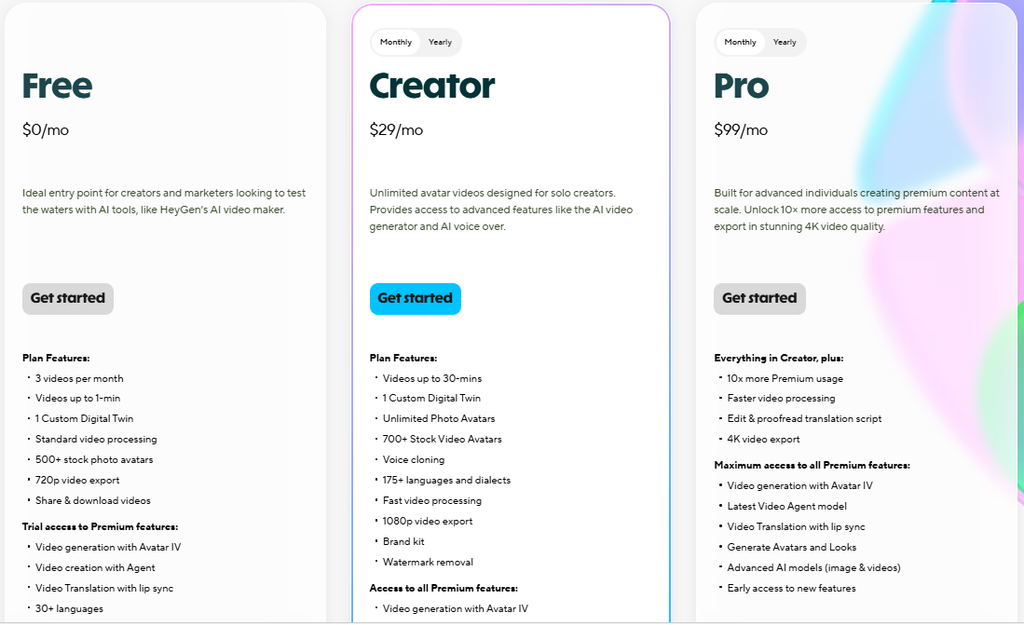
The Creator plan lets the affiliate make an AI presenter at a reasonable quality level and have it deliver up to 10 minutes of the required script. Beyond that allowance, additional credits are needed.
Best suited to: beginner affiliates who want to prioritize quality over volume. Editing a video with both background footage from Flow and an avatar is a little more involved. The talking head, however, draws attention and can distract viewers from flaws in the background visuals.
The workflow is largely the same, except that you also generate the presenter after creating the background footage. Ideally, the avatar should look like a typical member of your target audience. You can specify the voiceover, language, lip sync, and other details directly in HeyGen.
Case Study: 1900$ from Organic YouTube Traffic to Nutra Offers
This case study is not new, but it remains relevant. The affiliate promoted nutra offers from June to September 2024. Joint-health offers alone generated 7,558 clicks, 68 approved leads, and ~1900$ (if you convert from rubles) in profit during that period.

The offer selection logic was simple: choose something relevant to a broad audience. Joint pain, for example, affects both men and women aged 55+. The only expenses were proxies at RUB 99, YouTube channels costing up to RUB 1,000, and an antidetect browser. Video thumbnails at RUB 500 were optional.
Content selection was equally straightforward: open Dzen, find popular articles in the niche, turn them into voiceovers, and choose background images.
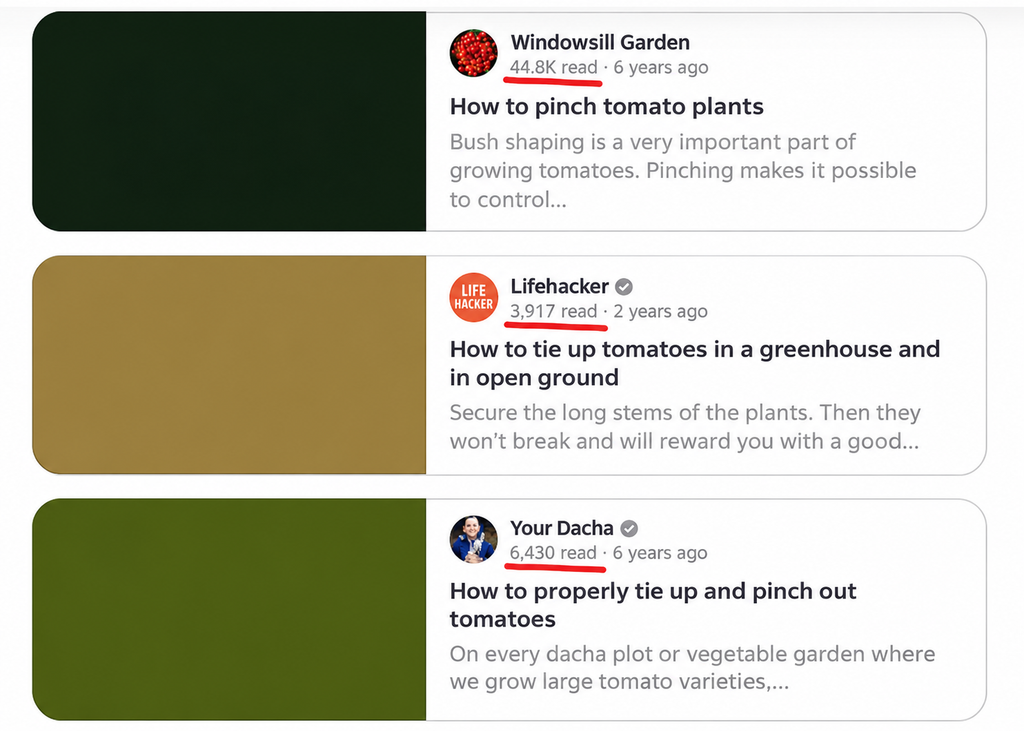
You can find material yourself or use Zenstat, but the simpler option is ChatGPT with web search enabled. Then create a smooth, natural transition from the article to the offer. For example, a video about the best time to plant tomatoes might mention lower-back or knee pain while gardening. The pitch then presents the advertised product as a way to prevent those problems.
The income figures for sample weeks in August and July looked like this:
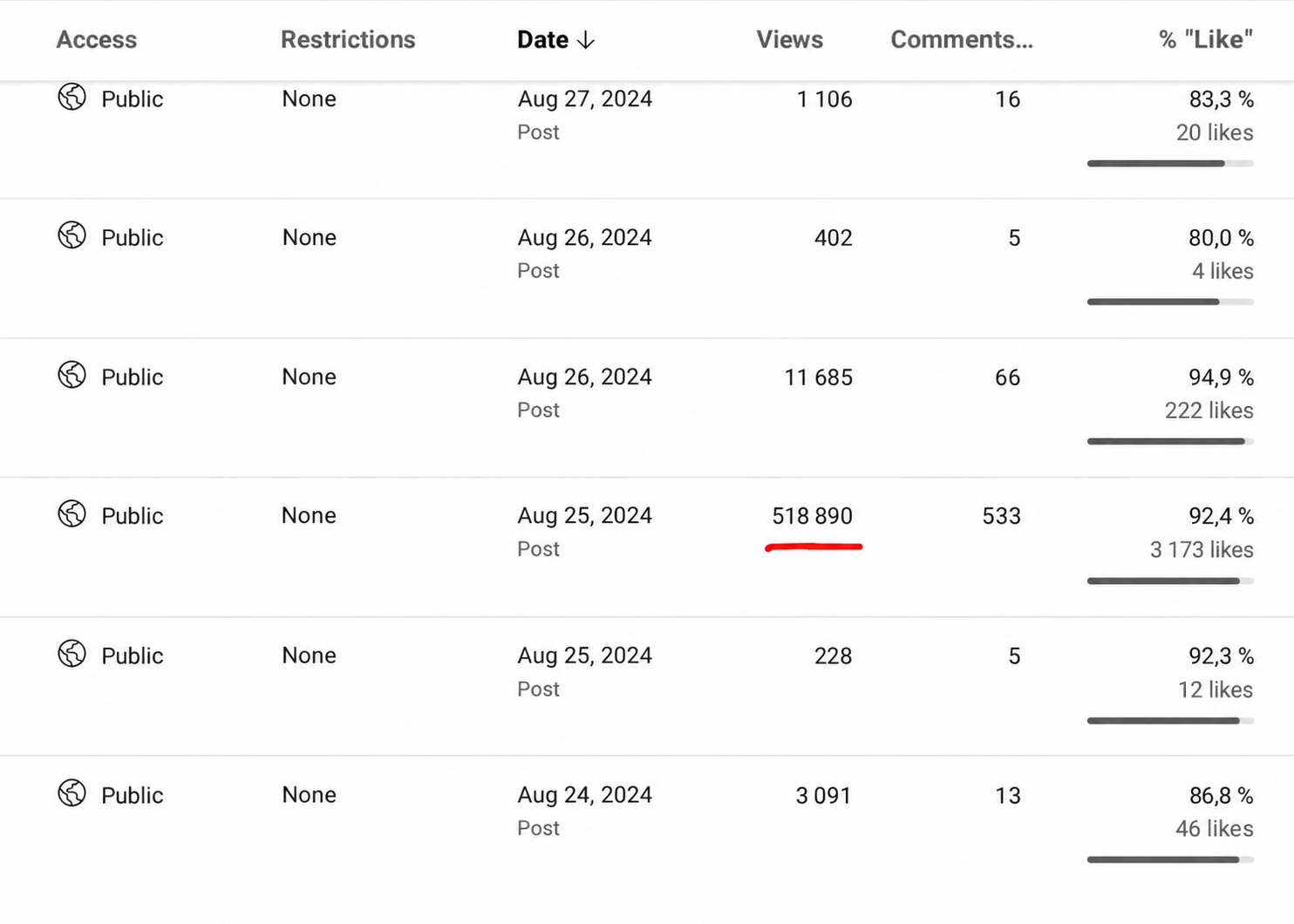
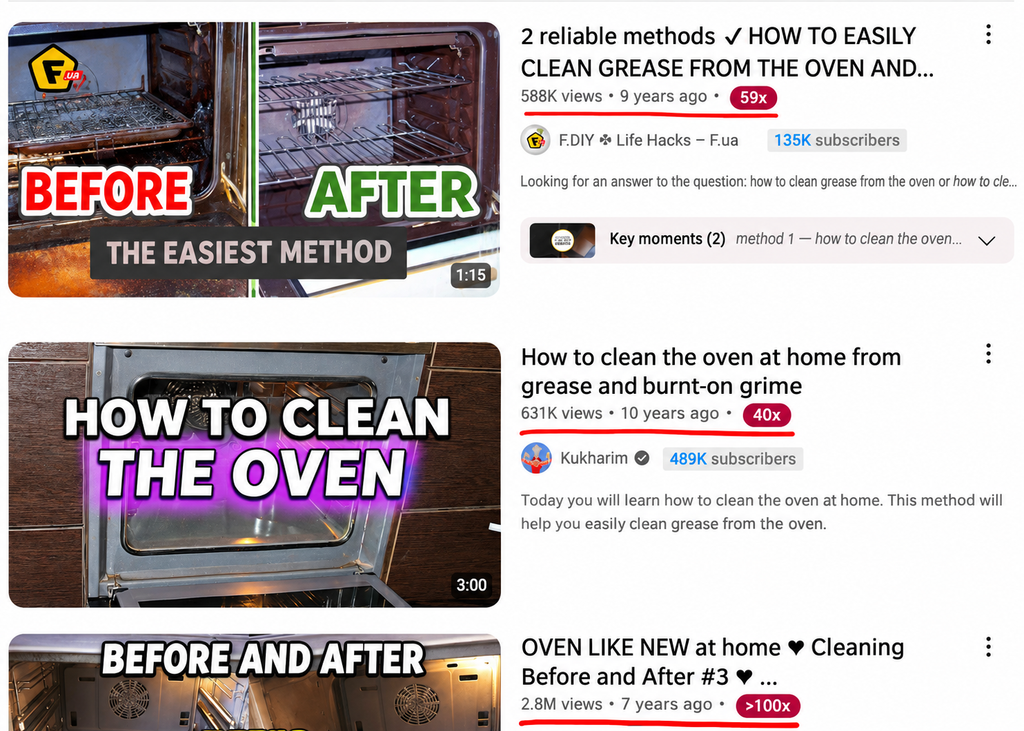
The author says profit depends on the affiliate’s creativity and approach. Sensational topics can attract views quickly, but interest can fade just as fast when the news cycle moves on. Everyday, stable topics can remain relevant for years. Nutra is an example of a more aggressive niche; physical products offer a more neutral, lasting alternative.
Conclusion
By 2026, AI video has moved beyond experimentation and become a practical tool for affiliate media buying. Its advantage is not just lower production costs: it also makes it possible to test ideas quickly, scale successful campaigns, and adapt creatives for different audiences. Traditional production depends on equipment, actors, filming, and lengthy preparation. With AI, an affiliate can build a production workflow almost alone and quickly release dozens of videos to test ideas.
AI video is not a shortcut to guaranteed income. Results still depend on a strong script, an understanding of the audience, a well-presented offer, and a funnel that works after the viewer watches. Some campaigns benefit from rapid testing and large volumes of videos without a presenter. Others work better with an AI avatar that holds attention and makes the ad more persuasive. Use AI to find a format that works, then turn it into a repeatable system, balancing production volume with quality

Comments (0)