


For unprepared beginners, driving conditionally free traffic from Instagram to an offer seems like a simple scheme: download a video → make it unique → publish. In practice, these fantasies quickly run into a lot of nuances: how to choose an account, how to warm it up, when to place the link, and so on.

Today we’ll break down how to run UBT from Insta, what you need for it, and what experienced affiliates have to say.
Technical Setup
Let’s imagine Andrey. He’s read a bunch of case studies with impressive numbers, picked up a dozen offers, but got stuck on the main thing: where to start? To keep it simple, we’ll go from easy to more complex.
The first thing you’ll need is a phone. If Instagram has never been on your personal device, it will do. If it has, buy the simplest phone on the market for 1,000–3,000 rubles and use that. The platform is primarily focused on mobile fans, so it trusts them more than PC users. Some affiliates believe iPhone is ideal for Instagram, but that’s definitely not the best option for starting out.
If you can’t buy a phone, use an anti-detect browser. For that, you’ll need separate accounts and proxies for the working GEO. Ideally, your anti-detect should be able to emulate a mobile device. There are such products on the market, but we won’t advertise them here. It’s best to use residential or mobile proxies. This isn’t cheap, but it softens the fact you’re using a computer.
If you’ve got this covered, move on to software and consumables.
Tools and Consumables
Besides an anti-detect browser and a phone, you’ll also need accounts, a video editor, a uniqueness tool, and an analytics service.
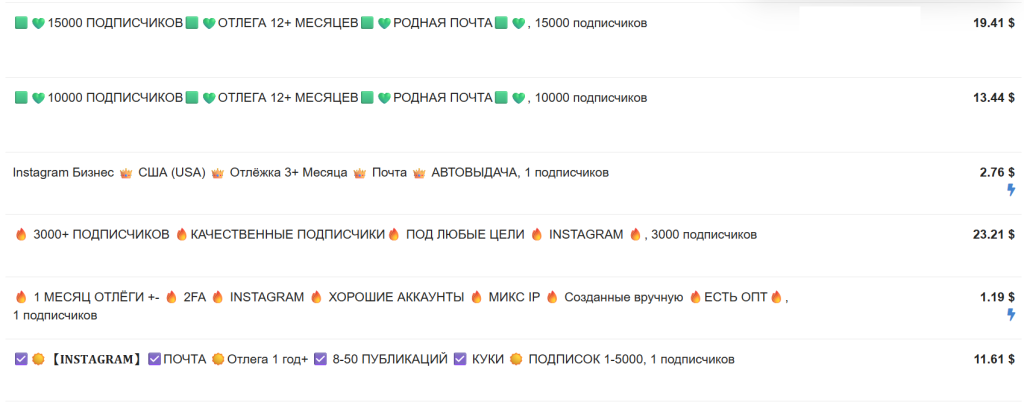
Accounts. Shops usually offer three options:
- fresh self-registered accounts;
- self-registered accounts with some age;
- old accounts with history.
There’s no point in buying trusted accounts at the start, even if your budget allows: if you don’t understand Instagram algorithms, profiles will get banned quickly. So, prioritize aged self-registered accounts, or fresh self-regs if you’re on a tight budget. They’re inexpensive.
Proxies. Each account needs a clean proxy. Ideally, use residential or mobile proxies, but if your budget is tight, individual IPv4 or IPv6 proxies will do.
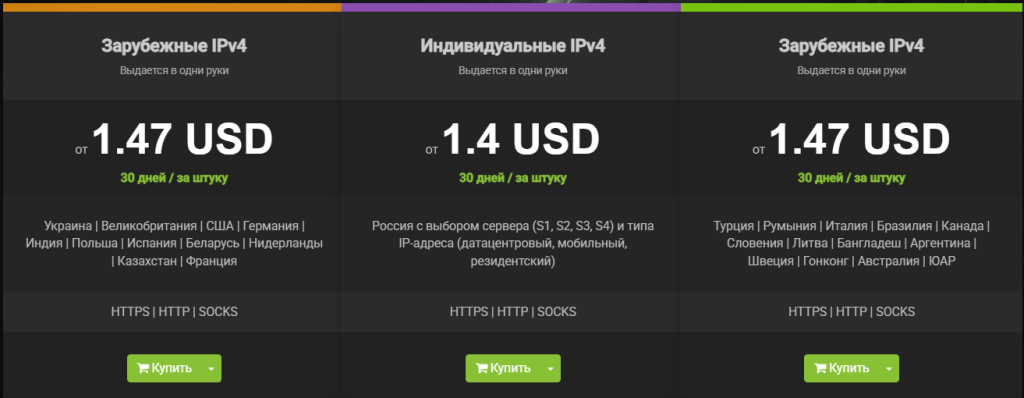
Important: one profile – one proxy – one environment. If you buy a batch of accounts, connect each one to a separate profile in your anti-detect with its own proxy for checking. Experts often note that the worst rookie mistake is giving Instagram a reason to think several accounts are tied to one fingerprint. If one account gets banned for violating the rules, the rest will follow. So, in the platform’s eyes, each profile should look like a separate person.
Uniqueness Tool. Here you have two options: use a ready-made uniqueness bot, or manually edit the original video in editors. The bot is easier and faster, but if the developer used a simple uniqueness algorithm, Insta might spot identical editing patterns. That’s like logging into a dozen profiles from your phone on home Wi-Fi. Still, it’s fine for starting out or testing a hypothesis.
In Adobe Premiere, the popular video editor, you can create a batch of your own templates and then edit them. This way, the uniqueness percentage is higher, and you have full control over all the details. In the long run, this is the best option—a buyer can find their own perfect system for video uniqueness and even sell it later.
Video editor. For complete beginners, we recommend CapCut. It works on both mobile and PC, and its features are enough for basic editing: transitions, effects, subtitles, music—all of this can be set up in just a few clicks. After that, it’s best to move on to Adobe Premiere. In the world of video editing, it’s like a top-tier Bugatti. In CapCut, settings are usually applied once for the entire clip. For example, if the scale is 102%, it will be 102% throughout the whole clip. In Premiere, you can do this:
- 0–2 sec: 100%;
- 2–4 sec: 103%;
- 4–7 sec: 98%;
- 7–8 sec: smooth zoom;
- 8–12 sec: 101%.
The same applies to working with sound, color, FPS, speed, and other details.
Analytics. If your wallet is starving, sick, and dead, start out using Google Sheets. A template could be, for example, like this one. Later, switch to a tracker or your own analytics system with an AI agent. There are plenty of guides on this topic online, so everyone can choose what works for them.
How to warm up accounts
Let’s say right away: there’s no universal template. Every affiliate comes up with their own algorithm based on texts and practice, and usually doesn’t share it just like that. So here’s an expert opinion:
| For the first few days, just watch reels in your niche, scroll through the feed, and occasionally like posts. You can also follow similar profiles and leave a couple of comments. The main thing is to gradually fill your feed recommendations with videos relevant to your chosen topic. The goal during these days is to train the algorithm. It analyzes your actions: what you watch longer, which videos you like, where you leave comments. In the end, it will understand who to show your videos to. This usually takes about a week. For the first 3–4 days, you can be active without worry. On days 3–5, set up your profile for the future topic: choose a proper name, avatar, and describe what you’ll be doing, but don’t add links yet. Don’t forget to stay active during this time. After about a week, you can publish your first videos. It’s best to start slowly—one video per day. Only start driving traffic when your videos consistently get into recommendations. |
At the same time, it’s a good idea to publish content for followers or your potential target audience. This could be memes, carousels, polls, short reactions to events, and anything else people might like.
When to add a link
The safest scenario is to first warm up the account, then publish a few Reels without any advertising undertones, and only after that add a link to the offer. And that’s only if the videos are already making it into recommendations.
what-to-promote-2026
It’s important to understand that Instagram is a platform where visuals come first. If you can showcase the offer in 40–50 seconds, it works. If not, there’s still a chance for conversion, but much lower. Let’s break down the popular niches for Reels in 2026.
Gambling and Betting
TikTok, Reels, and Shorts often copy each other. If some approach goes viral in Shorts, it’s almost guaranteed to be tested in Reels and vice versa. The evergreen option is strong emotions from winning.
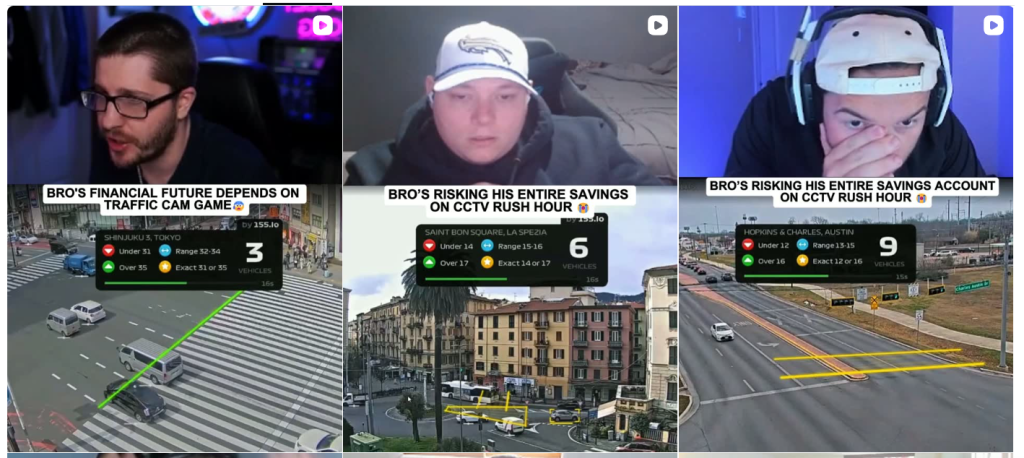
The “golden” season for betting comes during the World Cup, but some guys keep running this niche even now. For example, they review sources of signals or insights for those who bet on sports.
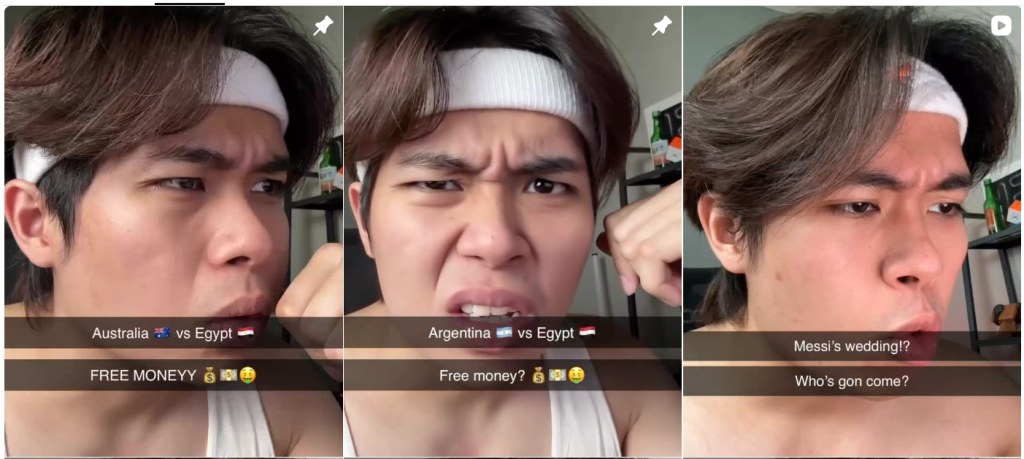
For example, here the user gets a chance to earn millions on Polymarket for just $1. Just do as they show in the closed Telegram channel and get paid.
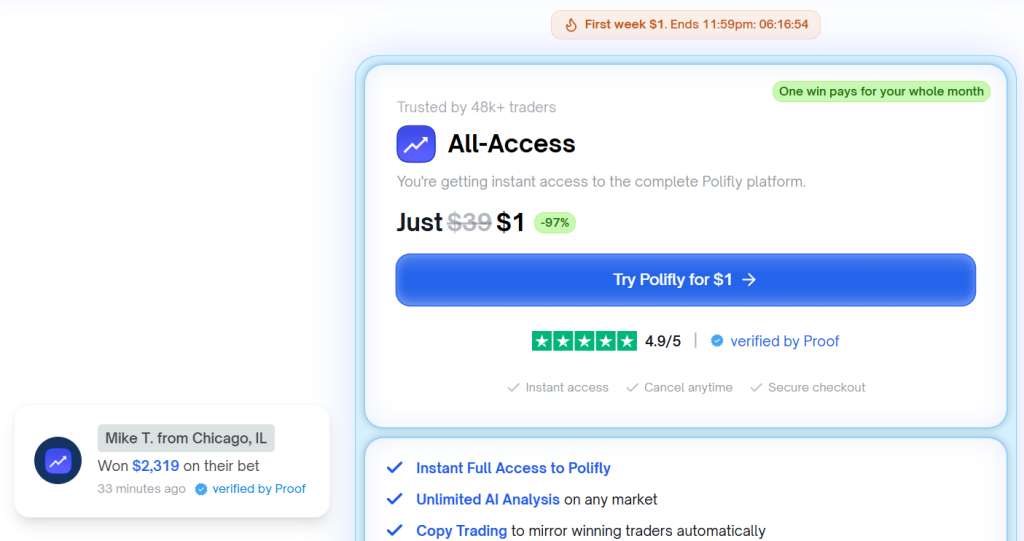
Promoting gambling and betting on Insta without a face is much harder than with one. That’s why we recommend exploring AI for creating deepfakes, since users are more used to videos with people.
Dating and AI Models
Dating, adult, and AI-girls are verticals that fit Instagram perfectly. The platform requires AI content to be labeled, but affiliates get clever: they add a disclaimer for literally 1–2 frames. Once the user bites on the video, they’re pushed to the profile and then to direct messages.
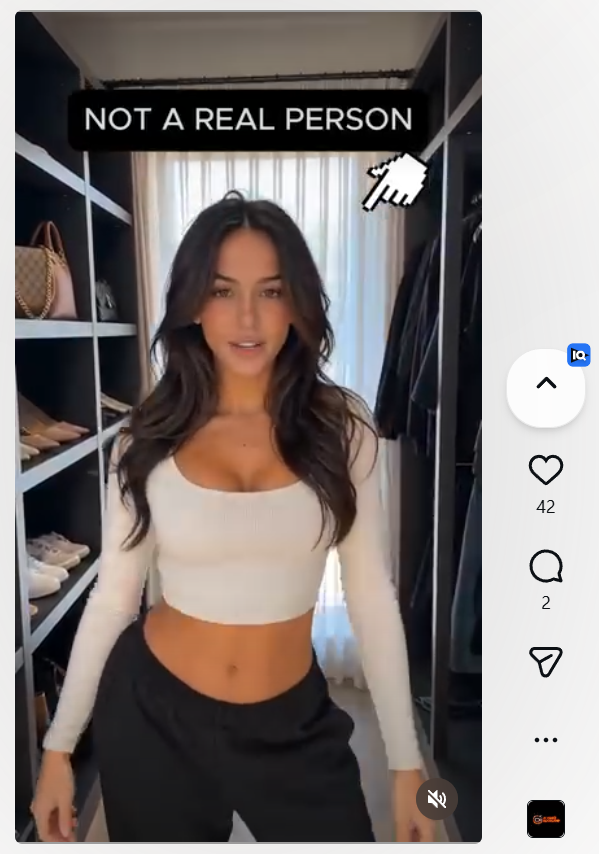
For the Russian-speaking segment, AI dating is a bit different—the audience is usually monetized through Telegram.
Every video shows the ideal for the target audience and includes a call to action: comment, visit the profile, check the link in the bio, and so on.

Practice shows that it’s easy to mask an offer so that moderation doesn’t notice anything.
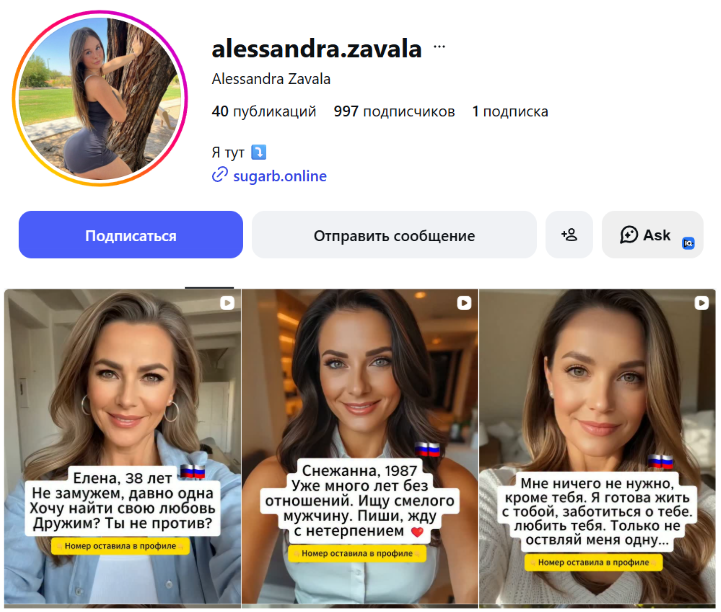
We’ll talk more about monetizing this niche later.
Nutra and Physical Products
In these verticals, practitioners use the “problem – application – result” story, household experiments, reactions, comparisons, and UGC.
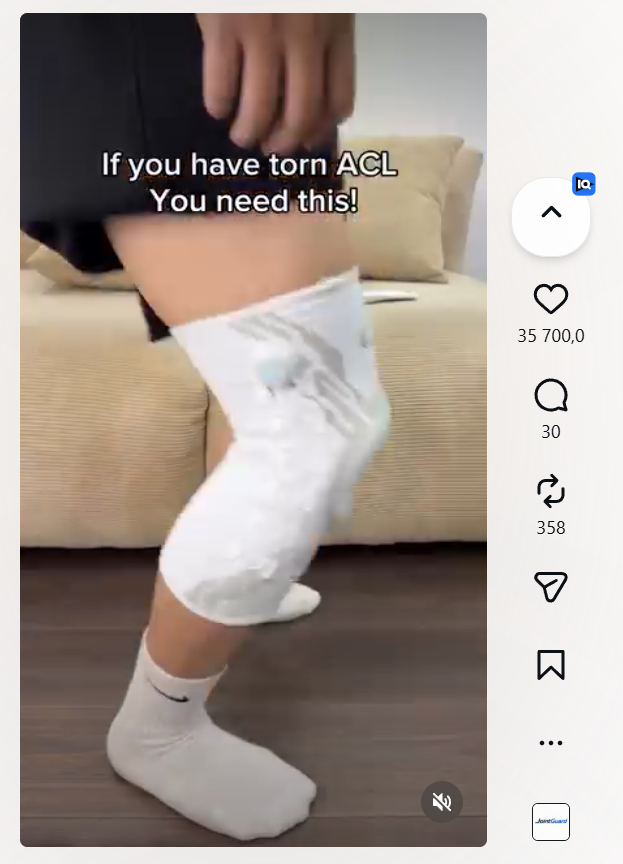
Ideally, the advertiser should suggest footage with the product in use or help shoot it.
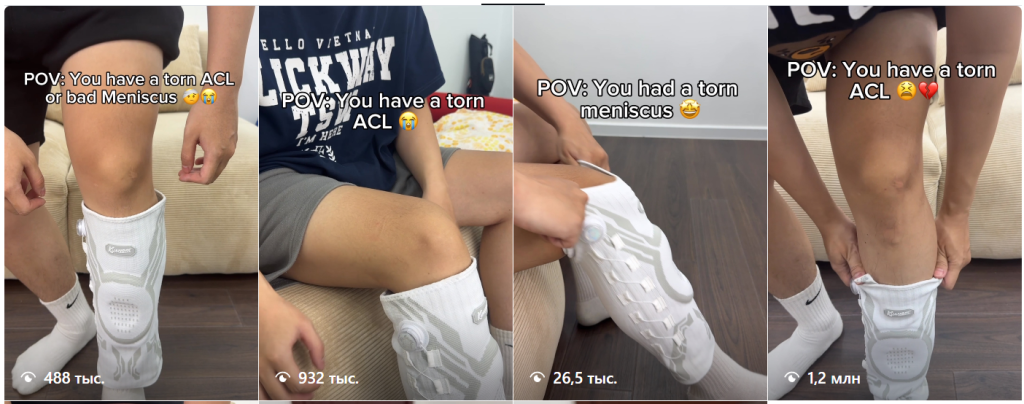
Promoting nutra or physical products without people and real experience is almost impossible. All the viral videos we found were always shot with a person or an AI model.
Apps, Services, and VPN
For digital products, screen recording, a quick feature overview, comparison of two tools, error breakdown, and answering common questions work well. At the end of such videos, there’s usually a comparison that clearly shows the benefit.
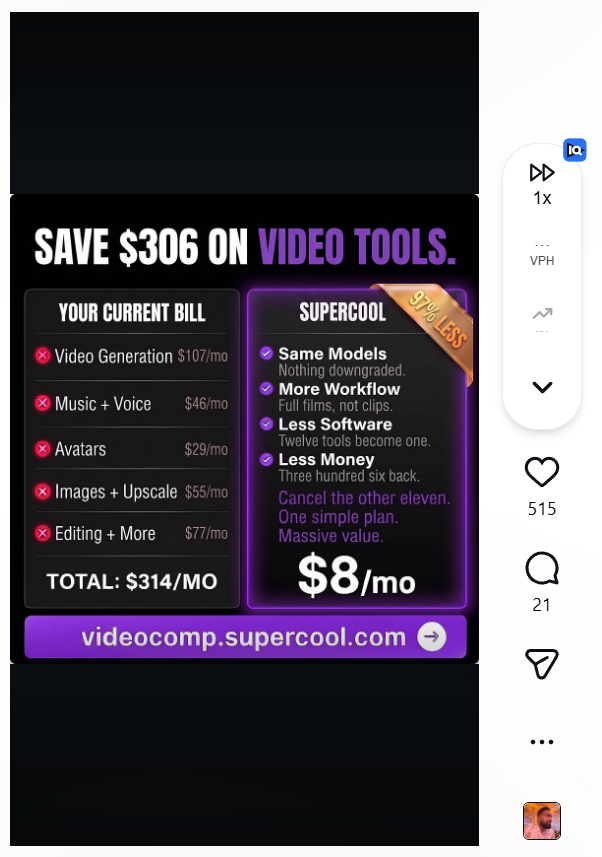
The beauty is that the same service can often be tailored to almost any target audience. For example, girls are interested in improving their photos with AI, marketers want to present products, and moneymakers can be offered ways to monetize the idea.
how-to-generate-content
Before neural networks, affiliates had it easy: find a video, change the speed, add a filter, and blast it across all accounts. Now Instagram algorithms are powered by neural networks, so this approach means your first account gets reach, but the second one gets nothing.
To work effectively with UBT in 2026, you need to make the same video unique on multiple levels. That’s what we’ll discuss here.
How to Properly Edit the Source
In short, change everything. In detail, here’s an approximate checklist:
- change the hash and metadata;
- slightly shift the start and end;
- adjust the frame rate;
- change the speed;
- color correction;
- add noise or overlay;
- new text and subtitles;
- replace or edit the audio;
- different first frame;
- new ending and CTA.
The more parameters an affiliate can change, the better. But simply changing the hash, speed, or zoom won’t help unless you also change the structure of the video itself. Ideally, each new clip should differ in meaning from the previous one. To do this, it’s convenient to break the video into five components and get creative within each:
- Donor. Show the first video as is, but in another, record it from the screen.
- Hook. Start with a question, promise, conflict, interesting number, or provocation.
- Body. Base it on a story, offer demo, author reaction, or comparison.
- Design. Freely change text, fonts, voice, music, character, or narrative pace.
- CTA. Send the user to the profile link, via a code word, comment, direct, or Telegram.
This way, one video turns into 10–15 unique clips you can upload from different accounts without risking overlap in views between profiles.
Testing Different Openings
A couple of months ago, there was a Reddit thread about reach on Instagram. It raised a point often seen in other affiliate communities: a weak opening is a guaranteed path to the trash.
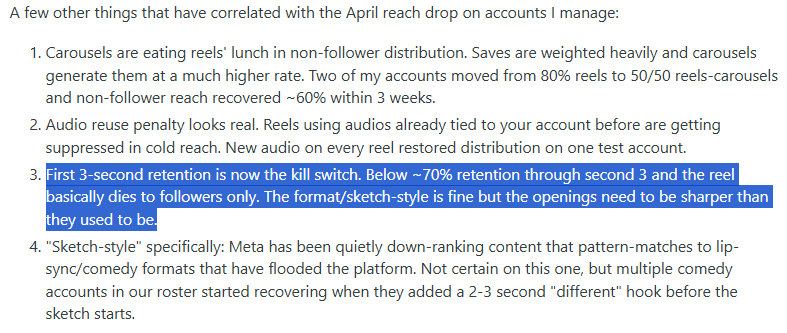
A universal option for an intriguing start is this: put the final scene at the beginning, cut it a second before the climax, then play the video as usual.
Where to Drive Traffic from Reels
A typical funnel looks like this:
Reels → profile → link in bio → Telegram, pre-landing, or offer.
However, it’s important to remember: the more steps from the first click to the target action, the harder it is to get a conversion. That’s why affiliates are always looking for ways to shorten or reduce the number of steps. Let’s break down the most popular ways to send leads to an offer.
Link in bio
The simplest option: the viewer watches the video and sees a clear CTA on the screen, prompting them to go to the profile where the link awaits.
This approach works well when the profile delivers on the creative’s promise. For example, if the video features an AI model looking to connect, the user naturally expects to find links to social networks or other platforms in the profile. But if, after a meme about World Cup betting, the user lands on a profile with a generic catalog of ten casinos, the chance of conversion drops sharply.
According to the FB-killa case author, the buyer uploaded 3 Reels every day with a profile link to a bonus showcase. In a month and a half, this approach brought in $1,638 in net profit.
Telegram
This is the standard option for all niches whose content is banned on Instagram.
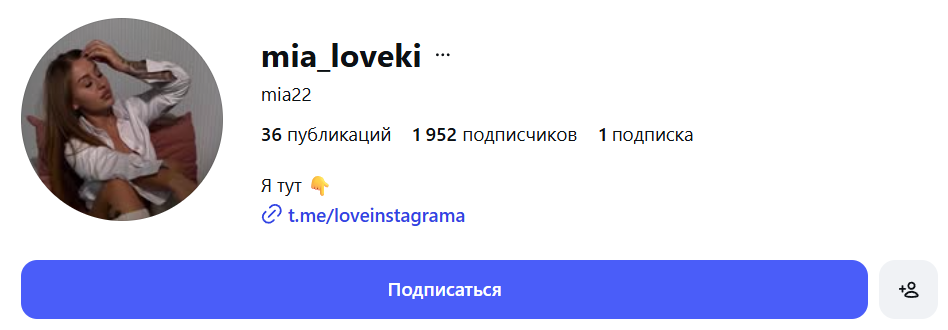
The buyer drives traffic to a channel and then explains to the audience why this was necessary.
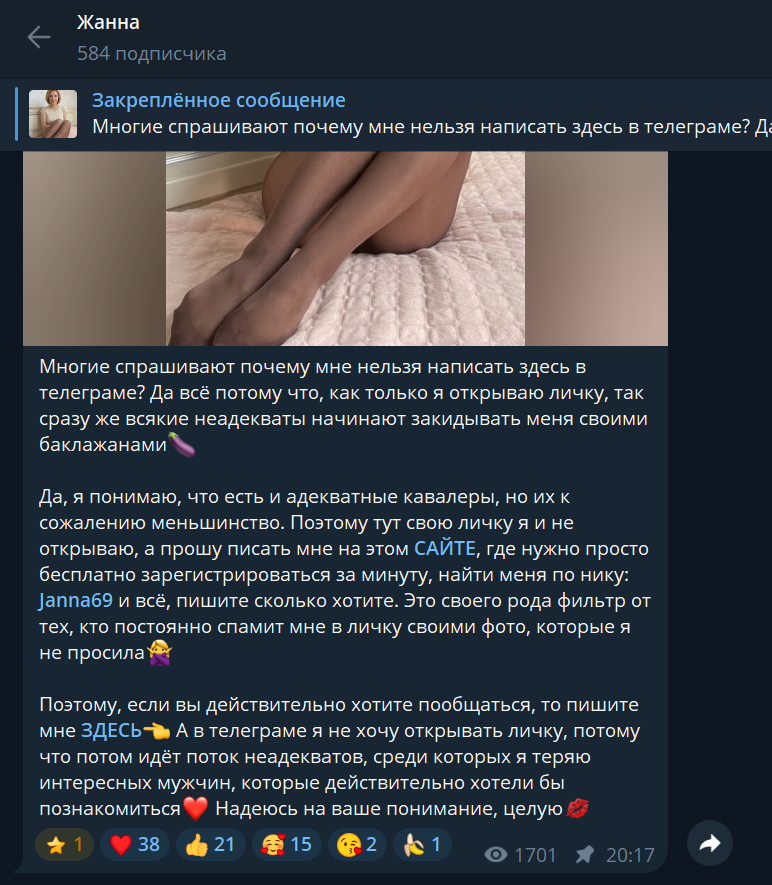
An alternative is to send the user to a Telegram bot. This option can be even more promising than a regular channel, but only if the affiliate plans out dozens of communication scenarios with the lead.
Code word in comments
If the niche is allowed on Instagram, or the video doesn’t violate platform rules, this approach is used. The user watches the video and then sees a phrase like “write the WORD in the comments – I’ll send the material to your DMs.” Sometimes the call to comment or write something is placed directly over the video.
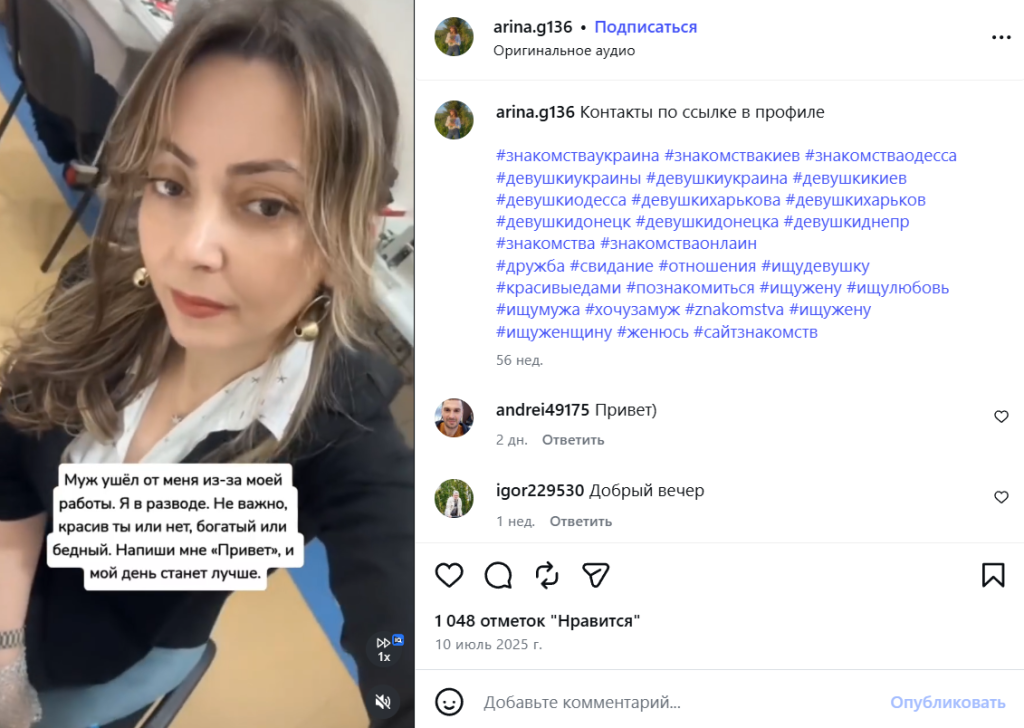
This way, the video builds engagement, and the buyer gets a chance to handle the lead in private messages.
Stories and highlights
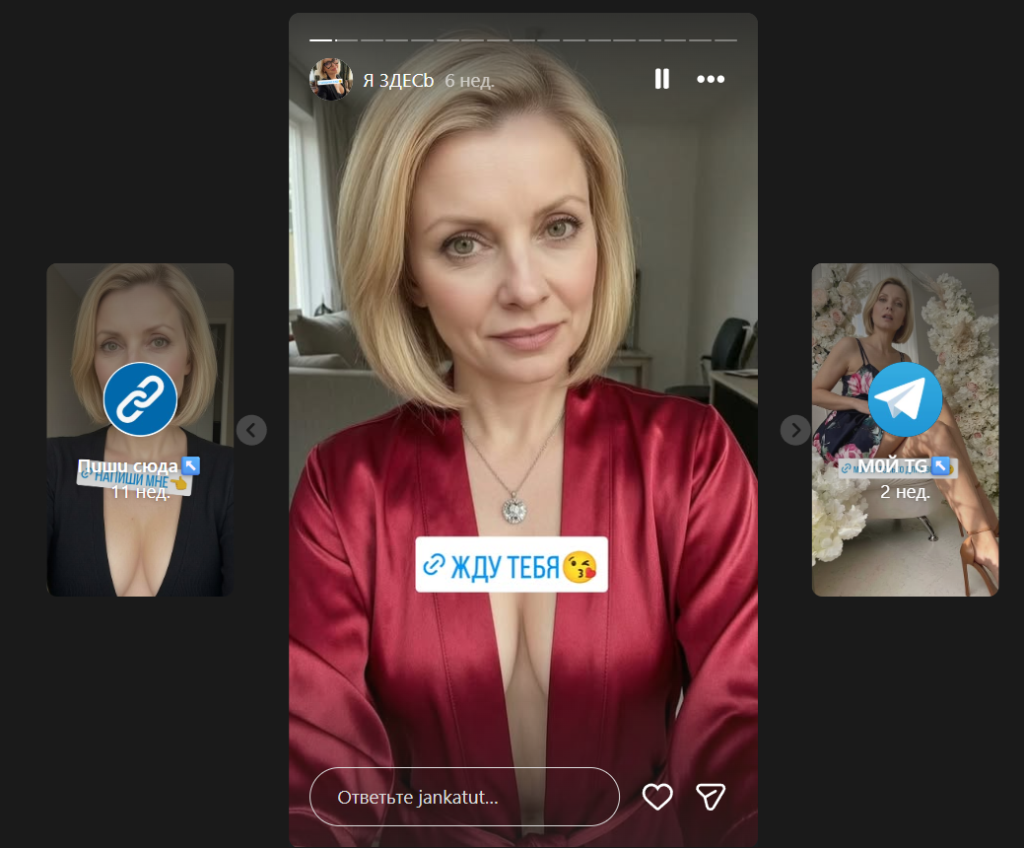
Stories are often used as an intermediate warming-up stage. A person comes from Reels, checks out the profile, views a few stories, and only then sees the CTA.
Common mistakes beginners make when running UBT from Reels
Inexperienced beginners usually want everything at once. In reality, it’s like starting a car and immediately shifting into 4th gear. Let’s look at some common mistakes:
- The first video immediately leads to the offer. A fresh profile, Reels with an offer ad among the first posts, and a link from day one is the worst way to start. First, show activity, build some history, and only then start promoting anything.
- One creative for the entire network. The most impatient think it’s better to go for quantity. If a video doesn’t work on one account, they upload it to five more profiles. This is also a dead end: only the first account will get views, and all the others will get zero.
- The entire warm-up is done in the wrong niche. If you’re pushing iGaming, look for similar accounts by interests and study their content. Algorithms need to understand which audience you want to engage with. That’s why sports betting might not be very appealing to fans of funny turtle videos.
- The first videos are made from leftovers. The first 5–10 videos should be created as if a million people will watch them. Instagram algorithms will judge the account based on these and look for your target audience. If you just upload content you don’t mind losing, you won’t know if the problem is a poorly warmed-up account or bad creatives.
- They publish ten videos in a row. The optimal interval between posts is one day. This gives the platform time to push them through recommendations, and the affiliate gets a clear picture: is it working or not? When an affiliate starts uploading clips in batches, it won’t bring any extra benefit.
Where to Get Ideas for Creatives
The main source of ideas is the Reels feed. Just enter a keyword or a hashtag from your working vertical into the search, and you’ll see the first references on the screen. It’s all free and pretty fast.
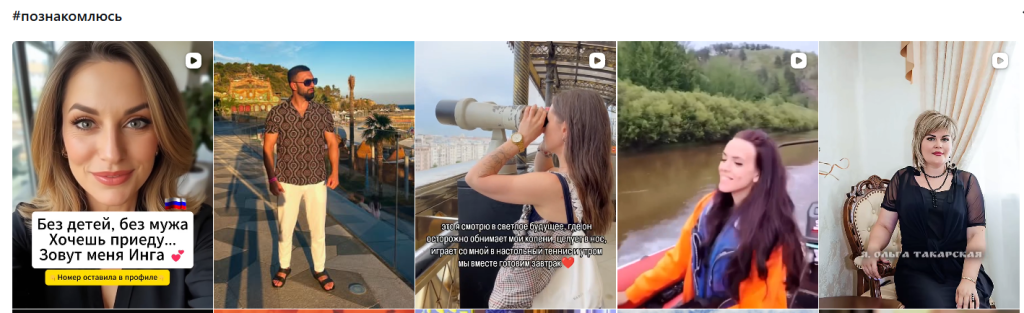
Experienced affiliates even create a separate account that they don’t use for ads. It’s tailored specifically for searching niche content. Just a couple of days is enough for such a profile to turn into your own spy tool.
Once you gather a dozen profiles, track their comments. For example, user questions like “where to download?”, “what’s this app?”, “is there a version for my country?” and “where’s the next part?” already contain a ready-made CTA or the topic for your next video.
Top Creatives for UBT Launches with Reels
Live Human Reaction
Timeless format: a win, something unusual, or an app in action happens on screen, and the hero’s face amplifies the emotion.
This format often looks like classic UGC, so it doesn’t attract extra attention from moderators. It’s usually used in gambling and betting.
Screen Recording with Result
These creatives are often used to promote apps, VPNs, or AI services. The main selection criterion for an offer is that its wow effect can be shown in 20–30 seconds.
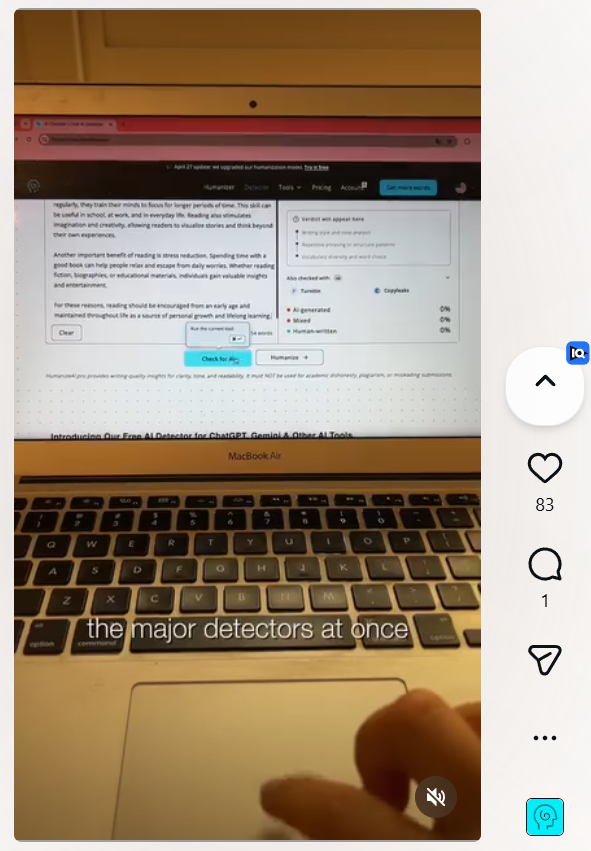
The first seconds show the end result, then the video quickly explains how it was achieved. The CTA leads to the tool, instructions, or the full version.
Meme Leading to Offer
The meme doesn’t explain the product but grabs attention around a familiar situation. The offer appears in the caption, Stories, pinned comment, or bio. There’s essentially no direct advertising here, so the video can easily get into recommendations and rack up views.
There’s demand in the market specifically for these mass formats: memes, gaming videos, neural content, and addictive clips are bought for further monetization with apps and services.
“Write a word – I’ll send the link”
The video gives part of the info, and the template, selection, or tool is sent via direct message after a comment.
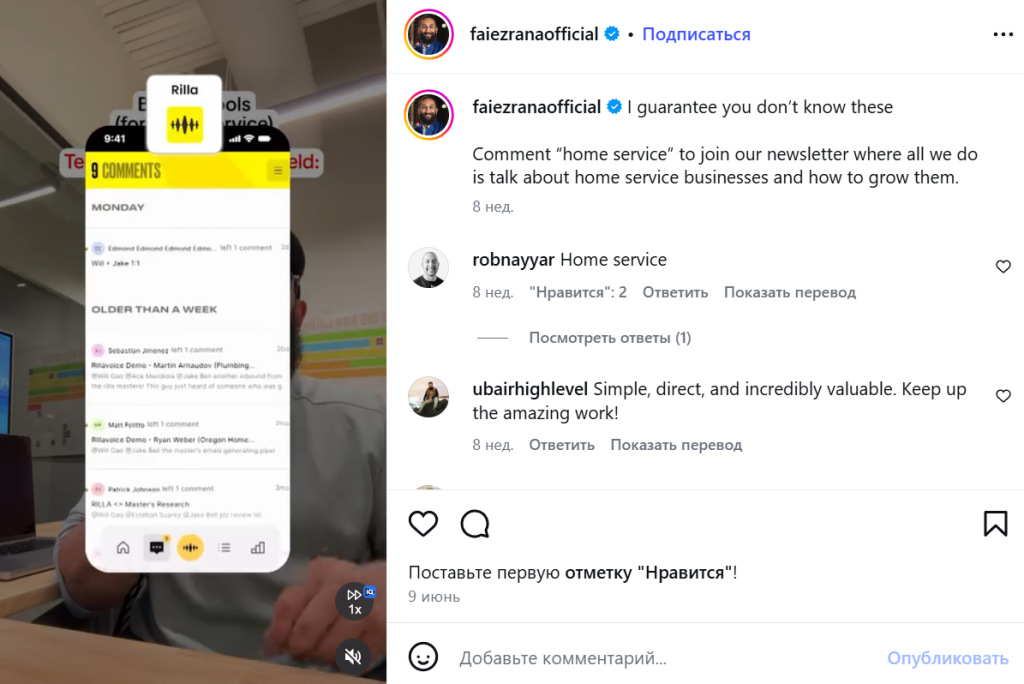
This format works not only for whitehat verticals. In gray niches, it’s used to share Telegram, a list of offers, instructions, promo codes, or the next part of the story.
Comparison of Two Options
“Expensive vs. cheap,” “manual method vs. automation,” “first slot vs. second,” “popular service vs. unknown”—these are classic comparison formats used in videos.
You don’t have to declare an absolute winner at the end. Sometimes it’s better to leave the result open to debate, so viewers head to the comments to defend their position.
Provocative question
Some experts recommend starting with a question that immediately hits the audience’s pain point, then offering a bit of value and a CTA.

The idea is to let the user recognize themselves, and then offer a solution.
Conclusion
At the start of the article, Andrey got stuck on a simple question: where do you even begin UBT with Instagram? Now the answer is a bit more down-to-earth than the case studies with millions of views promise: not with a hundred accounts, not with a $200 uniqueness tool, and not even with the search for the perfect Reels.
You should start with a system: one GEO, one vertical, a few accounts, and a measurable hypothesis. First, check how the profiles behave, then which videos the algorithms promote, and after that—which ones attract people to the profile. Finally, always measure whether the traffic turns into registrations, deposits, or other target actions. A video with 500,000 views might perform worse than a creative with 20,000 if the first attracted a random audience and the second brought in the right target audience.
The same goes for uniqueness. Hashes, FPS, sound, color, and other technical parameters help generate different file versions, but Instagram separately evaluates the originality of the content itself. So, as your network grows, it becomes more important to change not just the technical aspects, but also the hook, structure, character, storyline, and CTA.
Scaling only makes sense after you have repeatable results. If one profile consistently brings views, clicks, and conversions, you can apply its approach to other accounts and ramp up production. If you don’t have any of that, a hundred new profiles will just let you scale the problem faster.

FAQ
Experts recommend allowing about a week for warming up: for the first 3–4 days, create themed activity, on days 3–5 set up the profile without a link, and after about a week, publish your first Reels. Ideally, start with one video per day.
There’s no universal day. Most experts don’t rush to add an external link to a brand-new profile and first check if the account is getting normal reach. So it’s better to focus on the profile’s state: is it fully set up, does it have an activity history, and are the first Reels getting into recommendations?
We recommend starting with one video per day. This makes it easier to see which creative worked and how the audience reacts.
You can, but it’s not effective. Experts recommend creating different versions of the same original: change the intro, script, speed, color, and CTA. Just changing the hash or FPS isn’t enough to guarantee a truly original video. So when scaling, you should change both the technical aspects and the content itself.
CapCut is more than enough to start with: the desktop version lets you change the scale and opacity of frames, as well as adjust playback speed and other parameters. Premiere is more interesting for mass production, when you need deeper control over effects, sound, and final encoding settings – down to bitrate, color space, and keyframe interval.
The main metric for the video itself is watch time. If leads drop off after 1 second, the problem is only in the opening frames, and changing the final CTA makes no sense. Next, track retention, audience reaction, likes, comments, shares, and so on.
But for affiliates, that's not enough. You also need to count profile visits, link clicks, registrations, deposits, EPC, and revenue for each creative. That's why a viral video and a profitable video are not always the same thing.
It depends on the funnel length. If the action is simple and the offer is clear right away, extra intermediate pages can only lose users. For example, in dating, a user sees an attractive person and wants to message them. If the product needs explanation or several touchpoints, use the profile, stories, direct messages, Telegram, a bot, or a pre-landing page.
The cheapest spy is a separate Instagram* account trained for the right vertical. Practitioners interact only with relevant content so that recommendations gradually turn into a stream of other people's approaches and formats. Then they analyze not the whole video, but its components: the first frame, hook, storyline, duration, CTA, and audience reaction.

Comments (0)